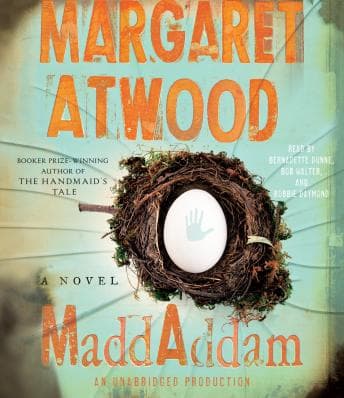

So I finally finished the MaddAddam trilogy. On a Tuesday morning Caltrain, 6:47 AM, somewhere between Millbrae and San Mateo, surrounded by other dead-eyed commuters clutching their cold brew like it's the only thing keeping them vertical. And honestly? That felt appropriate for a book about the end of the world.
Look, I came into this having devoured Oryx and Crake and The Year of the Flood back-to-back during a particularly brutal on-call rotation last year. Those books wrecked me in the best way - Atwood's darkly funny take on corporate dystopia hits different when you work for a company that could plausibly become a CorpSeCorps subsidiary. So my expectations for this finale were... high. Maybe too high.
The Zeb Problem (Which Isn't Really a Problem)
Here's the thing about MaddAddam - it's basically a backstory delivery system wrapped in a post-apocalyptic survival narrative. And I mean that as both a compliment and a slight criticism. The core of this book is Zeb's origin story, and Bob Walter absolutely nails it. His sections have this grab-you-by-the-throat energy that made my commute fly by. When he's telling Toby about his twisted past - the abusive preacher father, the brother who became a tech mogul, the bear (yes, there's a bear) - I missed my stop. Twice.
But the present-day stuff? It drags. There's a lot of recapping what happened in the previous books, which - okay, I get it, not everyone binged the trilogy like a Netflix series. But when you're 8 hours into a 13-hour audiobook and they're still explaining who the Crakers are, it starts to feel like padding.
Three Narrators, Three Vibes
The multi-narrator setup is interesting. Bernadette Dunne handles Toby's sections, and she's... fine? Her voice has this earnest quality that works for the character, but I've seen some listeners complain she sounds like she's narrating for a specific demographic. (One Goodreads reviewer said "retired women," which - harsh, but I kind of see it.) For me, it wasn't a dealbreaker, but at 1.5x speed she does lose some of the sardonic edge that Atwood's prose deserves.
Bob Walter, though. Bob Walter is the MVP here. His Zeb sections have this cynical, world-weary energy that's perfect. When he's describing corporate espionage or survivalist tactics, you believe every word. Robbie Daymond rounds things out with the Craker mythology bits, bringing this almost childlike wonder that contrasts nicely with the darker material.
The production is clean - no weird volume jumps between narrators, which is more than I can say for some multi-narrator audiobooks I've suffered through.
Where Atwood Still Kills It
Even when the plot meanders, Atwood's prose is still razor-sharp. Her ability to be simultaneously funny and devastating hasn't diminished. There's a scene involving the Painballers - basically the worst humans left alive - that made me audibly gasp on a packed train. That visceral dread reminded me of the darker moments in Rhythm of War, where Sanderson doesn't shy away from showing what desperation does to people. (The guy next to me definitely thought I was having a medical event.)
And the ending? Without spoilers, it's more hopeful than I expected from this series. The Crakers and humans finding a way to coexist, the weird hybrid mythology they're building together - it's oddly touching. Atwood doesn't give you a neat bow, but she gives you something to hold onto.
The ROI Calculation
So here's my honest take: if you've read the first two books, you need to finish this. Period. The closure is worth the slower pacing. But if you're coming in cold? Start with Oryx and Crake. This is not a standalone.
The 13+ hours is a commitment, and I won't pretend every minute earns its keep. The exposition dumps could've been tightened. Some of the present-day conflict feels less urgent than Zeb's flashbacks. But when this book hits, it hits hard.
Who Should Listen (And Who Should Skip): Perfect for long commutes, flights, any situation where you want to contemplate humanity's capacity for both destruction and weird, stubborn hope. Skip if you need constant action or haven't read the earlier books - you'll be lost and frustrated.
I finished this in about 9 commutes, and I'm still thinking about it. That's the Atwood effect - she plants something in your brain and lets it grow. Even when she's not at her tightest, she's still operating at a level most authors can't touch.