
Nikolai Lantsov is one of the best characters Leigh Bardugo ever created, and this book finally gives him the spotlight he deserves — then proceeds to tear him apart from the inside out.
Bottom Line: A politically dense, emotionally heavy fantasy audiobook elevated by Lauren Fortgang's stunning vocal performance. Not for Grishaverse newcomers, but if you've done the homework, this is the payoff. Skip it if you haven't read Shadow and Bone and Six of Crows — you'll be lost inside ten minutes.
King of Scars picks up after the events of the Shadow and Bone trilogy and the Six of Crows duology, threading together political intrigue, dark magic, and the kind of character work that makes you forget you're consuming fantasy. Nikolai is dealing with the literal demon living inside him — a remnant of the Darkling's power — while simultaneously trying to hold his crumbling country together. He's flanked by Zoya Nazyalensky, the Grisha general who could freeze you with a look faster than her Squaller powers, and a young monk named Yuri whose devotion to the Darkling borders on fanaticism. Meanwhile, Nina Zenik runs a parallel storyline in Fjerda that's equal parts spy thriller and grief narrative.
The dual storylines demand your attention. This isn't background listening material. Bardugo layers political machinations on top of supernatural threats on top of personal demons (both figurative and very literal), and if you zone out for ten minutes you'll miss a plot turn that restructures everything. I found myself rewinding more than once during a morning commute, which tells you something about the density of the storytelling.
Let's talk about Lauren Fortgang, because she's the reason this audiobook earns its reputation. Over sixteen hours, she creates what feels like a full cast production with a single voice. Her accent work — shifting between Russian-inflected tones for the Ravkan characters, harder consonants for Fjerdans, and distinct emotional registers for each POV character — is genuinely impressive. Nikolai gets this charming, slightly sardonic quality that captures his mask of wit perfectly. Zoya sounds imperious and wounded in equal measure. Nina carries warmth and grief simultaneously. One reviewer put it perfectly: Fortgang tricks you into thinking there are multiple narrators. That's not hyperbole. By the midpoint, I stopped hearing "a narrator doing voices" and just heard the characters.
Where Fortgang really earns her keep is in the emotional moments. There's a sorrow threaded through this book — Nikolai's fear of what he's becoming, Nina's mourning, Zoya's buried trauma — and the narration carries all of it without ever tipping into melodrama. The ending, which I won't spoil, hits with genuine force partly because Fortgang's delivery has been building that emotional foundation for fifteen hours.
The book isn't flawless, and honesty requires saying so. The pacing sags in the middle third. Bardugo is building toward something enormous, and some of that architectural work — the monastery scenes, certain political conversations — feels like setup rather than story. A few listeners have mentioned struggling to connect with Nikolai as a protagonist, which I understand even if I disagree. His charm can read as deflection, and the book is partially about that deflection cracking open, so you need patience to get to the payoff.
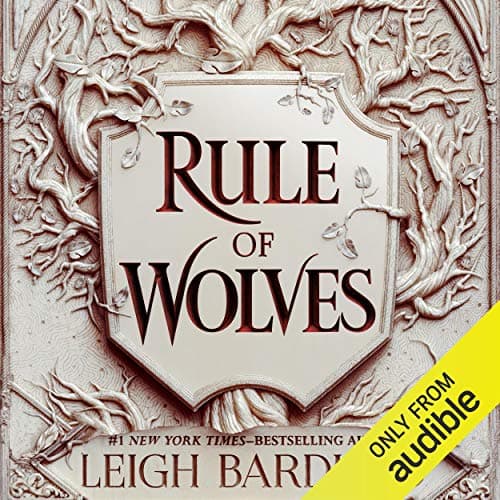
Nina's Fjerda storyline initially feels disconnected from Nikolai's journey. The threads do converge thematically, and Bardugo clearly planted seeds here that bloom in the sequel, Rule of Wolves. But in the moment, the jumps between storylines can feel jarring, especially when one plotline has more momentum than the other.
Here's what I keep coming back to, though: Bardugo's writing has matured significantly since Shadow and Bone. The prose is sharper, the political landscape feels lived-in rather than sketched, and she's asking harder questions about power, legacy, and what leaders owe the people they serve. This feels like a fantasy novel written for readers who've grown up alongside the Grishaverse rather than new visitors to it. That same sense of a world dense enough to reward patient, committed readers is something I found in Quicksilver too — another sprawling, politically layered book that only really opens up once you've put in the miles.
And that's the key caveat. King of Scars assumes you've read — or listened to — both the Shadow and Bone trilogy and the Six of Crows duology. Characters, relationships, and world mechanics carry over without much reintroduction. Jump in cold and you'll spend the first few hours confused. If you're a Grishaverse veteran, this feels like coming home to a house that's gotten more interesting since you left.
Fortgang navigates all of this with real grace. She's been the voice of this world for multiple books, and that consistency pays dividends. Names, places, and Grisha terminology roll off her tongue with practiced ease, which matters enormously in a setting where half the vocabulary is invented.
The cliffhanger ending will either thrill you or infuriate you. Probably both. It's the kind of finale that makes you immediately reach for the sequel, which is exactly what Bardugo intended. Fair warning: have Rule of Wolves queued up.