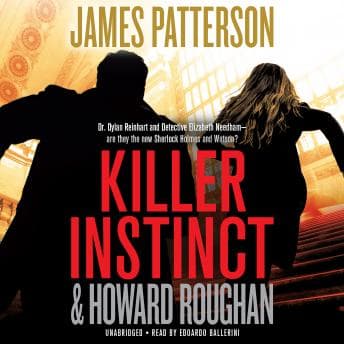
Look, I've got a bone to pick with Patterson. Or maybe it's Howard Roughan, his co-author on this one. Either way, someone needs to explain to me why a supposed terrorism expert keeps making tactical decisions that would get him laughed out of any real briefing room. Dylan Reinhart is supposed to be ex-CIA, but half the time he's making rookie moves that had me muttering at my truck's dashboard like a lunatic.
I was driving back from a client meeting in Houston—three hours of I-10 that feels like six—when I started this one. Ranger was in the back seat, probably judging my choice in literature. And honestly? By hour two, I was questioning it myself.
When the Professor Plays Spy
Here's the thing about Dylan Reinhart as a character: he's a psychology professor who wrote a book about criminal behavior, and he's got this secret CIA past. Fine. I can work with that premise. Patterson and Roughan clearly wanted to create someone who's both cerebral and capable of action. But the execution keeps tripping over its own feet. One minute Dylan's analyzing sociopathic behavior with textbook precision, the next he's charging into situations that any operator worth his salt would approach completely differently.
The central plot—a terror attack on New York that echoes 9/11—should've had me locked in. This is literally what I consult on now. Corporate vulnerability assessments, threat analysis, the whole nine yards. But the book treats terrorism like a puzzle box rather than the messy, politically complicated reality it actually is. The villain is smart, I'll give them that. Unpredictable in ways that keep the pages turning. But "sociopath who's the opposite of a textbook case" is doing a lot of heavy lifting here.
Detective Elizabeth Needham is the more interesting half of this partnership. She becomes a media hero after the attack—reluctantly, which is the only realistic part—and that puts a target on her back. Her scenes have more tension because she's operating in a world she actually understands. Street-level police work, navigating department politics, dealing with the press. That's grounded. Dylan's CIA flashbacks feel like they were written by someone who watched a lot of Homeland but never talked to anyone who actually worked at Langley.
Ballerini Behind the Mic
Edoardo Ballerini's narration is a mixed bag, and I'm going to be straight with you about it. When he's in his groove, the guy's solid. He shifts tone between Dylan's academic observations and Elizabeth's cop-speak effectively enough that you always know who's talking. There's an aristocratic edge to Dylan that works for the character—slightly pretentious, aware of his own intelligence. Elizabeth gets a grittier delivery.
But here's my gripe: the pacing. At 1.25x—my standard speed—there were still stretches where the narration felt like it was dragging. Some listeners apparently fell asleep to this thing, and I get it. During the quieter investigative moments, Ballerini's delivery gets almost hypnotic in a way that doesn't serve a thriller. You want urgency when people are hunting terrorists. You want your heart rate up. Instead, I got sections that felt like a bedtime story.
The "he says, she says" repetition that some folks complained about? Yeah, I noticed it too. Once you hear it, you can't unhear it. It's like a squeaky door hinge—not a dealbreaker, but annoying enough to pull you out of the story.
After-Action Report
At seven and a half hours, this isn't asking for a massive commitment. It's a quick deployment. And Patterson knows how to structure a thriller—short chapters, constant forward momentum, cliffhangers that make you say "just one more" even when you've already pulled into your driveway. The man's been doing this for decades, and the machinery works.
If you can overlook the tactical nonsense—and maybe you're not a former military guy who gets twitchy about these things—there's entertainment value here. The mystery of who's behind the attack has enough twists to keep you guessing. The relationship between Dylan and Elizabeth has genuine chemistry without getting bogged down in romantic subplot territory. And when the action sequences hit, they hit.
But I kept wanting more authenticity. More dirt under the fingernails. Patterson's thrillers are like MREs—they'll get the job done, they're engineered for efficiency, but you're not going to remember the taste.
Who's This Mission For?
Patterson fans who know what they're getting into—this one's for you. If you want a breezy thriller for your commute or a long drive, it delivers. Skip it if you're looking for realistic tradecraft or nuanced terrorism analysis. Regulators gave me that same itch for something grittier, something with more weight to it. Maybe pick up something by Vince Flynn or Brad Thor instead.
Ranger slept through most of it, which is either a commentary on the pacing or proof that German Shepherds have better taste than their owners.