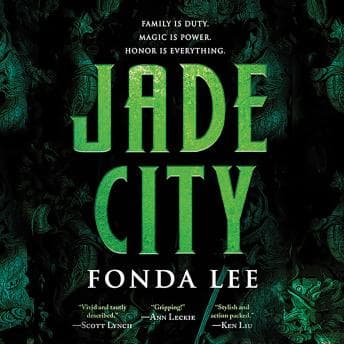

So there I was, three hours into my thesis work (okay, forty-five minutes of actual work and two hours of "research"), when I decided I needed background audio. Jade City had been sitting in my library for months because everyone kept comparing it to The Godfather meets Asian fantasy. And look, I'm a sucker for anything with a hard magic system and family drama.
I did not get any more thesis work done that day.
The Magic System Is Chef's Kiss
Okay, let me explain why this book broke my brain in the best way. The jade magic in Kekon isn't just "wear rock, get powers." It's a whole bioenergetic system where Green Bone warriors can enhance their perception, strength, and reflexes—but only if their bodies can handle it. Too much jade and you basically lose your mind. Not enough training and you're useless. There are specific disciplines—Lightness, Strength, Perception, Deflection, Channeling, and Steel—and each one has limitations and costs.
This is Sanderson-level world-building, folks. Fonda Lee clearly thought through every implication of how jade works, who controls it, and what happens when someone invents a drug that lets foreigners use it too. My D&D group would absolutely try to homebrew this system. (I'm already sketching notes. Dr. Patel would be so disappointed.)
But here's the thing—it never feels like an info-dump. The magic reveals itself through action, through the Kaul siblings using their abilities in fights and negotiations and moments of desperation. You learn what Channeling does when Hilo uses it to kill someone. You understand Perception when Shae senses danger before it arrives. It's integrated so naturally that I kept forgetting I was absorbing a complex system.
Andrew Kishino Nailed It
Nineteen hours is a commitment. I won't lie—I had moments early on where I wondered if I'd stick with it because there are SO many characters and political factions to track. But Andrew Kishino's narration honestly carried me through the slower setup chapters.
His voice work for the Kaul siblings is what sold me. Lan sounds measured and weary in a way that makes his burden as Pillar feel real. Hilo is all barely-contained violence and swagger—you can hear the guy who'd throw a punch first and maybe ask questions later. And Shae? Kishino gives her this cool distance that slowly cracks as she gets pulled back into clan business. The emotional range is impressive.
Some reviewers mentioned the pacing felt fast in places, and yeah, during some of the action sequences Kishino really moves. But honestly? It worked for me. The fight scenes are brutal and quick—they should feel urgent. Steven Pacey walked so narrators like Kishino could run, and this performance proves it. Speaking of narrators who elevate complex fantasy worlds, Return of the King set that gold standard decades ago.
(I will say—if you're not used to Asian names and terms, give yourself a few chapters to adjust. Kishino's pronunciation is great, but there's a lot to absorb early on. Stick with it.)
When the Clan War Hits
I'm trying not to spoil anything, but there's a moment maybe six or seven hours in where everything goes sideways. You know it's coming—the tension between the Kaul family and the Ayt family has been building since page one—but when it finally explodes, I literally stopped walking in the middle of the grocery store.
Just stood there between the cereal and the pasta, staring at nothing, processing what just happened.
Fonda Lee does not pull punches. These characters make choices with real consequences. People you like do terrible things. People you hate have understandable motivations. It's messy and complicated in exactly the way family drama should be. This isn't a story where the good guys win because they're good. It's a story about power, tradition, and what you're willing to sacrifice to protect your own.
The progression scratches the same itch as a good LitRPG—you're watching these characters level up their jade abilities, consolidate power, make alliances—but it's wrapped in literary fiction quality prose. Like someone took a Hong Kong gangster film and gave it the emotional depth of a family saga. That blend of action and character work reminds me of Confessor, though Lee's political intrigue runs circles around most fantasy.
The 19-Hour Question
Yes, it's 19 hours. Yes, it's worth it.
I burned through this in about a week, which for my schedule is basically speedrunning. I listened during my commute, while cooking, while pretending to organize my apartment. Stayed up too late more than once because I needed to know what happened next.
If you don't like slower political setup, the first few hours might test your patience. There's world-building to establish, factions to introduce, and Fonda Lee takes her time laying the groundwork. But once it clicks—and it will click—you'll understand why this won the World Fantasy Award.
Who's this for? If you love hard magic systems, morally gray family sagas, or anything that scratches that "crime epic meets fantasy" itch, this is your next obsession. Skip it if you need fast starts or can't handle a large cast—the early chapters demand patience.
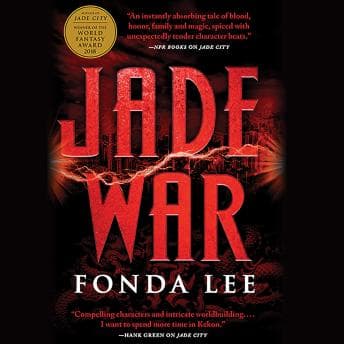
My only real complaint? Now I have to immediately start Jade War, and my thesis is already crying.