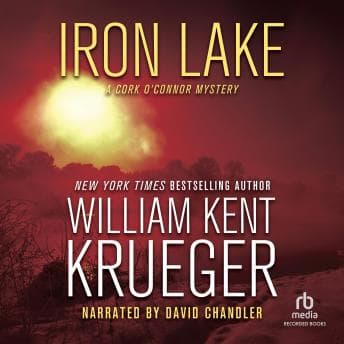

Look, I'll be honest—when I picked up Iron Lake, I wasn't expecting it to scratch my horror itch. It's a mystery, sure. But William Kent Krueger understands something a lot of thriller writers don't: dread isn't about jump scares. It's about the slow, creeping realization that something is deeply, fundamentally wrong in a place that should feel safe.
And small-town Minnesota in winter? That's already halfway to a horror setting.
The Cold That Gets Under Your Skin
Cork O'Connor is the kind of protagonist I didn't know I needed. Ex-sheriff, part Anishinaabe, carrying around enough guilt to fill Lake Superior. When a kid goes missing on the same day a judge supposedly kills himself, Cork's the only one who smells the rot underneath. Classic setup, right? But Krueger doesn't rush it. He lets the tension build like ice forming on a lake—slow, inevitable, and dangerous if you're not paying attention.
The cultural elements here aren't window dressing. The Anishinaabe reservation, the complicated history, the way Cork exists between two worlds—it all feeds into the mystery in ways that feel earned rather than exploitative. (My podcast listeners know I'm picky about this stuff. Horror and mystery have a long, ugly history of using Indigenous cultures as set dressing. This isn't that.)
The pacing is deliberate. Some might call it slow. I'd call it atmospheric. There's a difference between a story that drags and one that takes its time building a world you can feel in your bones. Iron Lake is the latter. The winter setting seeps through David Chandler's narration until you're practically shivering.
David Chandler: Solid Ground in a Storm
Here's the thing about Chandler's narration—it's not flashy. He's not doing wild character voices or theatrical performances. What he does is something harder to pull off: he stays steady. Clear. Consistent. For a nearly twelve-hour mystery with this much emotional weight, that matters more than vocal pyrotechnics.
He's got this smooth, even delivery that works perfectly for Cork's internal world. The guy's processing grief, guilt, and a mystery that keeps getting darker. You don't need a narrator chewing the scenery. You need someone who can carry the weight without dropping it.
That said—and I have to be honest here—the character differentiation is minimal. When you've got multiple characters in a scene, you're relying on context clues rather than distinct voices. It never confused me, but listeners who need clear vocal distinctions between characters might find it frustrating.
Also, some folks have mentioned audible breath sounds. I'll admit I didn't notice them much, but I was listening at 1.25x speed during my late-night shelving shifts at the library. (Yes, I'm that person. Shirley judges me for it.) At normal speed, they might be more noticeable.
Why This Works for Genre Fans
Iron Lake isn't horror. I know that. But it operates on the same principle that makes the best horror work: it makes you feel unsafe in ordinary spaces. A small town. A frozen lake. A community with secrets. The mystery elements are solid—genuinely surprising in places—but it's the atmosphere that got me.
Krueger won an Anthony Award for good reason. The man can write tension. And Chandler, for all his understated approach, knows how to let that tension breathe. He doesn't rush the quiet moments. He doesn't oversell the reveals. He trusts the material.
I listened to most of this in the dark, because apparently I never learn. The winter setting combined with the cultural elements and Cork's isolation created this specific kind of unease that I chase in everything I consume. Not quite horror, but horror-adjacent. Dread-flavored mystery.
Who Should Press Play (And Who Should Keep Scrolling)
This is for the patient listeners. The ones who like their mysteries slow and their atmosphere thick. If you're into Tony Hillerman or Craig Johnson, you'll feel right at home. David Chandler brings that same steady, grounded energy to Open Season, another atmospheric mystery where the setting does half the work. If you want non-stop action and plot twists every chapter, look elsewhere.
Commuters, this is your sweet spot. The pacing works perfectly for long drives or transit rides. I had a similar experience with Nowhere to Run—Chandler's narration style just works for these slow-burn mysteries. You won't miss crucial details if you zone out for a minute, but you'll want to pay attention during the key scenes.
Skip if you need highly differentiated character voices or if depressing themes hit you hard. Cork's dealing with real trauma, and the book doesn't shy away from that weight.
The Verdict from the Stacks
This is a solid start to what I'm told is an excellent series. I'm already eyeing the next one. Shirley remains unimpressed, but she's a cat. Her literary opinions are suspect at best.