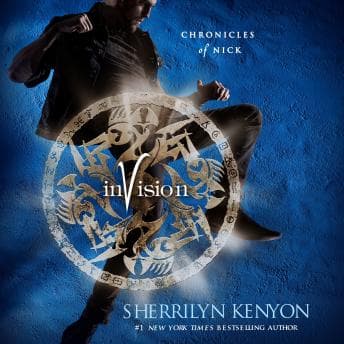

I was supposed to be debugging my procedural dungeon generator at 2 AM. Instead, I'm seven hours deep into Nick Gautier's demon drama, my thesis document mocking me from the other monitor. Worth it? Absolutely.
Sherrilyn Kenyon's Invision is basically what happens when you take a YA protagonist, give him the backstory of a D&D warlock who rolled nothing but natural 1s on his family tree, and then throw in every supernatural creature you can think of. Nick's trying to get into a good college while literally being destined to end the world. The cosmic irony writes itself.
When Your Character Sheet Says "Harbinger of Doom" But You Just Want a Scholarship
Look, I've played enough campaigns where the party's trying to prevent prophecy from happening. It never works. But watching Nick stubbornly refuse to accept his demon overlord destiny? That's the kind of character energy I live for. The guy's got ancient gods and demons on his team, he's claimed some mystical artifact called the Eye of Ananke, and his main concern is still proving everyone wrong about who he's supposed to become.
The magic system here isn't Sanderson-level—Kenyon's more interested in the mythology mashup than hard rules—but the world-building is dense in that satisfying way where you keep discovering new supernatural factions and power dynamics. That same layered mythology approach works beautifully in Dragon Keeper, where Robin Hobb builds an entire ecosystem of dragon lore without getting bogged down in exposition. My D&D group would have a field day with the cosmology. There's this beautiful chaos of demons, gods, undead, and whatever else Kenyon wants to throw into the New Orleans supernatural blender.
Holter Graham: Rolling With Advantage (Mostly)
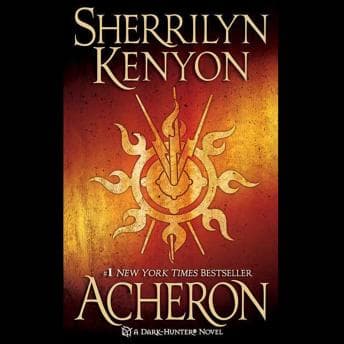
Here's where things get interesting. Graham won AudioFile's 2008 Best Voice in Science Fiction & Fantasy for Kenyon's Acheron, and you can tell why. The guy does distinct voices for humans, demons, undead, and—I'm not kidding—animals. His male character work is genuinely impressive; you never lose track of who's talking even when Nick's surrounded by his chaotic supernatural support group.
But. And this is a significant but.
His female voices have gotten... look, I'll be honest. Some of them veer into territory that pulled me right out of the story. There's a character named Simi whose voice apparently changed from earlier books, and while I haven't listened to the whole series, I can see why longtime fans might be frustrated. A few of the female characters sound almost cartoonish—not in a fun way, more in a "wait, is this supposed to be comedic?" way when the scene is definitely not going for comedy.
It's frustrating because his emotional delivery is genuinely powerful. When things get intense, Graham sells it. The comedic timing lands when it needs to. But those female voice choices create this weird tonal whiplash that kept pulling me out of otherwise solid scenes.
The Progression Fantasy You Didn't Know You Needed
Okay, hear me out. This isn't technically LitRPG (no stat blocks, sadly), but it scratches that same progression itch. Nick's constantly leveling up his abilities, learning new aspects of his powers, and facing increasingly dangerous threats. The pacing moves—at under 8 hours, Kenyon doesn't waste time on filler. 1986: At the End of Time has that same tight pacing where every scene earns its place. You're getting plot advancement and character development without the 40-hour commitment some fantasy series demand.
The internal demons Nick battles in this one? Actually more interesting than the external threats. There's real emotional weight to watching someone fight against what everyone says they're destined to become. (My advisor says I'm destined to never finish my thesis. I, too, am fighting prophecy.)
Who Should Roll Initiative (And Who Should Sit This One Out)
This is for you if: you love urban fantasy with deep mythology, you're already invested in the Chronicles of Nick series, or you want something with that YA energy but actual stakes. The New Orleans setting gives everything a specific flavor that generic urban fantasy lacks.
Maybe skip if: you need your fantasy narrators to do convincing female voices, you're jumping in without reading earlier books (the plot assumes you know these characters), or you want something with a complete magic system explanation. Also, content warnings for violence, language, and mature themes—this is YA that doesn't pull punches.
Rolling a Solid 7 on the D20
Invision isn't going to change your life. But it's a fun, fast ride through a supernatural New Orleans where a kid with the worst possible destiny is too stubborn to accept it. Graham's narration is mostly excellent with some notable weak spots. The world-building rewards series investment. And at 7 hours 44 minutes, it's the perfect length for a weekend of procrastination.
I should really get back to my thesis. But there are more books in this series, and Dr. Patel's disappointment is already a constant in my life. What's one more week?