
What happens when you put Samuel L. Jackson in the role of God?
I'll tell you what happens. You stop grading papers. You stand in your kitchen at 11 PM with a stack of sophomore essays on The Great Gatsby, and you just... listen. It's the kind of moment where stress just dissolves—something I felt listening to Anxious for Nothing, though that one's more about practical calm than theological awe. Because Samuel L. Jackson is speaking the words of the New Testament, and somehow it works. Somehow it absolutely works.
Look, I've been through a lot of Bible audiobooks. Comes with the territory when you teach literature - you can't really discuss Western canon without understanding the source material. Most of them are fine. Serviceable. The kind of thing you put on during a long drive and half-absorb. This is not that.
When Hollywood Meets Scripture
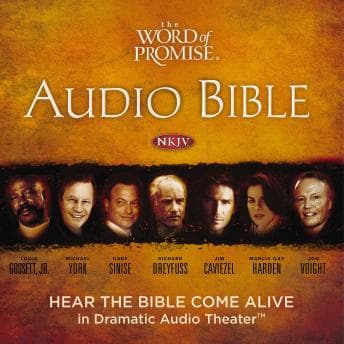
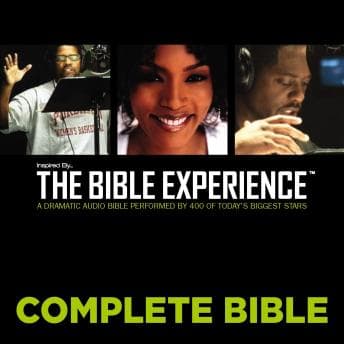
The Bible Experience is 86 hours of what I can only describe as ambitious insanity that actually pays off. Over 400 performers. The Prague Symphony Orchestra doing original underscoring. Technicolor Studios handling sound design like this is a Marvel movie. On paper, it sounds like a disaster waiting to happen - too many cooks, too much spectacle, the message lost in the production.
But here's the thing. It's not lost. It's elevated.
Denzel and Pauletta Washington performing Song of Songs together? That's not gimmick casting. That's understanding that the text is a love poem, and love poems need chemistry. Forest Whitaker as Moses brings this quiet authority that made me hear the Exodus narrative differently than I have in thirty years of reading it. Angela Bassett as Esther - and I'm not exaggerating here - made me understand why that book is in the canon. The drama, the stakes, the courage. She gets it.
And Eartha Kitt as the Serpent. My students would lose their minds. I kind of lost mine.
The Production That Justifies the Hype
I'm usually skeptical of "lavish productions." In my experience, heavy sound design often means someone's trying to hide weak narration. Not here. The orchestral underscore knows when to swell and when to shut up. The sound effects create atmosphere without becoming a distraction. It's the difference between a high school play with too many props and a professional theater production where every element serves the story.
The dramatized readings are genuinely dynamic. You can hear the difference between a psalm of lament and a psalm of praise. Understanding those emotional shifts requires the same kind of mental awareness that Science the Mind explores, though that book takes a more clinical approach to how we process emotion. The prophetic books - which, let's be honest, can be a slog in print - actually move. There's urgency. There's emotion. LL Cool J as Samson brings this swagger that makes the character's flaws and strengths feel human rather than mythological.
I listened to most of this during my lakefront walks with Denise. She's not particularly religious, but she kept stopping to ask who was speaking. "That's Cuba Gooding Jr.," I'd say. "That's Alfre Woodard." By week three, she was recognizing voices herself.
The Navigation Problem (Because Nothing's Perfect)
Okay, so here's where I have to be honest. The chapter and section navigation is genuinely frustrating. The organization into what seems like devotional months rather than traditional book-and-chapter structure means you can't easily find, say, Romans 8 when you want it. For casual listening, this doesn't matter. For study purposes? It's a real limitation.
I found myself taking notes on where certain passages landed, which defeats some of the purpose of an audiobook. If you're someone who needs to jump around - skip this for reference purposes. For straight-through listening, though? Worth the trade-off.
Who Should Listen (And Who Should Skip)
This isn't for everyone, and I mean that as a feature, not a bug. If you want a straightforward, no-frills Bible reading, this will feel like too much. If you're looking for a study tool with easy navigation, look elsewhere. But if you want to experience the Bible as literature - as the foundational text of Western storytelling, performed by people who understand performance - this is the gold standard. The 2007 Audies Audiobook of the Year award wasn't a fluke. This earned it.
My podcast listeners (all 47 of them, hi Mom) know I believe great narration is interpretation. Every pause, every emphasis, every vocal choice is a reading of the text. This production makes interpretive choices that are bold and, more importantly, defensible. They've thought about this. You can hear the thinking.
Would I listen again? I'm already planning to. There's too much here to absorb in one pass. The Old Testament alone could fuel a semester's worth of my "Annotated Life" episodes.
Principal Martinez, if you're reading this, I was definitely paying attention in last week's meeting. (I wasn't. I was listening to Ecclesiastes. Terry Crews was involved. No regrets.)