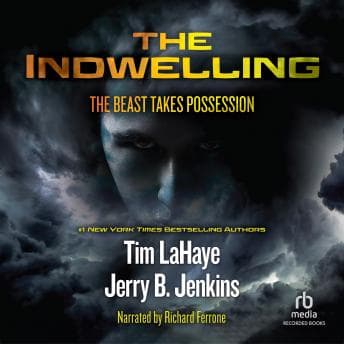

I'll be honest with you - I wasn't sure what to expect walking into this one. The Left Behind series isn't exactly what I assign my AP Lit students, and I'd somehow made it twenty years without picking up any of these books despite their cultural ubiquity. But there I was, grading papers at 11 PM on a Tuesday, and I figured: why not? If I'm going to understand what shaped an entire generation of American evangelical fiction, I might as well start somewhere in the middle. (Yes, book seven. I'm a rebel like that.)
And look, here's the thing about The Indwelling - it's not Dostoevsky. It's not trying to be. LaHaye and Jenkins are doing something very specific here, and once I stopped waiting for the prose to become something it wasn't, I actually found myself... engaged? Surprised? Definitely awake past midnight.
Richard Ferrone Earns His Keep
Let's talk about the narration first because Ferrone is doing heavy lifting here. The man has this rugged, almost gravelly quality that works surprisingly well for apocalyptic fiction. When you're dealing with Satan literally possessing the Antichrist - and yes, that's the plot, we're past subtlety here - you need a narrator who can sell the stakes without tipping into melodrama.
Ferrone walks that line. He inhabits the first-person sections with real conviction, and his pacing during action sequences keeps things moving. There's a suspenseful quality to his delivery that made me forget I was supposed to be checking for comma splices in sophomore essays. (The essays could wait. The Beast was taking possession.)
What struck me most was how he handled the ensemble cast. This series has a lot of characters at this point - the Tribulation Force, various political figures, the whole cosmic battle infrastructure - and Ferrone keeps them distinct without resorting to cartoon voices. It's professional work. Clean production too. No weird audio glitches, no moments where I had to rewind because something got muddy.
Prophecy Meets Page-Turner
Okay, so about the actual book. We're three and a half years into the Tribulation, the Rapture happened in book one, and now we're at the midpoint where things get really bad. The prophecy stuff is front and center - the Antichrist dies and gets resurrected, Satan takes the wheel, humanity inches closer to the final battle.
Jenkins and LaHaye aren't subtle writers. They're not going for ambiguity or literary complexity. What they ARE doing is creating propulsive, page-turning (ear-turning?) entertainment that weaves biblical prophecy with thriller conventions. It's airport fiction with eschatological stakes. And honestly? It works for what it is. I've found that same propulsive quality in Beneath a Scarlet Sky, which also prioritizes momentum over literary flourish.
The pacing drags in spots - there are sections that feel more like biblical exposition than story - but Ferrone's delivery smooths over the rougher patches. When the action kicks in, it kicks hard. The suspense builds effectively, even if you can see some plot beats coming from chapters away.
My students would probably hate this. Too earnest, too unironic, too committed to its worldview without the postmodern wink they've been trained to expect. But I found something almost refreshing about its sincerity. These authors believe what they're writing. That conviction comes through.
Who Should Listen (And Who Should Skip)
Let me be direct: if you're not already interested in Christian apocalyptic fiction, this probably isn't your entry point. Start with book one if you're curious about the series. If you're actively hostile to religious themes, you'll hate this - it's not trying to convert you through subtlety. Skip it.
But if you're a fan of the series, or you're someone who appreciates genre fiction done with conviction, Ferrone's narration elevates the material. He makes a ten-and-a-half-hour listen feel manageable. I knocked it out over a long weekend of grading and lakefront walks with Denise, and she only asked me to pause twice when I started muttering about narrative structure.
The audiobook format actually suits this material well. There's something about hearing prophecy quoted aloud, about the rhythm of the action sequences in your ears, that works better than I expected. It's not literature in the way I usually mean the word. But it's effective storytelling in its lane.
Class Dismissed
Would I recommend it to my podcast listeners? Probably not - they're there for Middlemarch and Faulkner, not the Rapture. But for the right audience, this delivers exactly what it promises. Ferrone makes sure of that.