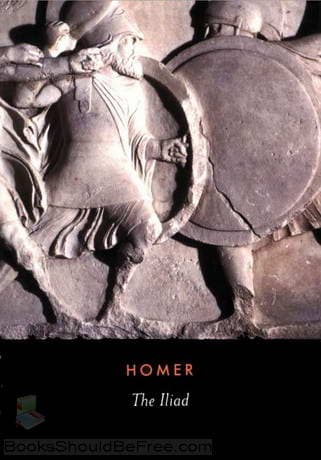

"Rage — Goddess, sing the rage of Peleus' son Achilles."
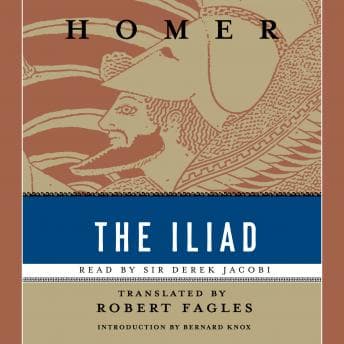
That opening line hit me somewhere around the Diversey Harbor stretch of the lakefront on a Sunday morning so cold Denise had pulled her scarf up to her eyebrows. Derek Jacobi's voice landed like a thrown spear — authoritative, ancient, absolutely certain of its purpose. I stopped walking. Denise kept going for about ten feet before she turned around and gave me the look. The "you're doing the audiobook face again" look.
I've taught the Iliad for twenty years. I've watched seventeen-year-olds roll their eyes at the Catalogue of Ships. I've argued with colleagues about whether Achilles is a hero or a petulant child. (He's both. That's the whole point.) But hearing it — really hearing it through Fagles' translation with Jacobi behind the wheel — made me feel like a first-year grad student again, dumb and electric with discovery.
Jacobi Treats Homer Like Shakespeare's Older, Meaner Brother
Let's talk about what the narrator is really doing here, because it's not just reading. Jacobi has this Shakespearean training baked into his bones — the man played Hamlet, for God's sake — and he brings that same architectural understanding of language to Homer. When Achilles rages at Agamemnon in Book 1, Jacobi doesn't shout. He drops his voice lower, tighter, like a man whose fury has gone past volume into something colder. It's a choice that tells you everything about Achilles before the plot does.
And then there's Maria Tucci. She handles the introductory material and select passages, and her voice carries this warmth that provides genuine contrast. Where Jacobi is bronze and iron, Tucci is something softer — not weaker, just different in texture. It creates a kind of tonal breathing room in a poem that can otherwise feel like eight hours of unbroken combat.
The narrator understands that pause is punctuation. Jacobi lets the similes land. And Homer's similes — a warrior falling like a poplar tree cut down by a chariot-maker, bees swarming from a hollow rock — these are the moments where the poem stops being about war and starts being about the world the war is destroying. Jacobi gives them space. He doesn't rush past them to get back to the killing. At 1.0x speed (yes, I will die on this hill), each image gets its full weight.
The Violence Isn't the Point, But It's Not NOT the Point
Here's what I tell my students every year, and what this audiobook made me believe again: the Iliad is not a war story. It's a story about what war costs. Every named death — and Homer names them, gives them fathers, gives them towns, gives them the lives they'll never go home to — is a small tragedy inside the big one. There's a moment where a soldier is killed and Homer tells us he came from a city near a river, that his father raised him. Then he's gone. Spear through the throat. Next line.
Hearing that pattern repeated across eight hours and forty-five minutes does something that reading it on the page doesn't quite achieve. It accumulates. By the time you reach Hector's final stand — and I won't pretend I wasn't walking faster at that point, as if my pace could change the outcome of a three-thousand-year-old poem — the weight of all those dead men is sitting on your chest.
Fagles' translation is doing heavy lifting here too. His English has this muscular, propulsive quality that keeps the hexameter's drive without sounding archaic. "Breaker of horses" for Hector. "Swift runner" for Achilles. These repeated epithets, which look redundant on the page, become rhythmic anchors in audio. Almost musical. You start anticipating them the way you anticipate a chorus.
Who This Is For (And Who Should Maybe Start Elsewhere)
If you loved Madeline Miller's Song of Achilles and want to hear the source material — this is its spiritual ancestor, obviously, but be warned: Homer's Achilles isn't Miller's sensitive lover. He's terrifying. He drags a man's corpse behind his chariot for days. And Jacobi makes you feel every inch of that cruelty without flinching.
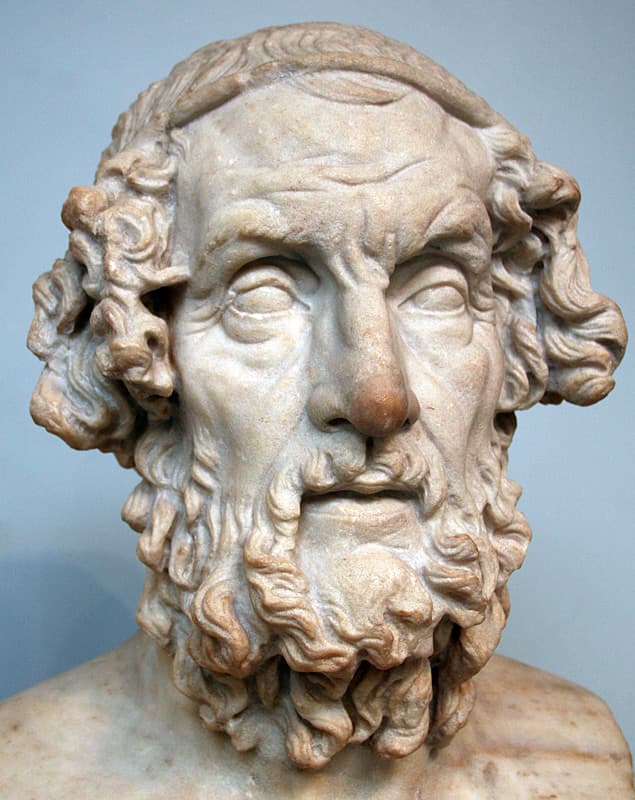
If you've never read the Iliad and the idea of an epic poem sounds like homework — honestly, this is where to start. Audio is how this poem was meant to be experienced. Homer was an oral poet. Some bard stood in a hall and performed this. Jacobi is that bard now, just with better recording equipment.
But if you're looking for fast-paced action with tight plotting, know that Books 2 through 4 can feel like wading through bronze-age bureaucracy. The Catalogue of Ships is exactly what it sounds like — a list of ships. Jacobi does his best, but there's only so much dramatic weight you can give to "and forty black ships sailed from Boeotia." My students would hate this section. I kind of love it for its stubbornness, its insistence that every city mattered. Though I'll admit, when I reviewed Forsaking Home a while back, I found myself thinking about that same stubborn insistence — the way certain stories refuse to let you skip past the people who don't survive to matter in the larger plot.
Some listeners have noted the production feels a little spare — no ambient sound effects, no battle noise. Personally? Good. This poem doesn't need sound design. It needs a voice and silence. That's it.
Worth Pausing the Faculty Meeting For
I finished the last hour — Priam kneeling before Achilles, begging for his son's body — during a late-night grading session. Papers forgotten. Red pen down. The prose deserves to be savored, and Jacobi savors it. That final scene is maybe the most humane passage in all of Western literature: two enemies, both destroyed by grief, sitting together and weeping for different reasons.
This is why we still read the classics. Not because someone put them on a syllabus. Because a blind poet three millennia ago understood something about loss that we still haven't figured out how to say better.
My students would hate this. I love it.