🎧
AudiobookSoul
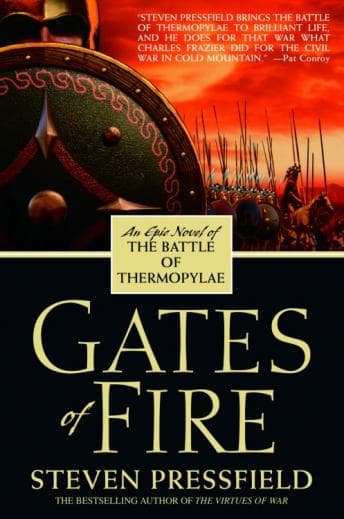
Gates of Fire audiobook cover

Gates of FireSpartans who make you forget you know the ending

by Steven Pressfield🎤Narrated by Derek Jacobi
🟢 Must Listen
✍️ 4.5 Editorial
🎤 5.0 Narration
Abridged
6h 16m
📝

Lesson Plan

Spartans who make you forget you know the ending

  • Voice Grade: Jacobi's gruff soldiers and breathless battle accounts are some of the finest audiobook narration I've encountered in years.
  • Class Theme: Brutal, philosophical, and strangely tender—the Spartan warrior ethos rendered with novelist's precision and historian's rigor.
  • Reading Rhythm: Earns its climax through patient character-building, though the abridged format leaves you wanting more.
  • Final Grade: Must Listen

Is this for you?

Pick this if: you love historical fiction and want philosophical depth with brutal battle scenes · you enjoy military history and accept patient character-building before the climax · you want a meditation on courage and don't mind graphic combat violence
Skip if: you are squeamish about graphic violence or prefer sanitized battle scenes · you need constant action and get impatient with slower character-building · you want the full unabridged experience without feeling material was trimmed
📚Best for fans of: Alexander Hamilton, For Whom the Bell Tolls, The Iliad
Read Time4 min read
Duration6h 16m
Your rating?
Marcus Williams, audiobook curator
Reviewed byMarcus Williams

English teacher, 20 years. Podcast with 63 listeners (one is his mom).

🎧 Listens mostly while walking lakefront, drawn to narration that interprets not just reads, impatient with forgetting words have chosen rhythm.

Last updated:

Share:

"Come back with your shield—or on it." That's the Spartan mother's farewell to her son leaving for battle. I've taught this line to hundreds of students over the years, watched them nod politely, scribble notes, forget it by lunch. But hearing Derek Jacobi deliver it? Different thing entirely. I was walking the lakefront with Denise, and I actually stopped. Just stood there like an idiot while joggers went around me. This is why we still read the classics. Or in this case, listen to them. ## When History Becomes Blood and Breath Steven Pressfield does something remarkable here. He takes the Battle of Thermopylae—three hundred Spartans against the Persian millions—and makes you forget you already know how it ends. The story is told through Xeones, a squire who survives to recount the stand to the Persian king. It's a framing device that shouldn't work as well as it does. But Pressfield understands something my students often miss: history isn't about dates and outcomes. It's about the people who didn't know the ending yet. That same focus on the human story behind the history drives [Alexander Hamilton](/reviews/alexander-hamilton-1766823220341-b470), though Chernow's subject traded the phalanx for the pen. The psychological insight here is staggering. This isn't just sword-and-sandal action (though there's plenty of that). It's a meditation on what makes men willing to die for something larger than themselves. The Spartan cult of courage, the brutal training, the strange tenderness between warriors who know they're walking toward death—Pressfield renders all of it with a novelist's eye and a historian's rigor. I found myself thinking about Hemingway, actually. That same spare, muscular prose. That same refusal to sentimentalize violence while still honoring the men who endure it. My students would hate this comparison. I love it. ## Derek Jacobi Earns Every Pause And then there's Derek Jacobi. Look, I've listened to a lot of audiobooks. Jacobi's performance here is something else. His soldiers are—and I'm stealing this from another listener because it's perfect—"terrifyingly gruff." But it's not just about doing voices. It's about understanding that pause is punctuation. When he describes the fighting, you can almost smell the blood. (I know that sounds like hyperbole. It's not.) Here's what separates great narration from good: Jacobi doesn't just read the battle scenes. He interprets them. The breathlessness builds exactly when it should. The quiet moments after combat land with the weight they deserve. He shifts between narrators—Xeones recounting to the Persians, the Spartans speaking among themselves—with subtle changes in timbre that never feel showy. You always know who's talking. That's harder than it sounds. Fair warning: some listeners mention struggling with his accent initially. I didn't have this problem, but I also spent three years in grad school listening to British lecturers drone about Chaucer, so my ear is calibrated differently. Give it twenty minutes. It clicks. ## Six Hours Instead of More (And Why I'm Still Recommending This) Okay, so here's the thing—this is the abridged version. Six hours instead of... however long the full book runs. And honestly? I wish there was more. I wanted to live in this world longer. The pacing is excellent, the story complete, but you can feel the edges where material was trimmed. That said, what's here is extraordinary. The production is clean, professional, no weird audio artifacts or jarring transitions. And at six hours, it's actually perfect for a long weekend of commuting or—if you're like me—grading papers at 11 PM while pretending you're somewhere more interesting. ## Who This Is For (And Who Should Skip) Essential listening for anyone who loves historical fiction. Military history buffs, obviously. But also anyone interested in what the Greeks called *arete*—excellence, virtue, the striving to be your best self. The philosophical ideas here are evergreen. They mattered in 480 BC and they matter now. Skip this if you're squeamish about violence. The battle scenes are graphic. Pressfield doesn't flinch from what combat actually looks like—the gore, the exhaustion, the terror. It's not gratuitous, but it's not sanitized either. And if you need constant action, the slower character-building sections might test your patience. This is a book that earns its climax. It doesn't rush to get there. ## Cold Coffee, Warm Recommendation I finished this on a Saturday morning, sitting on my back porch, coffee going cold because I couldn't pause it. Denise came out and asked what I was listening to. I tried to explain—Spartans, Thermopylae, the whole thing—and she just nodded and went back inside. She's heard me ramble about books for twenty-three years. But here's what I couldn't articulate in that moment: this audiobook reminded me why I became an English teacher in the first place. Not for the grading, obviously. (Never for the grading.) But for those rare moments when a story reaches across centuries and grabs you by the throat and says *this matters*. Derek Jacobi and Steven Pressfield made something special here. Worth pausing the faculty meeting for. Worth stopping on the lakefront like an idiot. Worth every minute.

Grading The Audio 📊

Audio production quality notes that may affect your listening experience

🎙️

Read by a single narrator throughout the entire audiobook.

📖

Shortened version - some content may be condensed or omitted.

🗣️

Narrator has strong accent - may require adjustment period for some listeners.

Quick Info

Release Date:July 5, 2000
Duration:6h 16m
Language:English
Audio Code:58694736

About the Narrator

Derek Jacobi

Sir Derek George Jacobi is an acclaimed English actor and audiobook narrator known for his distinguished stage, film, and television career. He has narrated numerous classic works including Homer's The Odyssey and The Iliad, and is recognized for his masterful and unhurried narration style. Jacobi has received multiple awards including Earphones Awards and prestigious acting honors such as Olivier and Tony Awards.

5 books
4.8 rating

Enjoyed this review? Rate it!

📬

Get Weekly Audiobook Picks

Join listeners getting honest reviews from our curators every Monday. No spam. Unsubscribe anytime.

Subscribe on Substack