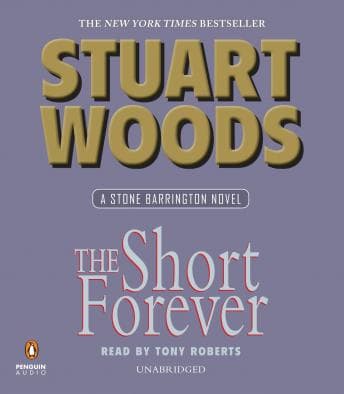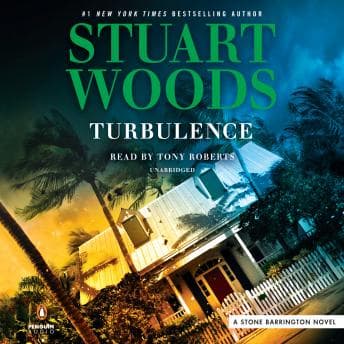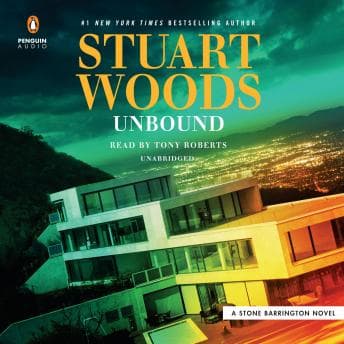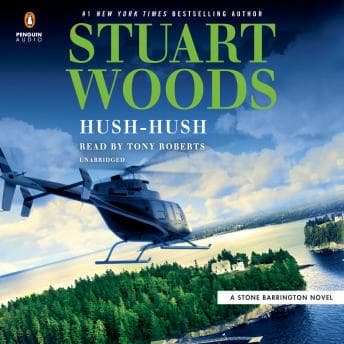

I should probably confess something upfront. I've never been a Stuart Woods devotee. My literary snob credentials run deep—I teach Faulkner and Fitzgerald to teenagers who'd rather watch paint dry. But here's the thing: sometimes you're stuck at a faculty development session about "synergizing student outcomes" and you need something that moves. Something that doesn't require you to parse subordinate clauses or contemplate the human condition.
So there I was, pretending to take notes on assessment rubrics while Stone Barrington dealt with anonymous threats in my earbuds. And you know what? It worked. Mostly.
The Comfort Food Problem
Look, I've read enough reviews calling the Stone Barrington series "predictable" to know what I was getting into. This is book... forty-something? Fifty? At this point, Woods was churning these out like my students churn out five-paragraph essays—competent, formulaic, occasionally surprising you with a good line. The anonymous villain with "cutting-edge tactics" is about as mysterious as my grading rubric. Stone will figure it out. Stone always figures it out. He'll also sleep with someone new, drink expensive scotch, and deploy his network of powerful friends.
But here's where I'll defend this book against its critics: sometimes you want the formula. Sometimes you want to know the good guy wins without having to emotionally invest in whether he will. Secret Garden operates on similar autopilot—you know exactly where it's going, and that's the appeal. Woods keeps everything above water. Nothing hidden, nothing to excavate. And at 7 hours 29 minutes, it doesn't overstay its welcome.
Tony Roberts: The Narrator Paradox
Here's where things get complicated. Tony Roberts has been voicing Stone Barrington since audiobooks came on cassette tape—and some listeners treat him like the definitive interpretation. "I will only listen to his books if they are read by Tony Roberts," one devotee wrote. I get it. There's comfort in consistency.
But—and I say this as someone who believes great narration is performance art—Roberts has developed some habits that work against the material. His men sound ancient. Not distinguished-older-gentleman ancient, but creaky-needs-a-nap ancient. And his women? They sound, frankly, unintelligent. There's a tech-savvy love interest in this book who's supposed to be sharp and capable, and Roberts reads her like she's confused about how doors work.
The bigger problem: I kept losing track of who was speaking. In a thriller built on dialogue and scheming, that's not a minor issue. I had the opposite experience with Into the Drowning Deep—the narrator there nailed every character distinction, which made the ensemble cast actually trackable. Roberts doesn't always land his pauses in the right spots, and in a book this dialogue-heavy, that matters.
Worth Pausing the Faculty Meeting For?
Honestly? Sort of. If you're already a Stone Barrington fan, Roberts is your guy and you'll forgive his quirks. If you're new to the series, maybe start with an earlier entry where the formula felt fresher. This one's comfort food—satisfying if you're hungry for exactly this, disappointing if you wanted something with more texture.
My students would hate this. They'd call it "boomer fiction" and ask why Stone doesn't use TikTok to catch the villain. (They'd have a point about the tech stuff feeling dated, actually.) But I didn't hate it. I finished it. I even looked forward to my next boring meeting so I could keep listening.
That's not nothing.
Who Gets an A, Who Gets a D
This is for: Longtime series fans, people who want plot-forward entertainment during chores or commutes, anyone who needs something engaging but not demanding.
Skip if: You're a narration purist, you want complex character work, or you've never read Stuart Woods and want to start with his best (go find Chiefs, the Edgar winner that started it all).
I listened at 1.0x because the author chose those words—but honestly, 1.25x wouldn't hurt here. The pacing could use the boost, and Roberts' delivery is deliberate enough to handle the speed. My one concession to modernity.