
"The challenge is to distinguish sharply between the people who told lies and the people whose only offence was to believe them."
That line hit me somewhere around hour two, sitting in the parking lot of a client's office in north Austin, fifteen minutes early for a meeting and not wanting to pause. Because that distinction - between the liars and the lied-to - is something I spent years thinking about in a completely different context. In the military, bad intelligence gets people killed. In civilian life, bad information just gets people angry. But the mechanism is the same: someone sells a narrative, and people buy it because it confirms what they already feel.
A Radio Host Without the Call-In Button
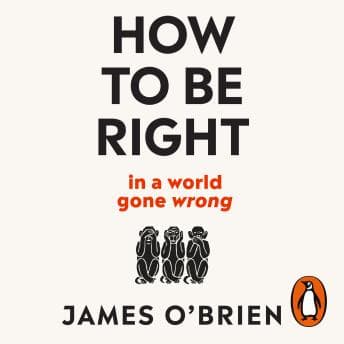
James O'Brien is an LBC presenter - British talk radio, for those unfamiliar - and this audiobook is essentially his method laid bare. How he takes callers who are absolutely certain that immigrants are destroying the NHS or that Muslims bear collective responsibility for terrorism, and walks them backward through their own logic until they can't find the foundation they thought was there.
Here's what works: O'Brien doesn't shout. He doesn't condescend. He asks questions. Specific, surgical questions. "Which EU regulation, specifically, are you upset about?" And then silence. The caller fumbles. The argument collapses under its own weight. It's an interrogation technique, frankly - one I've watched skilled intelligence officers use. You don't attack the conclusion. You attack the premises. Let the subject do the demolition work themselves. That methodology - using precise, targeted questioning to dismantle a narrative from the inside - reminded me of the forensic approach in Truths We Hold: An American Journey, where the argument is built through accumulated specifics rather than sweeping declarations.
The book moves through topics like chapters in an ops manual - Brexit, immigration, Islam, feminism, political correctness, the nanny state. Each one follows a similar pattern: here's the popular grievance, here's where that grievance actually comes from (usually tabloid media), and here are the questions that expose the gap between feeling and fact.
Where the Armor's Thin
At just under five hours, this is a quick listen. And that's both a strength and a limitation. O'Brien is sharp, he's funny, and his RP delivery has this calm precision that reminds me of a British officer I worked with in Helmand - the kind of guy who could tell you your plan was fatally flawed while making it sound like a polite suggestion over tea.
But the format starts to feel repetitive by hour three. Each chapter runs a similar playbook: anecdote from the show, dismantling of the caller's position, broader point about media manipulation. It works brilliantly the first four or five times. By chapter eight, you're seeing the pattern and the surprise is gone. Like watching someone run the same tactical drill - effective, but you already know the outcome.
The other issue - and O'Brien would probably acknowledge this - is that he's preaching to a choir that's already singing. If you already agree with him, this book will make you feel validated and maybe better equipped for pub arguments. If you don't agree with him, you're probably not buying this audiobook. The title itself - How To Be Right - isn't exactly an invitation to open dialogue. It's a declaration.
I've seen this dynamic in briefing rooms. The best intelligence analysts present information and let commanders draw conclusions. The less effective ones tell you what to think. I kept thinking about Demon in the Freezer: A True Story, which handles a similarly charged subject by trusting the reader to arrive at the horror on their own - Preston never tells you what to feel, and it hits harder for it. O'Brien sits somewhere in between - his questions are genuinely good, but the framing makes it clear there's only one acceptable answer.
Author-Narrated and It Actually Works
Since this is basically O'Brien doing what O'Brien does on radio minus the callers, having him read his own book makes complete sense. His timing is excellent - comedic pauses land, the frustration in his voice when recounting particularly absurd caller arguments feels authentic because it IS authentic. No actor could replicate the specific exasperation of a man who's had the same conversation with different people five thousand times.
No music, no sound effects, no production tricks. Just O'Brien talking. For a book this short and this argument-driven, that's the right call. Anything else would've been a distraction.
I listened at my usual 1.25x and it worked fine. His pacing is already pretty brisk - radio training, I'd guess.
Who Gets Issued This Book
If you're a fan of O'Brien's radio work, this is pure, uninterrupted James without commercial breaks or traffic updates. You'll love it. If you're interested in the mechanics of how media narratives shape public opinion - regardless of your politics - there's real value here in the methodology. The specific questions he uses to unpack assumptions are genuinely useful tools.
Skip it if you're looking for deep policy analysis. This isn't that. It's a framework for conversation, not a comprehensive argument. And if you're on the other side of these issues, honestly, this book isn't trying to reach you - it's trying to arm the people who'll argue with you at Christmas dinner.
Ranger slept through this one, which is fair. No explosions. But I didn't.
Debrief
A tight, well-executed field manual for dismantling bad arguments. Not deep enough to be essential, not long enough to overstay its welcome. Worth your time on a short commute week, but at under five hours, wait for a sale unless you're already an O'Brien devotee.






![Steve Jobs [unabridged audiobook] audiobook cover](/_next/image?url=https%3A%2F%2Fcovers.audiobooks.com%2Fimages%2Fcovers%2Ffull%2F9788499923406.jpg&w=1920&q=75)