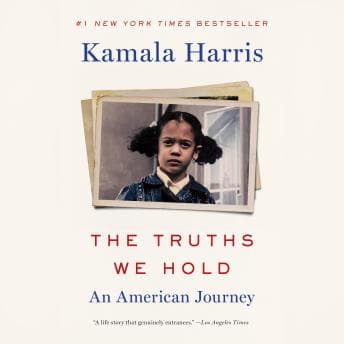

This book made me miss my abuela so hard I had to pause three times just to breathe.
I was deep into a logo redesign at 2 AM, cats asleep on the couch, when Kamala Harris started talking about her mother Shyamala. About how this tiny woman from India would march her daughters to civil rights protests, how she'd tell young Kamala "You may be the first to do many things, but make sure you're not the last." And I just... I had to put my stylus down. Because that's exactly the kind of thing my abuela would say, in her own way, mixing Spanish and English and fierce love.
When Her Voice Cracks, So Do You
Here's the thing about author-narrated memoirs—they can go either way. Sometimes you get someone reading their own words like they're presenting a quarterly report. But Harris? She reads this like she's sitting across from you at a kitchen table, coffee getting cold because the conversation matters more.
The warmth in her voice when she talks about her mother's cancer research, the slight edge when she describes fighting the big banks during the foreclosure crisis, the way she almost laughs when recounting her mother's matter-of-fact parenting style—it's intimate in a way a professional narrator couldn't replicate. There's this moment where she's discussing her work as DA prosecuting child abuse cases, and her voice gets quieter, more measured. You can hear the weight of those cases still sitting on her shoulders.
No fancy production here. No music, no sound effects. Just her voice for nine and a half hours. And honestly? That's all it needs.
The Daughter of Immigrants Thing Hit Different
Look, I'm a first-gen Mexican-American who grew up watching my family navigate systems that weren't built for us. So when Harris talks about her Jamaican father and Indian mother meeting at a Berkeley civil rights protest, about being bused to school as part of desegregation, about code-switching between worlds—yeah. Yeah, I felt that in my bones.
She doesn't sanitize her story. She talks about the complexity of being a prosecutor in communities that have every reason to distrust law enforcement. About the criticism she faced from both sides—too soft for conservatives, too cop for progressives. There's this section where she explains her "smart on crime" philosophy, and you can hear her genuinely wrestling with the contradictions, not pretending they don't exist.
The book covers a lot of ground—healthcare, immigration, the opioid crisis, her Senate work. Sometimes it reads more like policy primer than memoir, which might lose you if you're here purely for the personal stuff. But even the wonkier sections have this thread of her mother's voice running through them: "What are you going to do about it?"
Content Warning, Corazón
I need to flag this because it caught me off guard at 3 AM: there are discussions of child abuse cases, domestic violence, sexual assault, and police brutality. She doesn't sensationalize any of it, but she doesn't look away either. If you're in a fragile headspace, maybe save this for when you're feeling more grounded.
Who Needs This (And Who Should Skip)
If you want pure escapism, this ain't it. If you're looking for a political takedown or campaign manifesto, you'll be disappointed—it's more personal than that. But if you're someone who finds hope in watching people try to fix broken systems from the inside? If you're a daughter of immigrants who needs to hear someone else navigate that particular tightrope? If you just want to spend nine hours with someone who sounds like she actually believes what she's saying? This one's for you.
I finished it while the sun was coming up, Frida finally awake and demanding breakfast, and I just sat there for a minute thinking about my abuela. About all the women who came before us who didn't get to be first at anything, who made sure we wouldn't be last.
Abuela Would've Had Opinions
She would've loved this book, honestly. Would've clutched her rosary at some parts, nodded fiercely at others, probably yelled at Kamala through the speakers like she used to yell at telenovela characters. "¡Eso, mija!"
I cried twice. Once for Harris's mother, once for mine. Sometimes the books that matter most are the ones that make you miss the people who shaped you. Titanic did that to me too—different story, same ache for people we've lost.
My heart. MY HEART.





![Steve Jobs [unabridged audiobook] audiobook cover](/_next/image?url=https%3A%2F%2Fcovers.audiobooks.com%2Fimages%2Fcovers%2Ffull%2F9788499923406.jpg&w=1920&q=75)