
Can a political memoir written in first person actually work when someone else reads it?
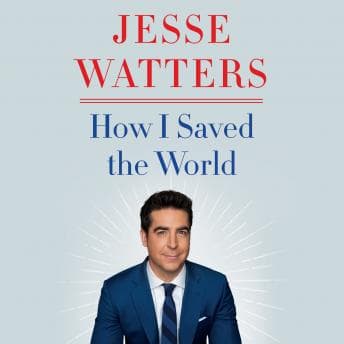
That's the question I kept turning over during my drive home after a brutal night in the trauma bay - three GSWs, a motorcycle vs. guardrail, and a code that went sideways before we pulled it back. I needed something light. Something that wasn't going to make me feel anything heavy. So I queued up Jesse Watters' How I Saved the World thinking it'd be the audiobook equivalent of leaving Fox News on in the break room - familiar background noise with occasional laughs.
And look, it kind of is that. But the narrator situation created a problem I couldn't unhear.
When the Voice Doesn't Match the Swagger
Here's the thing about this book - Watters wrote it dripping with his specific brand of self-aware smarm. The whole premise is built on his persona: the guy who ambushes people on beaches with cameras, who leans into the smirk, who knows he's being ridiculous and wants you to know he knows. That energy requires his voice. Larry Wayne delivers clean, professional narration - good audio quality, clear enunciation, steady pacing. But it's like watching someone else do your friend's impression of themselves. The sarcasm lands flat because Wayne reads the jokes straight. When Watters describes himself as holding "the key to the future" or suggests his book might win a Nobel Prize in chemistry, that needs a wink in the delivery. Wayne gives it a news anchor read instead.
I kept comparing it to how political audiobooks work when the author narrates - think Tina Fey's Bossypants or Trevor Noah's Born a Crime, where the performance IS the content. Those books wouldn't survive a different narrator either. This is the same problem. The material is built for a specific voice, and that voice isn't here. It's the same reason I bounced hard off Selected Short Stories by F. Scott Fitzgerald on audio once - some voices are so tied to their prose style that any other human reading them creates this uncanny valley effect where you're constantly aware of the gap.
The Hamburgers vs. Breadlines Chapter (and Other Watters-isms)
Content-wise, you're getting exactly what you'd expect from a Watters book. He bounces between actual memoir beats - working his way up at Fox, the early O'Reilly Factor ambush segments, tagging along on Air Force One - and political commentary sections where he outlines what he sees as the left's failures. The memoir parts are genuinely entertaining. His description of being a basement-level Fox minion doing grunt work before getting his shot on camera has real self-deprecating energy. The political manifesto sections read more like extended monologues from his show, which - depending on where you sit - is either the whole point or the whole problem.
I'm not here to review the politics. I'm here to tell you whether it works as an audiobook. And it's... fine? At 9 hours and 26 minutes it's not asking for a massive time commitment. The chapters move quick. But there's a sameness to the tone that made my attention drift during the middle stretch, somewhere around hour five when the commentary sections start outnumbering the personal stories. I caught myself thinking about whether I'd charted Mrs. Rivera's second IV push correctly instead of listening. That's never a great sign.
Who This Is Actually For (Be Honest With Yourself)
If you're already a Watters fan - you watch his show, you follow his segments, you think the beach interview bits are peak comedy - you'll enjoy this. It's fan service, and there's nothing wrong with fan service. The book delivers his worldview with his signature confidence and his stories from inside the Fox machine are genuinely interesting regardless of your politics.
If you're not already in his camp, this isn't converting anyone. And if you're somewhere in the middle, the narrator gap might be the thing that tips you. Because without Watters' actual delivery, the humor reads as someone telling you about a funny person rather than being in the room with one.
Carlos is conservative, watches Watters sometimes. I told him about the book. He said, "Why didn't Jesse just read it himself?" Exactly, Carlos. Exactly.
Night Shift Rx
This is comfort food for a specific audience - like how my mom's lumpia is perfect for our family but my coworker Jenny once called it "interesting" with that face people make. You know the face. If Watters is your lumpia, dig in. If not, there are better political memoirs to spend a credit on, ones where the author actually shows up to read their own jokes. My mom would have opinions about this book's politics but would respect that he wrote it himself instead of having someone ghostwrite it. (She still thinks I should've been a doctor, but she respects the hustle.)