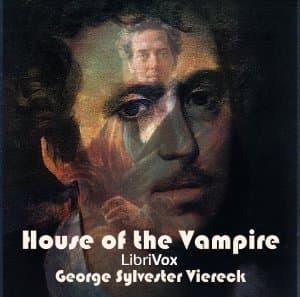

"The soul of the artist is the finest prey." That line hit me somewhere around the forty-minute mark, and I had to pull it back fifteen seconds just to sit with it. I was cleaning my Sig P226 at the kitchen table - Linda was already asleep - and Ranger lifted his head off the floor like he felt it too.
Let me cut to the chase: this isn't a vampire book. Not really. There are no fangs, no blood, no garlic. Published in 1907, George Sylvester Viereck wrote something genuinely weird for its era - a story about a charismatic older writer named Reginald Clarke who feeds on the creative output of younger artists. He doesn't drain their blood. He drains their ideas, their manuscripts, their very ability to create. And the young writer Ernest Doling walks right into it like a butter bar walking into his first ambush.
The Predator Who Steals Your Words Instead of Your Blood
Here's what's interesting about this thing. Viereck was 23 when he wrote it, and there's a raw autobiographical anxiety bleeding through every page - this fear that someone more powerful, more established, could simply absorb your talent and leave you hollowed out. Ernest brings his play to Clarke's Manhattan townhouse, and piece by piece, Clarke incorporates Ernest's ideas into his own work. The kid can't even prove it because the theft happens at some psychic or subconscious level. It's gaslighting before we had a word for it.
The book's short - under three hours - and it doesn't waste your time with setup. Viereck drops you into the literary circles of early 1900s New York, where young artists orbit around Clarke like moths around a very well-dressed flame. What got me was how modern the manipulation feels. Clarke isolates Ernest from his girlfriend Ethel, controls his social circle, alternates between flattery and dismissal. The slow erosion of someone's sense of self under that kind of pressure is something What Alice Forgot also gets uncomfortably right, though it comes at identity loss from a completely different angle. I've seen this scenario play out in real life - not with vampires, obviously, but with toxic leadership. The commander who takes credit for every good idea his staff produces while they burn out underneath him? That's Reginald Clarke in digital camouflage.
The prose is ornate - we're talking 1907, so brace yourself for some flowery passages about Art with a capital A - but there's a genuine tension underneath. When Ernest finally realizes his masterwork has been stolen, not physically but psychically consumed, the helplessness is palpable.
Elizabeth Klett and the LibriVox Question
So here's where I need to be straight with you. This is a LibriVox recording, which means it's a volunteer production. Elizabeth Klett narrates the whole thing solo, and she does a creditable job with what is essentially a very dialogue-heavy, very theatrical text. Her reading is measured and clear - she treats the material with genuine respect rather than rushing through it like some LibriVox readers do. The male character voices aren't dramatically differentiated - Clarke and Ernest sometimes blend together in conversation - but she compensates with pacing and emphasis that keeps you tracking who's speaking.
The audio quality is clean for LibriVox but won't match a professional studio recording. No background hiss that I noticed, no jarring edits. At 1.25x speed this thing flies by in about two hours and fifteen minutes, which felt right for the material.
Who This Is Actually For
Worth your time? Here's the debrief. If you're expecting Bram Stoker, you'll be disappointed. If you're expecting action, you'll be bored stiff. But if you've ever been fascinated by the psychology of manipulation - how a narcissist can make you doubt your own reality - this 117-year-old novella has something to say.
The author clearly did their homework on the artistic temperament, probably because he was living it. Viereck himself became a controversial figure - he was a German propagandist during both World Wars and eventually went to federal prison for it. Knowing that adds an uncomfortable layer to a book about a man who bends others to his will through sheer force of personality.
Skip this if you need your vampires with fangs and capes. Pick it up if you're a horror completist who wants to see what psychic vampirism looked like before it became a trope. At under three hours and available free through LibriVox, the investment is minimal. It's an odd little artifact from a complicated author, and it stuck with me more than I expected.
Ranger's Sleeping, So That's My Cue
Not a must-listen, but a genuine curiosity. The kind of book you mention at a dinner party and nobody's heard of it, which is half the fun. It's free, it's short, and it'll make you think twice about the next charismatic person who tells you they love your ideas.