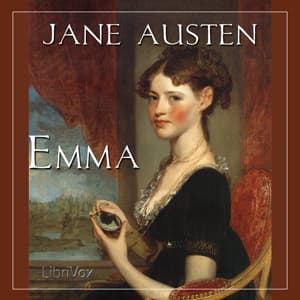

I'll admit something. I've taught Emma probably fifteen times over my career, and somewhere around year ten, I started dreading it. Not because Austen isn't brilliant—she is—but because grading essays about Emma Woodhouse's "journey of self-discovery" had drained every ounce of joy from the text. The words on the page started feeling like furniture I'd bumped into too many times.
So I did something I should've done years ago. I let someone else read it to me.
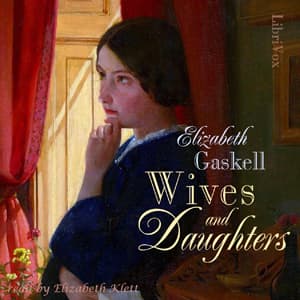
Elizabeth Klett Gets It
Here's the thing about narrating Austen: you can't just read her. The prose looks simple on the surface, but there's this constant undercurrent of irony, this wink Austen gives the reader while her characters remain blissfully unaware of their own absurdity. Miss it, and you've got a pleasant drawing-room drama. Catch it, and you've got comedy gold.
Elizabeth Klett catches it. Every single time.
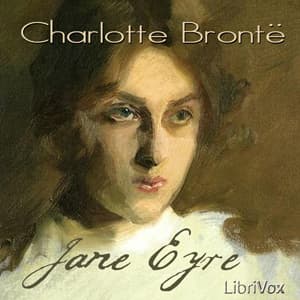
She does the same thing with Jane Eyre, finding all those layers Brontë hides in plain sight.
Her Emma is confident without being insufferable—which is harder than it sounds, because Emma is insufferable for most of the novel, and that's the point. Klett threads this needle by letting just enough self-satisfaction creep into Emma's voice that you understand why everyone in Highbury defers to her, while also hearing the naivety underneath. When Emma congratulates herself on her matchmaking schemes, Klett delivers the lines with such earnest pride that you're already wincing, knowing the disaster that's coming.
And then there's Miss Bates. Oh, Miss Bates. The woman who never stops talking, whose monologues spiral through tangents about her mother's health and Jane Fairfax's letters and the quality of the apples and back again without taking a breath. In the hands of a lesser narrator, these sections would be torture. Klett makes them delightful—breathless and scattered and somehow endearing. You understand exactly why Emma finds her exhausting, and also why Emma's cruelty to her at Box Hill lands like a gut punch.
(My students always miss why that scene matters. They're too busy checking their phones. But listening to it? With Klett's wounded pause after Emma's cutting remark? It hit different, as they say.)
Fifteen Hours at Regency Pace
I won't lie to you—this is nearly fifteen hours of audiobook, and the plot moves at the pace of a Regency-era carriage on a muddy road. If you need action, if you need things to happen, you're going to struggle. I listened to most of this while grading midterms, and there were moments where I'd look up and realize I'd been hearing about the preparations for a dinner party for twenty minutes.
But here's what I've come to appreciate, hearing it fresh: the slowness is the substance. Austen isn't interested in what happens. She's interested in what people think is happening, and how spectacularly wrong they are. Emma spends the entire novel constructing elaborate theories about who loves whom, and she's wrong about literally all of it. The pleasure is watching her confidence collide with reality, one excruciating revelation at a time.
Klett's pacing honors this. She doesn't rush through the drawing-room conversations to get to the "good parts" because the drawing-room conversations are the good parts. The subtle shifts in her tone—the way Mr. Knightley's voice carries this barely-suppressed frustration whenever Emma's schemes come up, the way Frank Churchill sounds just a little too charming, a little too smooth—these are the clues Austen planted, and Klett makes sure you hear them.
I caught things I'd never noticed teaching this book. The way Jane Fairfax's reserve sounds less like shyness and more like someone desperately holding a secret. The genuine warmth in Mr. Woodhouse's endless fussing about drafts and gruel. Mrs. Elton's voice—pompous and social-climbing and completely oblivious to how everyone else in the room is tolerating her. Klett gives each of them space to be fully realized, not just plot devices.
Who Should Listen (And Who Should Skip)
If you've bounced off Austen before because the language felt dense or the pacing felt glacial, honestly? This audiobook might be your way in. Hearing the rhythms of the prose, the way Austen's sentences build and land, makes the style feel natural rather than antiquated. Klett's delivery is warm without being precious—she trusts the material and trusts you to keep up.
But if you need plot momentum, if slow-burn character comedy isn't your thing, fifteen hours is a lot to ask. Sample the first chapter. If Miss Bates's rambling makes you smile, you're in good hands. If it makes you reach for the skip button, no shame.
For my fellow English teachers, for the Austen devotees, for anyone who's ever loved Pride and Prejudice and wondered if the other novels hold up: yes. They do. Sense and Sensibility is another one that absolutely holds up, by the way. And Elizabeth Klett's narration reminded me why I fell in love with this stuff in the first place, before the grading and the lesson plans buried it.
Worth pausing the faculty meeting for. (Sorry, Principal Martinez. Still not sorry about Middlemarch, though.)