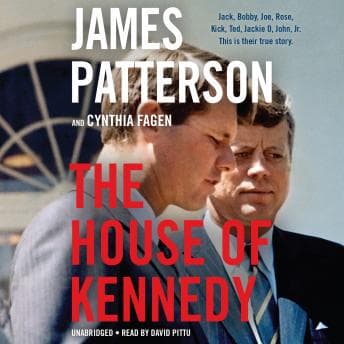

What is it about tragedy that makes us lean in closer instead of looking away?
I've been thinking about this a lot since finishing House of Kennedy. I was designing wedding invitations—ironic, right?—when the chapter about Jackie's bloodstained pink suit came on. I had to stop working. Just sat there with my stylus hovering over my tablet while David Pittu's voice walked me through the most public grief in American history.
My abuela used to talk about where she was when JFK was shot. She was seventeen, newly arrived in Texas, barely speaking English, and she remembers the Anglo women at the factory where she worked crying together. "Even the mean ones," she'd say. "Todos lloraban." Everyone cried. I think about that when I listen to books about the Kennedys—how this one family became everyone's family, for better and worse.
The Voice Carrying All That Weight
David Pittu has this quality I can only describe as steady warmth. Like a really good history teacher who actually cares whether you're following along. He doesn't sensationalize the tragedies—and look, there are SO many tragedies—but he also doesn't flatten them into Wikipedia entries. When he gets to the deaths (and there are so many deaths), his voice carries the appropriate gravity without tipping into melodrama.
Here's the thing though: the female voices? Not great. I noticed it especially during Jackie's sections. It pulled me out a bit, like watching a movie where the dubbing is slightly off. Not a dealbreaker for me, but if you're sensitive to that kind of thing, consider yourself warned.
The narration works best when it's just Pittu being Pittu—clear, engaging, almost soothing even when the content is anything but. I listened at my usual 1.0x because rushing through Kennedy history feels disrespectful somehow? Like these were real people who really suffered and really died, often young, often violently.
Patterson Does What Patterson Does
Okay, so here's where I have to be honest. James Patterson isn't writing literary biography here. He's doing what he always does—making complicated things accessible, keeping the pages (or in this case, the audio) moving. If you've read other Kennedy biographies, you're probably not learning anything groundbreaking. This is Kennedy 101, not a PhD seminar.
But that's not necessarily a criticism? Sometimes you want the overview. Sometimes you want someone to organize the chaos of this family's history into something digestible. The dual family mottos Patterson keeps returning to—"To whom much is given, much is expected" and "Win at all costs"—become almost like a drumbeat. You start seeing how those competing values shaped everything, from Joe Sr.'s ruthless ambition to Bobby's evolution into something more compassionate.
I ugly-cried during the Bobby Kennedy section. Didn't expect that. Something about the way Patterson frames his transformation from his brother's enforcer to his own kind of leader, and then—gone. Just like that. In a hotel kitchen. I was making coffee when that chapter hit and I just... stood there. Frida (my cat) looked at me like I'd lost my mind.
When You Already Know the Endings
The book is structured chronologically, which makes sense but also means you know what's coming. That's the weird thing about Kennedy history—we all know the endings. We know about Dallas. We know about the Ambassador Hotel. We know about the plane crash and the skiing accident and Chappaquiddick and all of it.
So the tension isn't "what happens next" but "how does Patterson frame what we already know?" And honestly, he does a decent job. The "novelistic style" People magazine mentioned is real—it reads more like a story than a reference book, even if some listeners found it too reference-y. Your mileage will vary depending on how much Kennedy history you've already consumed.
The new bonus chapter brings things more current, which I appreciated. The Kennedy legacy didn't end with the assassinations, and Patterson seems genuinely interested in how later generations have carried (or struggled with) that weight.
Would Abuela Have Liked This?
You know what? Yeah, I think she would have. She loved stories about powerful families—the drama, the glamour, the inevitable falls. The Kennedys are basically an American telenovela, except real. The beautiful young president. The grieving widow in her pink suit. The brothers falling one by one. The scandals and the comebacks and the curse that may or may not be real.
Pittu's narration would have worked for her—clear enough to follow, warm enough to trust. She would have cried at the same parts I did. She would have clicked her tongue at the scandals and said "ay, pobrecitos" at the deaths. That same complicated family grief—the kind where you mourn people you never met—hit me hard in I'm Glad My Mom Died, though from the opposite angle.
This isn't a perfect audiobook. The female voice issue is real, and if you're a Kennedy scholar, you might find it too surface-level. But for a 10-hour listen that covers an entire dynasty with genuine emotional weight? It works. It's a good commute book, a good "doing dishes" book, a good "I want to feel something while I design someone's logo" book.
Listen if: you want an accessible, emotionally engaging overview of America's most tragic dynasty—especially if you're new to Kennedy history or want something to feel alongside. Skip if: you've already read serious Kennedy biographies and need new revelations, or if imperfect female voice work is a dealbreaker.
Abuela Would Have Loved This One
My heart. MY HEART. That's what I kept thinking. All that promise. All that tragedy. All that complicated, messy, very American ambition. The vibes are melancholy but not hopeless—more like sitting with someone who's telling you about people they loved and lost.
Abuela would have loved this one.