
Pulitzer winners really need an editor. There, I said it.
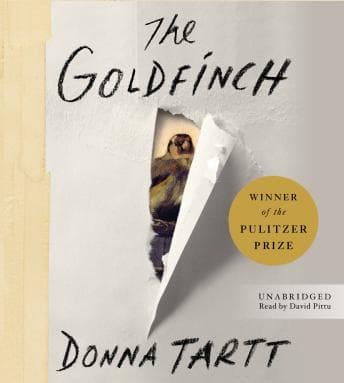
At 32 hours and 24 minutes, The Goldfinch asks for the kind of commitment I usually reserve for teaching juniors how to write a thesis statement without using the phrase "since the dawn of time." I started this one on a gray walk by the lake with Denise, kept going while half-listening to a faculty meeting about assessment data (Principal Martinez, I was absolutely focused), and finished it late at night with a stack of essays leaning at me like a threat. And here's the annoying part: Donna Tartt earns most of that length.
Because this isn't just a long novel about grief. It's a long novel about what grief does when it curdles into possession, secrecy, self-medication, and the very human habit of confusing pain with identity.
The explosion, the painting, and the terrible luck of surviving
The opening museum explosion is one of those scenes that lodges itself in your nervous system. Theo Decker survives. His mother does not. And from that moment on, the book keeps asking a brutal question: what does a kid do with the guilt of being the one left standing?
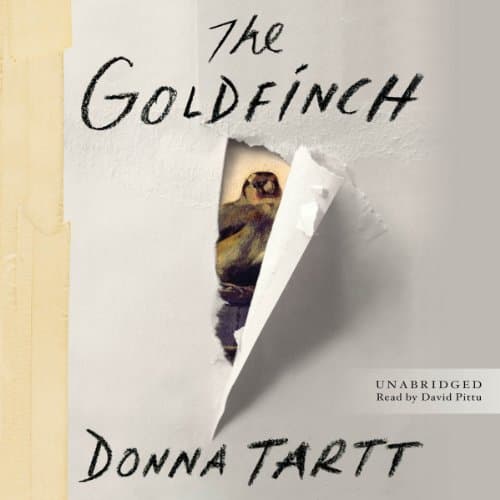
Theo's answer - though he barely knows he's answering it - is to hold onto the small painting of the chained bird, The Goldfinch, as if beauty itself might substitute for love, or order, or absolution. That's what the author is really saying here. The painting matters, yes, as plot engine and symbol. But more than that, it becomes Theo's private altar. His crime. His comfort object. His little glowing excuse for not letting the past stay buried.
Tartt is very good on social dislocation. Theo moving from trauma into the immaculate Park Avenue home of his wealthy friend feels almost obscene in its contrast - polished surfaces, expensive rooms, people who don't know how to speak to a grieving boy without sounding like they've been coached by a magazine article. Then the novel swings in a completely different direction, toward dust, danger, addiction, and the cramped moral fog of the antiques world and the criminal art trade. If you loved The Secret History, this is its spiritual successor - less collegiate performance, more bruised soul wandering through expensive ruins. Honestly, the closest thing I've found to that same ache of longing and displacement in recent audio is Giver of Stars, which trades the antiques world for rural Kentucky but keeps that same bruised insistence on holding onto the thing that gives your life shape, even when it costs you.
And Theo himself is not built for easy affection. That's part of why the book works. He lies. He drifts. He clings. He keeps making choices that made me mutter, alone, in the kitchen, "Come on, kid." My students would hate this. I love it. Because Tartt understands that damage doesn't make people poetic. Usually it just makes them repetitive.
David Pittu knows when not to show off
This performance won an Audie, and after spending 32 hours with it, I get why.
David Pittu's smartest choice is Theo. At 13, Theo sounds young without turning into a caricature of boyhood; later, Pittu lets the voice harden and fray almost imperceptibly, which is exactly right for a character growing older without growing sturdier. That kind of control matters in a novel this long. If he'd pushed too hard emotionally, the whole thing would've collapsed into melodrama by hour six.
He also manages a huge cast with real clarity. Theo's mother has warmth without sentimentality. The wealthy Manhattan set carry that polished confidence that sounds expensive even in audio. And Boris - chaotic, magnetic, half-feral Boris - comes through as one of the performance's great pleasures, even if some listeners are right that the accent leans more broadly Eastern European than the book's Australian-Russian mix suggests. Minor issue. Still. It's noticeable if you're listening closely.
But Pittu sells Boris's energy, and energy matters more than passport accuracy here. Boris should sound like trouble with a grin. He does.
What impressed me most, though, was Pittu's handling of the darker material: Theo's addiction, the shabbier criminal dealings, the scenes where panic starts to press in around the edges. He doesn't overplay the suffering. He tightens the tempo just enough that the tension starts humming. The narrator understands that pause is punctuation. In a book obsessed with memory and self-justification, that restraint is a gift.
No music. No sound effects. Just a clean solo performance that trusts the prose. Good. This book would've been cheapened by production gimmicks.
Where it drags, and why I still think it's worth your credit
Now for the honest teacher note in the margin: yes, parts of this audiobook drag.
Not all slowness is failure - sometimes the prose deserves to be savored, and Tartt can write a sentence that makes you stop walking and stare at the lake like you've just remembered your own adolescence. But there are stretches where Theo's despair, dependency, and circular thinking become deliberately exhausting. Deliberately, I think. Still exhausting.
So if you need constant plot movement, this may feel like being trapped at a very elegant dinner party with a brilliant person who takes too long to answer simple questions. The redemption arc is also not neat. Some listeners will want more moral clarity, more firm landing, more proof that all this suffering adds up to something clean. It doesn't. Life rarely does. This reminds me of what Hemingway said about how we are all broken and some grow strong at the broken places - though Tartt is more interested in the people who stay broken and learn to decorate the cracks.
This is not a background audiobook. Absolutely not. You can fold laundry to a thriller. You cannot half-listen to Tartt describing the emotional logic of an obsession and expect to keep up. Best taken in dedicated stretches, maybe on long walks, maybe on a road trip, maybe at night when the house is finally quiet and you're willing to let a book brood at you.
I listened at 1.0x. Of course I did. The author chose those words, and Pittu knows how to place them.
Who should listen (and who should skip)
Pick this up if you like character-driven novels with a big nineteenth-century heart hiding inside a modern story - fate, class, longing, vice, beauty, consequence. Pick it up if you can handle grief, addiction, and a protagonist who can be maddeningly passive until he suddenly isn't.
Skip it if you want brisk plotting, clean catharsis, or a tidy moral ledger.
Worth pausing the faculty meeting for.