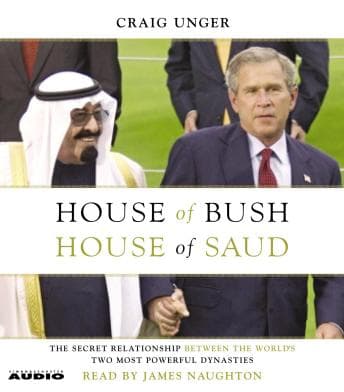

I'm going to start with a complaint. This book is only six hours and sixteen minutes long, and that's a problem. Not because it's bad - because Craig Unger is trying to untangle thirty years of financial entanglements between two of the most powerful families on the planet, and six hours feels like trying to teach The Great Gatsby in a single class period. You can do it, but you're leaving bodies on the floor.
I was at the kitchen table, supposedly helping Denise plan our summer vacation, when I started this one. By hour two, I was staring at the wall while she waved Airbnb listings in front of my face. She finally said, "Whatever you're listening to, you look like you just read your students' essays on Lord of the Flies." She wasn't wrong. This book has that same queasy feeling - civilization peeling back to reveal something ugly underneath.
The Money Trail Is the Plot
Let's talk about what Unger is really saying. This isn't a conspiracy theory book, even though the subject matter practically begs for that treatment. What Unger does - and does well - is trace a paper trail. He starts in the mid-1970s when the Bush family first began cultivating relationships with Saudi elites, and he follows the money forward through oil ventures, defense contracts, and the Carlyle Group. The structure is chronological, methodical, almost prosecutorial. If you saw Fahrenheit 9/11, you've encountered some of this material, but Moore was building a polemic. Unger is building a case. There's a difference.
The most unsettling section involves the post-9/11 Saudi airlift - 140 Saudis, including members of the bin Laden family, flown out of the country while the rest of us couldn't get on a plane to visit our mothers. Unger doesn't scream about this. He just lays it out. The names, the flight manifests, the timeline. The restraint is what makes it devastating. This reminds me of what Hemingway said about the dignity of the iceberg - what's beneath the surface carries the weight.
Where the book wobbles is in its middle stretch, roughly hours three through four, where Unger catalogs business deal after business deal. The connections matter, but the sheer density of names - Saudi princes, Texas oilmen, intelligence operatives - starts to blur together. I found myself rewinding more than once, not because the writing was unclear, but because there's simply too much connective tissue for a book this short. This needed either another two hours of breathing room or a tighter editorial hand to prioritize which deals mattered most.
James Naughton Knows What He's Holding
Naughton's narration is the right call for this material. He reads like a veteran journalist presenting evidence to a grand jury - measured, clear, and just barely restraining his own alarm. His pronunciation of Arabic names is clean and confident, which matters more than you'd think in a book where you're tracking dozens of Saudi royals. He never stumbles over "Bandar bin Sultan" or treats unfamiliar names like speed bumps.
The narrator understands that pause is punctuation. When Unger drops a particularly damning connection - say, the timing of a Bush family business meeting relative to a geopolitical event - Naughton lets the silence do the work. No theatrical gasps, no ominous tone shifts. Just a beat of nothing that lets your brain catch up to what you just heard. That's performance art disguised as restraint.
His one limitation is range, but it's not really a limitation here. This isn't a book that needs character voices or dramatic flair. It needs authority and clarity, and Naughton delivers both without breaking a sweat.
Who Needs This in Their Ears
If you're the kind of listener who devours political nonfiction - Bob Woodward, Jane Mayer, that whole investigative corridor - this is essential context, even twenty years after publication. The patterns Unger identifies didn't stop in 2004. They just got harder to see.
If you need narrative momentum and emotional hooks to stay engaged, this will test your patience. My students would hate this. I love it. But I also acknowledge that loving something doesn't mean it's flawless. The last time I had this split reaction — loving something my students would absolutely bail on — was with Yellow Birds, which asks similar patience of the reader and rewards it in ways that are hard to articulate in a podcast that only my mom reliably downloads.
Skip it if you want both sides carefully weighed. Unger has a thesis and he's not shy about it. He's a journalist, not a referee. That's fine with me - I'd rather someone have a point of view and defend it with evidence than pretend at objectivity.
The Assignment I'd Give My Juniors (If They'd Actually Do It)
This book is twenty years old and it still made me put down my coffee and stare out the window. The prose deserves to be savored, even when - especially when - what it's describing makes you uncomfortable. At six hours, it's a brisk weekend listen, but don't treat it like background noise. This one demands your attention. Worth pausing the faculty meeting for. (Sorry again, Principal Martinez.)