
Sophie was actually napping. Like, truly asleep. Not the fake nap where she lies there singing to herself for 45 minutes. Real nap. And I had this audiobook queued up, ready to go, expecting something light for my precious two hours of freedom.
I was not prepared to ugly-cry into my cold coffee.
When the Author Reads His Own Heart
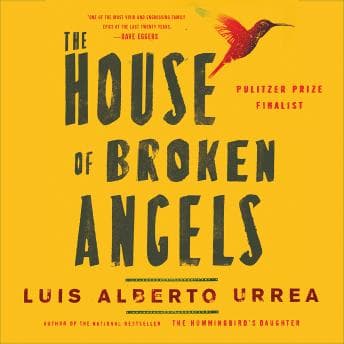
Luis Alberto Urrea narrates his own book, and honestly? It's the only way this story should be experienced. There's this warmth in his voice—like he's sitting across from you at a kitchen table cluttered with family photos, telling you about people he actually loves. Because he does. This book is based on his own family, and you can hear it in every syllable.
His voice has this quality that's hard to describe—immediate, like he's right there in your ear. Some reviewers found it overwhelming, and I get that. It's intimate in a way that takes adjustment. But once you settle in? It's like being welcomed into a family reunion where everyone's talking over each other and someone's always crying or laughing or both. He swings from gorgeous poetic passages to straight-up family chaos without missing a beat. The way he delivers the Spanglish, the nicknames, the inside jokes—no other narrator could have done this.
A Funeral and a Birthday Walk Into a Bar
The setup sounds impossibly sad: Big Angel, the family patriarch, is dying. His mother just died. The weekend is now a funeral AND a final birthday party. But here's the thing—this book is not sad. I mean, it IS sad, devastatingly so, but it's also hilarious and loud and full of so much life that the grief becomes something beautiful instead of crushing.
The opening scene where Big Angel is late to his own mother's funeral had me snort-laughing, which is not a great look when you're trying to be quiet during nap time. And then twenty minutes later I'm wiping my eyes because Urrea writes about family love in a way that just—it cracks you open. There's no other way to say it.
The story bounces between present-day party chaos and flashbacks that explain how this sprawling Mexican-American family ended up in San Diego. Little Angel, the half-gringo brother who never quite fit in, is trying to understand a history he wasn't part of. It's messy and complicated and so real.
The Mom Translation
Okay, here's my honest assessment as someone who listens in 15-minute chunks between breaking up sibling fights and negotiating vegetable consumption:
This book requires attention. Not in a frustrating way, but Urrea's prose is dense with love and detail. Cutting Season: A Novel had that same richness—every sentence mattered, every detail built the world. You can't half-listen while also mentally planning dinner. I paused it during housework and saved it for car time and nap time when I could actually focus. Worth it.
At just under 10 hours, I finished it in about a week and a half. That's fast for me. The pacing moves like a good family party—sometimes you're deep in conversation with one person, sometimes you're watching chaos unfold across the room. It never drags, even when it slows down for the emotional gut-punches.
Content-wise: there's language (lots of it, authentically so), some violence in the backstory, and frank discussions of life and death. Nothing that made me uncomfortable, but it's not a cozy read. It's a real read.
Who Should Grab This (and Who Should Skip)
If you want a tidy plot with a neat resolution, this isn't it. The story IS the family—their jokes, their fights, their legends, their love. If that sounds boring to you, skip it.
But if you've ever sat at a holiday table surrounded by people who drive you crazy but who you'd also die for? If you've ever watched an older relative and suddenly realized you're running out of time to hear their stories? If you want to laugh and cry in the same chapter? This is your book.
My book club would eat this up. (If I ever have time for book club again. Sophie starts preschool in the fall. Maybe then.)
Garage Cry: Totally Worth It
I finished this one sitting in my garage, engine off, crying like an idiot while my kids were inside watching Bluey and probably destroying something. Didn't care. Needed to finish it.
Urrea writes: "All we do, mija, is love. Love is the answer. Nothing stops it. Not borders. Not death."
And yeah. That's it. That's the whole book. That's everything.
Made me call my mom. Made me hug my kids extra long. Made me grateful for my own messy, loud, imperfect family. Paris Apartment: A Novel left me with that same emotional residue—not life-changing plot-wise, but it shifted something in how I saw my own relationships.
Not groundbreaking in the sense of reinventing literature. Groundbreaking in the sense of cracking open your heart and planting something there. Sometimes that's exactly what you need.