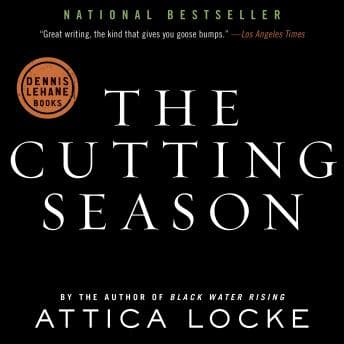

I was grading sophomore essays on The Great Gatsby - you know, the usual parade of "Gatsby represents the American Dream" takes - when Quincy Tyler Bernstine's voice pulled me into Louisiana sugar cane country. And look, I stayed there for twelve hours. The essays could wait. (They always can.)
Attica Locke does something here that I wish more mystery writers understood: history isn't just backdrop. It's the whole point. Belle Vie is a plantation turned tourist attraction, complete with actors in period costume and wedding receptions where people sip champagne on grounds where enslaved people once bled. The murder of a migrant worker forces the estate's manager, Caren Gray, to confront not just a present-day crime but the unexcavated horrors that literally lie beneath her feet.
When Two Mysteries Become One
Locke weaves a contemporary murder investigation with the disappearance of an enslaved man named Jason over a century earlier. This could've been gimmicky - the parallel timeline trick that so many authors fumble. But she earns it. I Am Pilgrim: A Thriller pulls off something similar with its dual narratives, though with less historical weight. The connections emerge organically, and when they finally converge, I actually stopped walking along the lakefront and just stood there. Denise asked if I was okay. I wasn't. In the best way.
The first three-quarters move deliberately. Some listeners call it slow. I call it Faulkner pacing - Locke is building something, and if you're impatient, you'll miss the architecture. This is Southern Gothic with a purpose. Every detail about the plantation's operation, the corporate interests circling the property, the complicated dynamics between Black workers and white tourists playing antebellum dress-up - it all matters. The mystery isn't just whodunit. It's what this place did, and what it continues to do.
My students would probably abandon this after chapter two. I loved every minute of the slow burn.
The Voice That Carries It
Here's where I have to be honest: Bernstine's voice took me a few chapters to settle into. There's a particular quality - a sharpness, maybe - that initially felt off. But then something clicked. That edge? It's Caren. This is a woman running a plantation museum while raising a daughter, navigating corporate pressure, and carrying generations of complicated history. She should sound a little worn. A little guarded.
Bernstine has serious stage presence (she's done Broadway, and you can tell). When she shifts between characters - the condescending white executives, the exhausted field workers, Caren's young daughter - you never lose track of who's speaking. More importantly, she understands that pause is punctuation. The silences in this audiobook carry weight. When revelations land, Bernstine lets them breathe. That's performance art, not just reading.
One listener described her voice as sounding like a "cranky child" at first. I get it. But give it an hour. The voice becomes the character, and by the end, I couldn't imagine anyone else narrating.
What Locke Is Really Saying
This is a murder mystery, yes. But it's also an argument. Locke is asking what it means to preserve history when that history is trauma. Belle Vie hosts weddings. People take photos in front of slave quarters. The gift shop sells... I don't even want to think about what the gift shop sells. And Caren is complicit in all of it, even as she tries to protect her daughter from its ugliness.
The migrant worker's death forces everyone to reckon with who gets to be a victim, whose labor matters, whose story gets told. Into the Water: A Novel tries to ask similar questions about whose stories matter, though it never commits to answering them the way Locke does. Locke draws explicit lines between slavery and modern exploitation without being preachy about it. The prose is elegant - fluid in a way that reminded me of Toni Morrison's ability to make brutality beautiful on the page.
Dennis Lehane picked this as the first book for his HarperCollins line, and that tracks. It has his moral seriousness, his understanding that crime fiction can carry real ideas. If you loved Mystic River, this is its spiritual successor - different geography, different history, but the same commitment to letting place shape story.
Worth the Twelve Hours
I finished this at 11 PM, papers still ungraded, and immediately texted my AP Lit colleague to add it to her summer reading list. (She won't. She never does. But I try.)
The pacing requires patience. If you need action every chapter, this isn't for you. But if you want a mystery that trusts you to think, that treats history as something alive and dangerous, that uses genre conventions to say something true about America - this is it.
Bernstine's narration improved the story. That's not something I say often. The prose deserves to be savored, and she savors it.
Listen at 1.0x. The author chose those words. The narrator understood them. You should too.