
What happens when a thriller writer gets bored enough to investigate real crimes? Either something brilliant or something that gets people killed. In this case, both.
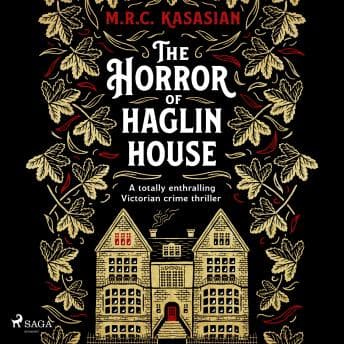
I was three hours into a late-night drive back from a client site in Houston when Lady Violet Thorn started growing on me. She's not your typical Victorian protagonist—she's a jilted writer who talks to her own fictional character, Ruby Gibson, like the woman's sitting right there in the room. And here's where Emma Gregory earns every penny of her paycheck: she makes you believe these conversations between author and imaginary creation are completely normal. Her Lady Violet has this dry, aristocratic edge that shifts naturally into Ruby's more adventurous, slightly rougher tone. By hour four, I'd stopped thinking about the distinction. They just became two women I was eavesdropping on.
When Your Intel Gets Muddied
Let me cut to the chase on the plot: it's complicated. Bodies start dropping around Montford, and Lady Violet—against her better judgment—gets pulled into investigating Haglin House. The problem? Kasasian throws a lot of characters at you. Servants, townspeople, suspects, victims. On audio, keeping track of who's who requires actual attention. This isn't a background listen while you're answering emails. I had to rewind twice during one particularly convoluted scene involving multiple servants and a rather grisly death.
The pacing runs slow for my taste. I've seen real investigations move faster than some of these plot developments. But here's the thing—Kasasian clearly did their homework on Victorian atmosphere. The market town setting, the class dynamics, the way Lady Violet navigates being a woman of status who's also essentially conducting her own intelligence operation. It rings true. The author's background as a dentist might seem random, but that attention to period detail suggests someone who researches thoroughly before committing to paper. That same meticulous attention to investigative detail shows up in T Is for Trespass, where Grafton's protagonist conducts her own intelligence operation.
Gregory's One-Woman Army
I've listened to a lot of narrators. Some good, some I'd rather sit through a PowerPoint briefing than hear again. Emma Gregory? She's in the top tier. The way she handles the ensemble cast—and there's a lot of them—makes it feel like you've got multiple performers. Her range is genuinely impressive. Lady Violet's measured, slightly sardonic delivery contrasts sharply with the more common accents of the townspeople. When things get dark—and they do get dark, including a dog and rat fight scene that made Ranger's ears perk up—Gregory doesn't flinch from the material.
The humor lands too. Kasasian writes funny, but Gregory's timing elevates it. There's a wit running through Lady Violet's observations that could fall flat with the wrong performer. Gregory makes it feel natural, like you're listening to a very clever woman who's seen too much to be shocked by anything anymore.
The Operational Assessment
Worth your time? Here's the debrief: if you can handle complexity and don't mind slowing down to track the players, this is a solid Victorian mystery with genuine horror elements. The "horror" in the title isn't false advertising—some scenes are genuinely disturbing. But it's not a gore-fest. It's more about the creeping dread of Haglin House itself and what might be happening behind those walls.
Compared to Kasasian's Sidney Grice series (which I haven't tackled yet), some listeners found this less immediately gripping. Fair enough. This feels like a setup book—establishing Lady Violet, her world, her methods. The payoff might come in later installments.
Skip this if: You need constant action. You get frustrated when you can't immediately identify who's speaking. Or you're trying to listen while multitasking. This book demands focus. At 13 hours, it's a commitment, and the complexity means you're not doing yourself any favors trying to absorb it during a busy morning commute.
Grab it if: You're a fan of Anthony Horowitz or M.C. Beaton who wants something with slightly more teeth. Anyone who enjoyed the creeping dread in Housekeeper: A twisted psychological thriller. Anyone who appreciates a narrator who can genuinely transform a text. Or readers who enjoy the meta-element of a writer protagonist who blurs the line between fiction and reality.
Mission Complete—With Caveats
I finished this one pulling into my driveway at 0200, and I didn't regret a minute of it. The plot tangles eventually straighten out. Gregory's performance carries you through the slower stretches. And Lady Violet—sardonic, clever, more capable than anyone gives her credit for—is the kind of protagonist I'd follow into another investigation.
Ranger slept through most of it, but he's not much for Victorian mysteries. His loss.