
"The mother who takes pains to endow her children with good habits secures for herself smooth and easy days."
I hit play on this around hour three of a delayed Caltrain situation—signal issues near Millbrae, the usual chaos—and honestly? Charlotte Mason's Victorian confidence about parenting felt weirdly grounding while surrounded by frustrated commuters doom-scrolling.
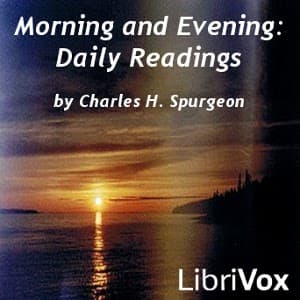
Bottom Line: This is basically a 19th-century parenting philosophy podcast, and it's way more applicable to modern life than you'd expect. The LibriVox production is surprisingly solid, and Mason's ideas about habit formation and respecting children's intelligence hold up remarkably well.
Your Great-Great-Grandmother Had Opinions (Good Ones)
So here's the thing about Charlotte Mason—she was writing in the 1890s, but half her ideas sound like they came from a productivity blog. Her whole framework is about building systems (she calls them "habits") that run on autopilot so you're not constantly fighting your kids on basic stuff. As someone who debugs distributed systems for a living, I appreciated the architecture. She's essentially saying: invest upfront in good defaults, and you'll save cycles later.
The section on attention training hit different. Mason argues that the ability to focus is a habit you can cultivate, not some innate trait. Power of Concentration makes basically the same argument, just with way less Victorian sentence structure. She's talking about children, but—and maybe this is just my 2AM brain—I kept thinking about my own attention span and how it's been absolutely wrecked by context-switching between Slack channels. The woman was onto something.
What surprised me: she's not authoritarian at all. There's this whole section about respecting children as "persons" with their own ideas and dignity. For a Victorian educator, that's pretty radical. She pushes back hard against the "children should be seen and not heard" mentality of her era.
The LibriVox Gamble (It Pays Off)
Real talk about LibriVox productions—they're volunteer-narrated, which means quality varies wildly. I've abandoned LibriVox audiobooks before because the audio levels were all over the place or the narrator sounded like they were recording in a bathroom.
This one? Actually good. The reading is clear and accessible, and whoever coordinated this project did solid work on consistency. It's not Ray Porter (obviously), but it doesn't need to be. Mason's prose is dense and Victorian, so a straightforward reading style works. You're not here for vocal gymnastics—you're here for the ideas.
The pacing is... deliberate. This is a 9+ hour listen, and Mason takes her time building arguments. At 1.5x, it flows well. At 1.75x, the Victorian sentence structures start to blur together. I'd recommend 1.25x if you actually want to absorb the philosophy, 1.5x if you're already familiar with her work and just want a refresher.
Where It Drags (And Where It Doesn't)
Not every chapter is gold. The sections heavy on Biblical references and Victorian morality feel dated—not offensive, just... of their time. Mason was writing for Christian mothers in 1890s England, and some of that context doesn't translate.
But the practical stuff? The chapters on habit formation, on how to actually teach children to pay attention, on the difference between discipline and punishment? That's the good stuff. I found myself taking mental notes for my own life, not just hypothetical future parenting.
The book also assumes you have, like, a governess and household staff. Which is hilarious. Mason casually mentions delegating tasks to servants while discussing how mothers should be more involved in education. The class dynamics are very much 1890s England. You have to read past it.
Run It or Skip It?
Queue this up if: You're a homeschooling parent who wants a philosophical framework, not just curriculum tips. Also surprisingly useful for anyone interested in habit formation and self-education—there's real overlap with modern productivity thinking.
Hard pass if: You're expecting a quick, actionable parenting guide. This is philosophy, not a how-to. Also skip if Victorian prose makes you want to throw your phone out the train window.
The ROI on this audiobook is high if you're already in the Charlotte Mason orbit or curious about classical education approaches. It's free (LibriVox), it's well-produced, and the ideas are genuinely interesting even if you're not a parent.
The Debug Report
I finished this over about a week of commutes, and it's the kind of book that rewards slow absorption. Mason repeats her core ideas from different angles, which can feel redundant but also helps the concepts stick. By the end, I had a pretty solid mental model of her educational philosophy.
Would I recommend this to Kevin? Probably not—he'd zone out in the first hour. Would I recommend it to my friend who homeschools her three kids and is constantly looking for philosophical grounding? Already texted her the link.
For a free audiobook of a 130-year-old parenting manual, this is genuinely worth your time. Just maybe not at 6AM on a packed train. Save it for a longer, quieter commute.