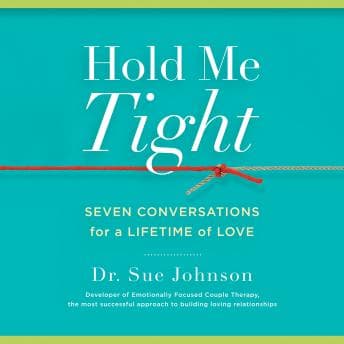

Look, I'll be honest. When Jenny handed me this audiobook and said "We're listening to this together," I knew I was in trouble. Not because I don't care about our relationship—I do, obviously—but because relationship books usually fall into two categories: either they're so fluffy they're useless, or they're so clinical they make you feel like a lab rat. Sue Johnson's Hold Me Tight is neither. And that genuinely surprised me.
Here's the bottom line upfront: This book has actual ROI. Not in the spreadsheet sense (though I did catch myself mentally mapping the concepts to team dynamics at a startup I'm advising), but in the "this will save you thousands in couples therapy" sense. My parents never had language for what Johnson describes here. They just white-knuckled through 40 years of marriage with stubbornness and shared purpose. This book gives you the vocabulary they never had.
That same focus on practical frameworks shows up in Top 1%: Habits, Attitudes & Strategies For Exceptional Success, though applied to career outcomes instead of relationships.
The Framework That Actually Works
Johnson's core insight is deceptively simple: we're all basically toddlers when it comes to emotional attachment. Your partner isn't your business partner or your roommate—they're your primary attachment figure. When that bond feels threatened, you panic. You either pursue aggressively or withdraw completely. She calls these "Demon Dialogues," and honestly, I've seen versions of them play out in every failing company I've ever consulted for. (Yes, I'm making everything about business. Jenny would roll her eyes.)
The seven conversations she outlines aren't theoretical fluff. They're structured interventions. "Recognizing the Demon Dialogues." "Finding the Raw Spots." "Forgiving Injuries." Each one builds on the last. It's basically a change management framework for your marriage. And unlike most business frameworks, this one is backed by decades of clinical research and real outcomes.
What I appreciated—and this is rare for self-help—is that Johnson doesn't waste your time. The book is under nine hours, and there's minimal padding. She uses case studies from her practice, but they serve the content rather than just filling pages. At 2.0x, I got through it in under five hours. Time well spent.
Helen Keeley Knows What She's Doing
I couldn't find much about Helen Keeley online beyond her narrator credits, but based on this performance? She gets it. Her voice has this quality—warm but not saccharine, clear but not clinical. She sounds like the therapist you actually want to talk to, not the one who makes you feel judged.
The pacing is deliberate. Strategic pauses where you need to sit with something. When Johnson describes a couple in crisis, Keeley's delivery carries the weight without being melodramatic. When there's a practical exercise, she slows down just enough that you could actually do it if you wanted to. (I didn't. I was driving. But I appreciated the option.)
For a book this dense with emotional content, the narration could've easily tipped into either "robotic textbook" or "overwrought therapy session." Keeley threads the needle perfectly.
Where It Gets Real
The chapter on "Forgiving Injuries" hit harder than I expected. Johnson distinguishes between small hurts and what she calls "attachment injuries"—those moments when you reached for your partner and they weren't there. A miscarriage where he didn't show up emotionally. A career crisis where she dismissed your fear. These aren't things you "get over." They're things you have to actively heal.
I thought about my parents' dry cleaning business. The 14-hour days. The times my mom needed support and my dad was too exhausted to give it. They never had conversations about attachment injuries. They just... survived. Johnson's framework makes me wonder what their marriage could've been with better tools.
That's the thing about this book. It's not just for couples in crisis. It's for anyone who wants to understand why they react the way they do when they feel disconnected. Why a forgotten text message can trigger a three-day cold war. Why "I'm fine" is never actually fine.
Who Gets Value Here (And Who Won't)
If you're in a long-term relationship and willing to do the work—actually have the conversations, not just nod along—this delivers. If you're looking for quick fixes or want your partner to change without examining yourself, save your credit. This requires both people showing up.
The ROI on Nine Hours
Skip the grand romantic gestures. Skip the communication techniques that make you sound like a corporate mediator. This book argues that the foundation is simpler and harder: emotional accessibility, responsiveness, engagement. A.R.E., she calls it. Are you there for me? Can I reach you? Do I matter to you?
My parents did this instinctively, in their own imperfect way. Now it has research and a framework and an audiobook with excellent narration.
Jenny and I finished it together. We've started having some of the conversations. I'm not going to tell you it's comfortable. But it's useful. And for a guy who measures everything in utility, that's the highest compliment I can give.
Bottom line: If you're in a relationship—any relationship you care about keeping—this is worth the nine hours. Even at 1.0x.