
What's the actual ROI on credit repair books?
I've asked myself this question about a dozen times over the years. My parents never had credit scores in Korea - they built their dry cleaning business on handshakes and reputation. When they immigrated, the American credit system hit them like a freight train. So when clients ask me about personal finance fundamentals, I pay attention to resources like this one.
Listened to this at 1.5x while prepping a deck for a fintech startup last Tuesday. Four and a half hours is actually reasonable for a financial self-help book - most of them bloat to 8+ hours with motivational filler. Clayborne keeps it tight.
The Playbook Actually Has Plays
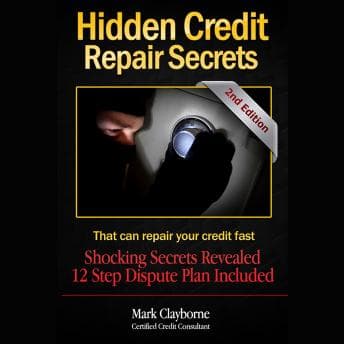
Here's what separates this from the typical "pay your bills on time" advice that wastes everyone's oxygen: Clayborne gives you the actual dispute letter templates. The 12-step dispute plan isn't theoretical - it's the same framework credit repair firms charge $1,500+ to execute on your behalf. I've seen clients pay consultants to do exactly what this book teaches for free.
The debt settlement strategies - negotiating to pay pennies on the dollar - this is real. I watched a struggling founder use similar tactics to clear $40K in debt for about $8K. The book explains the psychology of why creditors accept these deals (they've already written off the debt, any recovery is profit). That's the kind of insight that actually moves the needle.
Bouncing back from bankruptcy within a year? Aggressive timeline, but the mechanics he outlines are sound. Secured credit cards, authorized user strategies, the specific order of operations for rebuilding - it's all there.
Tvedt's Delivery: Competent but Flat
The narrator, Brandon Tvedt, is... fine. Competent. Clear enunciation, professional delivery. But there's no energy behind it. For a book that's essentially a manual, you want someone who sounds like they've actually helped people dig out of financial holes. Tvedt sounds like he's reading a tax document. Not bad, just flat.
And look - some of these "secrets" aren't exactly hidden anymore. Disputing inaccuracies on credit reports? That's been common knowledge since the FCRA became internet-famous. The book was clearly written when this information was harder to find. Now you can get half of this from a good Reddit thread.
But here's the thing - having it structured, sequential, and reviewed by attorneys still has value. Most people paralyzed by bad credit need the hand-holding more than the information.
Why Opacity Is the Feature, Not the Bug
I've consulted for three different lending startups. The credit system is designed to be opaque. That's not a conspiracy - it's just how complex systems evolve. Books like this are essentially arbitrage guides for regular people. They're translating industry knowledge into consumer action. Top 1%: Habits, Attitudes & Strategies For Exceptional Success takes a similar approach to demystifying success frameworks that most people think are reserved for insiders.
Is every technique still current? Probably not - credit bureaus adapt. But the underlying logic of how to communicate with creditors, how to leverage your rights under consumer protection laws, how to sequence your credit rebuilding - that's durable knowledge.
My parents figured out some of this through trial and error over fifteen years. This book compresses that learning curve into an afternoon.
Who Should Hit Play (And Who Shouldn't)
If you're actively dealing with collections, disputed items, or rebuilding after a financial disaster - this is worth your time. The letter templates alone could save you hundreds in credit repair fees. If your credit is fine and you're just "curious about optimization" - skip it. This is triage medicine, not wellness coaching. You'll be bored. And if you're a visual learner who needs to see the actual letter formats - the audiobook might frustrate you. There's a lot of "as shown in the template" moments where you'll want the physical book or PDF companion.
Park's Bottom Line
This delivers more actionable value per hour than 90% of financial self-help audiobooks. The information density is high, the fluff is low, and the strategies are grounded in how credit repair actually works - not how we wish it worked.
Is it exciting? No. Tvedt's narration won't keep you awake on a long drive. But at 4.5 hours, it respects your time, and the content respects your intelligence.
My parents would've benefited from this in 1987. They didn't have it. You do. Use it or don't - but don't pay someone else to execute what you can learn here for the cost of one Audible credit.
Jenny would say I'm being too generous to a book this dry. Jenny didn't watch her parents get denied a business loan three times because nobody explained how credit bureaus worked.