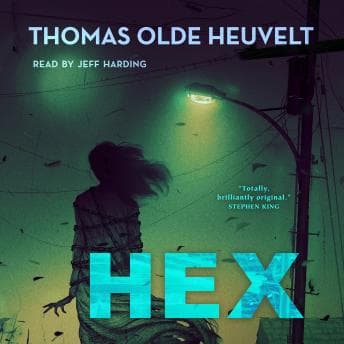

Three AM on the unit. One patient sleeping, one watching infomercials, and me at the nurses' station with this book in my ears, trying not to wake anyone when the Black Rock Witch just... appeared in someone's kitchen. Again. For the hundredth time.
I almost dropped my coffee.
Here's the thing about Hex that nobody warned me about: it's not scary in the way you expect. It's scary in the way a chronic illness is scary. The witch—Katherine van Wyler—she's been haunting Black Spring for centuries. Eyes and mouth sewn shut. She just shows up. In your living room. Next to your kid's bed. And the town has just... adapted. They have an app to track her location. Volunteers to move her when she's blocking traffic. It's normalized horror, and that concept is genuinely brilliant.
When "That's Just How It Is" Becomes The Most Dangerous Phrase
I work in a trauma center. I've seen what happens when people normalize things they shouldn't. When "that's just how it is" becomes the most dangerous phrase in the building. This book gets that. The real horror isn't the witch—it's the town's response to her. The surveillance state they've built. The way they police each other. The teenagers who've grown up their whole lives in quarantine, never allowed to leave, never allowed to tell outsiders about their curse.
And then those teenagers decide to livestream the witch.
As someone who's actually worked a code, I can tell you—the moment everything goes wrong is never the dramatic one. It's the small decision that seems harmless. The shortcut. The "just this once." Thomas Olde Heuvelt understands this. The spiral from "let's film her" to medieval mob violence happens so gradually that you keep thinking someone will stop it.
Nobody stops it.
Jeff Harding's Balancing Act
The narration is... fine. And I mean that in the clinical sense—adequate, functional, gets the job done. Harding handles the large cast reasonably well, though some characters tip into caricature territory. The teenagers especially can sound a bit over the top, like he's doing "annoying teen" rather than letting them be actual people. But his delivery of the atmospheric moments—the quiet dread, the casual mentions of the witch standing in corners—that works.
This is a 14-hour commitment. I spread it over about two weeks of post-shift drives, and honestly? The second half drags. The book becomes repetitive in a way that mirrors the town's endless cycle of witch-management, which might be intentional but doesn't make it less tedious. By hour ten, I was checking my phone to see how much was left.
Carlos asked why I was crying in the car. I blamed allergies. But there's a moment near the end—I won't spoil it—involving a father and son that hit me somewhere I wasn't expecting. This book earns its emotional punches, even when it's testing your patience getting there.
The Group Psychology Is Disturbingly Accurate
Look, this isn't a medical thriller, so I can't yell at my dashboard about defibrillator protocols. But the psychological realism of how a community responds to prolonged trauma? That's accurate. Finally. The way people turn on each other. The scapegoating. The way fear becomes permission for cruelty. I've seen hospital units go through versions of this during bad stretches. Olde Heuvelt—Dutch author, this is his English debut, Hugo-nominated—he gets group psychology in a way that feels researched.
The supernatural rules are consistent too. The witch can't be photographed without consequences. Her eyes can never be opened. The town's survival depends on keeping these secrets. It's a closed system, and the book honors its own logic even as everything falls apart. Circular Staircase has that same commitment to internal logic, though it's far less brutal about it.
Who's Going To Love This (And Who Should Skip)
Perfect for that post-shift decompression if you want something that'll make you feel things—but fair warning, it's bleak. Really bleak. The ending doesn't pull punches. If you need hope in your horror, look elsewhere.
Night shift approved for: anyone who likes slow-burn dread, small-town secrets, and stories about how communities destroy themselves. Think The Lottery meets The Blair Witch Project meets your HOA's worst impulses.
Skip if: you want a fast-paced scare-a-minute thriller, or if repetitive middle sections make you abandon books. Also skip if you need likeable characters—these people make choices that'll have you muttering "what are you DOING" at your steering wheel.
End of Shift Assessment
Hex is a good book. Better than most horror I've listened to this year. But it's also frustrating in ways that kept it from being great. The concept is A+ work—genuinely original, and I don't say that lightly. The execution is more like a B. Strong start, sagging middle, devastating ending. Harding's narration is serviceable but not memorable.
Would I recommend it? Yes, with caveats. Wait for a sale. This is a library borrow or a streaming pick, not a full-credit purchase. The brilliance of the premise carries you through the weaker sections, but just barely.
My mom would hate this. She'd say it's too dark, too hopeless. She's probably right. I'm recommending it anyway.