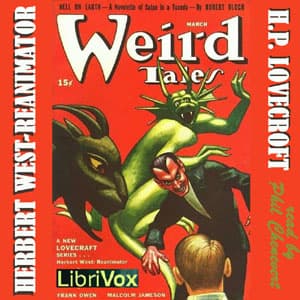

Everyone talks about this as the story that launched a thousand zombie movies, but here's the thing - it's barely 90 minutes long and it reads more like a fever dream lab report than anything you'd recognize from the 1985 film. I queued this up at 11PM after a brutal day of chasing down a memory leak in production, figuring a short Lovecraft story would knock me out. Instead I lay there wide awake, staring at the ceiling, genuinely unsettled. Not by jump scares. By the slow, methodical wrongness of it all.
Lovecraft Wrote a Lab Notebook From Hell
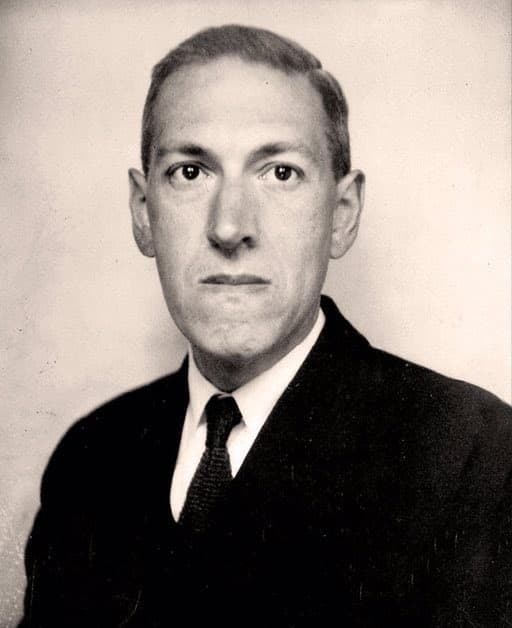
So here's what surprised me: this isn't really a zombie story in the modern sense. It's structured as six loosely connected episodes - because Lovecraft originally serialized it in a magazine called Home Brew in 1922 - and each one follows the same pattern. Herbert West has a new corpse. Herbert West injects his reagent. Something terrible happens. Rinse, repeat, escalate. It's almost algorithmic. And honestly? That repetitive structure is both the weakness and the weird strength of the thing. Lovecraft himself apparently hated writing it (he was doing it for pay, which - same, Howard, same), and you can feel him pushing against the formula while being stuck in it. The narrator character is basically a passive observer watching his med school buddy spiral into increasingly unhinged experiments, and there's this queasy complicity to it. He knows West is wrong. He helps anyway. Every. Single. Time.
The body horror escalates in ways that genuinely got under my skin - there's a sequence involving a decapitated body that keeps operating independently from its head, and the clinical detachment Lovecraft uses to describe it makes it worse, not better. He writes about reanimated corpses the way I'd write a post-mortem on a failed deployment. Just facts. No emotion. That's what's creepy.
Phil Chenevert's Voice Is Weirdly Perfect for the Wrong Reasons
Okay, so Phil Chenevert. Going in, I expected gothic doom-and-gloom narration. What I got was... warmer? More conversational? His voice has this jovial quality that on paper seems completely wrong for Lovecraft. But here's my take after sitting with it: the narrator character in this story isn't a horror movie protagonist. He's a guy looking back on terrible events with a kind of detached academic distance. Chenevert's tone actually matches that unreliable, slightly too-calm retrospective voice. It's like listening to a colleague casually describe the worst production incident of their career over beers - the mismatch between tone and content is what makes it land.
That said - he doesn't really differentiate between characters vocally. West and the narrator and anyone else who speaks kind of blend together. For a 90-minute story with limited dialogue, this isn't a dealbreaker. But if you're used to narrators like Ray Porter who give you distinct vocal signatures for every character, you'll notice the flatness. This is a LibriVox-quality recording (because it literally is one), so temper your expectations on production value. No sound effects, no score, just a guy reading Lovecraft in what sounds like a reasonably quiet room.
The 90-Minute Litmus Test
Here's the thing about sub-2-hour audiobooks: the ROI calculation is completely different. This isn't a 40-hour commitment where a mediocre narrator ruins your week. It's one commute leg. Less than one commute leg for me, actually - I finished it before we hit Millbrae. At that length, the question isn't "is this the best version of this story?" but "is 90 minutes of early Lovecraft worth your time at all?"
And... yeah. It is. Not because it's his best work (it's not - he was writing for a paycheck and the seams show), but because it's genuinely interesting to hear the DNA of modern zombie fiction in its earliest form. Lovecraft was doing reanimated corpse horror before Romero was born. The tropes feel familiar but slightly off, like looking at an old codebase and recognizing the patterns but not the syntax. That same uncanny-familiar quality hit me reading Second Variety — Philip K. Dick doing paranoid android horror decades before it became a genre staple, the DNA recognizable but the execution genuinely strange in ways the later imitators lost.
Perfect for: bedtime, a short errand run, waiting for a build to compile. Skip for: anything where you need sustained tension or a polished production.
Who Gets the Reagent
If you're a Lovecraft completist or you want to understand where Re-Animator came from before it became Jeffrey Combs camp-horror, this is a quick and worthwhile listen. If you're expecting the movie's energy, hard no. This is slower, weirder, and more academic. If you need top-tier narration to get through horror, look elsewhere - Chenevert is fine but not the voice you'd cast for this. But for free (it's public domain, folks) and 90 minutes? I've spent longer debugging print statements that turned out to be in the wrong file.