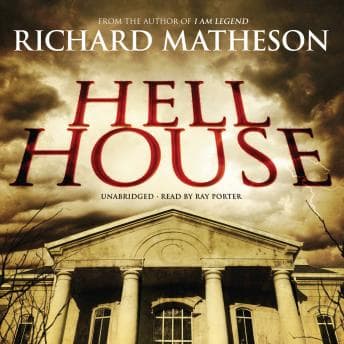

What happens when you pit a physicist against the supernatural and throw two mediums into the most notorious haunted house in fiction? You get Richard Matheson's Hell House — a novel that's been sitting on horror's Mount Rushmore since 1971 and still sparks arguments about whether it actually deserves to be there.
I'll tell you where I land. But first, some context.
The Belasco Problem
I was reorganizing the horror section at the library — yes, at 7 PM on a Tuesday, because apparently that's what my life has become — and I had this playing through my earbuds while shelving Matheson's own I Am Legend next to a dog-eared copy of The Shrinking Man. There's something about handling an author's physical books while listening to a different one that makes you hyperaware of their range. I recently revisited I Am Legend in audio form, and it struck me how Matheson can wring so much quiet despair from a single man in a dead world—then turn around and unleash this kind of sledgehammer. And here's the thing about Hell House: it's not Matheson at his most elegant. It's Matheson at his most unhinged.
The setup is classic haunted house investigation — four people, one week, a wealthy dying man's money backing the whole thing. But Matheson isn't interested in the slow-drip psychological approach that Shirley Jackson perfected in The Haunting of Hill House. (And yes, I will always bring up Jackson. It's a sickness.) Where Jackson let the house work on Eleanor's fractured psyche like water eroding stone, Matheson goes for the jugular. Belasco House doesn't whisper. It screams. It assaults. It degrades.
This is where the book gets divisive, and honestly? I get both sides. The sexual violence, the constant physical attacks, the sheer relentlessness of it — Matheson is swinging for the fences with every chapter. Sometimes that lands as genuinely disturbing. Sometimes it lands as... a lot. There were moments where I caught myself thinking "okay, we get it, the house is evil" rather than actually feeling dread. And dread is the whole game. This understands that horror isn't about gore — it's about dread. Except Hell House sometimes forgets its own lesson.
The character dynamics save it, though. Dr. Barrett the physicist versus Florence Tanner the spiritualist is a fantastic engine for the plot. Barrett's rigid skepticism isn't just a character trait — it's his fatal flaw, and Matheson knows it. Florence's faith makes her simultaneously the most sympathetic and most vulnerable person in the house. And then there's Ben Fischer, the sole survivor of the previous investigation, who spends most of the book doing the smartest thing anyone has ever done in a haunted house novel: absolutely nothing. He walls himself off psychically, refuses to engage, and just... waits. That's genuinely unsettling in a way the more explicit stuff isn't.
Ray Porter Meets Emeric Belasco
The narrator commits. That's rare. And Ray Porter doesn't just commit — he goes full method on the voice of Belasco, the dead owner whose presence saturates every wall of the house. When Belasco starts taunting, blaspheming, screaming through Porter's performance, it hits different than reading it on the page. There's a physicality to it. You can hear Porter pushing into that dark register, and it transforms scenes that might read as over-the-top into something that actually crawls under your skin.
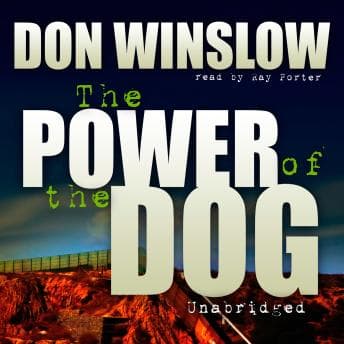
His differentiation between Barrett's clinical detachment and Florence's emotional openness is sharp too. Barrett sounds like a man who's already written his conclusions before the experiment starts. Florence sounds like someone who's going to get herself killed because she can't stop reaching out to whatever's reaching back. Porter gets this. He plays the tension between them as an ideological war, not just dialogue. Porter brought that same narrative ferocity to Terminal List, turning a military thriller into an unrelenting head-trip where every moment feels like a gut punch.
Is it a flawless performance? I'd say it's a strong one with a specific gear — Porter excels at intensity and menace, and this book gives him plenty of both. At nine hours, the pacing is tight enough that he never has to carry dead weight. The audiobook moves.
Who Gets an Invitation to the Hell House
If you scare easily, skip. If you don't, you need this — but with a caveat. This is 1971 horror. The sexual content and sexual violence are handled with the sensibilities of that era, which means "not great by modern standards." The women in this book exist in Matheson's framework, and that framework has some creaky floors. Know that going in.
Fans of The Haunting of Hill House who want the nasty, confrontational cousin of that book — this is it. Shirley Jackson walked so Matheson could sprint into a wall at full speed. Whether that sprint impresses you or makes you wince probably depends on your tolerance for pulp intensity dressed up in literary ambitions.
Podcast listeners — my podcast listeners are going to love arguing about this one. I'm already drafting the episode.
The Light Stays On Tonight
I listened to the last two hours after dark. Not in bed — at the kitchen table, with Shirley (my cat) parked on the chair across from me, staring at absolutely nothing in the corner of the room like the horror cliché she is. Shirley (my cat) was unimpressed. I was... not terrified, exactly. But unsettled. And that Belasco reveal at the end? It's either brilliant or ridiculous depending on your mood. I landed on brilliant. Barely.
Hell House isn't perfect horror. But it's committed horror, performed by a narrator who matches its energy beat for beat. And in a genre full of half-measures, that counts for something.