
What does it mean to be a mother when you never really had one yourself?
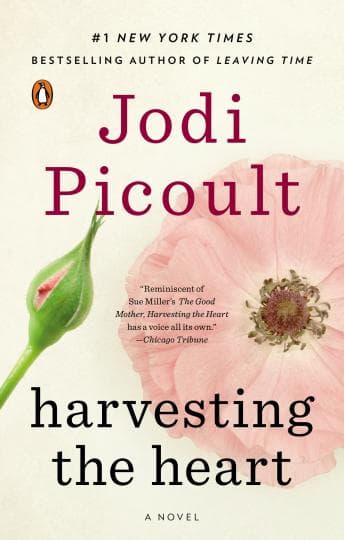
I've been teaching teenagers for twenty years, which means I've spent two decades watching kids navigate the fallout of complicated family dynamics. The absent parent. The one who stayed but checked out. The generational patterns nobody wants to acknowledge but everybody repeats. So when Picoult's second novel landed in my ears during a particularly brutal stack of sophomore essays, I wasn't expecting it to hit quite so close to the conversations I have with my students every single day.
Paige is five when her mother walks out. Just... leaves. And the rest of this seventeen-and-a-half-hour listen is essentially watching that wound shape everything—her art, her marriage to Nicholas (an ambitious surgeon who's basically married to his residency), and eventually her own terrifying journey into motherhood. Look, Picoult wrote this back in 1995, and you can feel that it's early work. The pacing drags in spots—I'll be honest, there were a few late-night grading sessions where I caught myself drifting. But the emotional architecture? That's pure Picoult.
The Weight of What Gets Left Behind
Here's the thing about this book that kept pulling me back in: it's not really about whether Paige is a good mother. It's about whether she *believes* she can be. And that distinction matters. I see this with my students all the time—the ones who've been told they're failures eventually stop trying because why bother? Paige carries her mother's abandonment like a prophecy she's destined to fulfill.
Picoult does something smart here. She doesn't let Nicholas off the hook. He's not a villain, exactly, but he's so consumed by his own ambition that he can't see his wife drowning right in front of him. The marriage feels real in that uncomfortable way—two people who love each other but speaking entirely different languages. My wife Denise and I listened to parts of this together on our lakefront walks, and there were moments where we just looked at each other like... yeah. We've had versions of that fight.
Cassandra Campbell Knows How to Sit in the Silence
The narrator understands that pause is punctuation. Campbell's voice has this quality—soothing without being sleepy, if that makes sense. She differentiates between characters well enough that I never got lost, which matters in a book that spans years and jumps between perspectives. Some reviewers mentioned the pacing felt slow, and I get that. But honestly? I think Campbell's measured delivery matches the material. This isn't a thriller. It's a slow excavation of trauma, and rushing it would feel wrong.
I listened at 1.0x because (and my students would roll their eyes at this) the prose deserves to be savored. Picoult's sentences in this early novel aren't as polished as her later work, but there's a rawness to them that Campbell honors. She doesn't oversell the emotional moments—she trusts the words to do the work.
Where It Gets Messy (In a Good Way)
The middle section—when Paige makes a choice that mirrors her own mother's—that's where I almost stopped grading entirely. (Principal Martinez, I was definitely listening to your email about curriculum updates during this part. I wasn't.) Picoult doesn't flinch from making her protagonist do something genuinely difficult to forgive. And that's what separates good domestic fiction from the stuff that feels like a Hallmark movie.
This reminds me of what Hemingway said about writing—that the dignity of movement of an iceberg is due to only one-eighth of it being above water. Picoult shows us Paige's actions, but the real story is everything underneath. The shame. The fear. The desperate hope that maybe breaking the pattern is possible even after you've already repeated it. That same exploration of inherited trauma—how we carry what our mothers couldn't give us—is what makes I Know Why the Caged Bird Sings so devastating.
If you loved *The Great Alone* by Kristin Hannah or Alice Hoffman's earlier work, this is their spiritual successor—or predecessor, really, since it came first. It's got that same willingness to sit in discomfort without offering easy answers.
Who This Is (and Isn't) For
If you're drawn to slow-burn domestic fiction that explores mother-daughter wounds and generational patterns, this one's for you. Skip it if you need plot momentum—my students would probably hate this. Too slow, too much internal processing, not enough action. But if you're the type who wants to sit with something uncomfortable and turn it over in your mind? Seventeen hours well spent.
Mr. Williams's Final Grade
Here's my honest take: this is early Picoult, and it shows. The plot can be predictable in spots, and some of the character work feels a bit heavy-handed compared to her later novels. But the emotional core is solid. Really solid. And Campbell's narration makes those seventeen-plus hours feel less like a commitment and more like a long conversation with someone who's been through something and is finally ready to talk about it.
Worth pausing the faculty meeting for. Definitely.