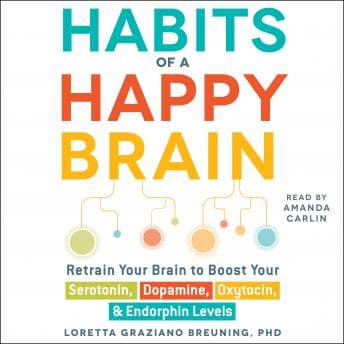

Look, I'm going to be honest—I almost DNF'd this one because of the narrator situation. Amanda Carlin has won an Earphones Award, which makes the audio quality here genuinely confusing. Her delivery has this slightly... processed quality? Like she's reading through a very clean vocoder. Not robotic exactly, but not quite natural either. It's weird. I kept checking my Bluetooth connection.
But here's the thing—I stuck with it, and I'm glad I did. Because underneath the uncanny valley narration is actually some pretty solid brain science.
The Neuroscience Actually Holds Up (Mostly)
Breuning's PhD shows. She breaks down the four "happy chemicals"—dopamine, serotonin, oxytocin, and endorphin—in a way that's accessible without being dumbed down. The core premise is basically: your brain is running on ancient mammal software, and understanding why it does what it does gives you leverage to hack it.
The dopamine explanation finally made sense of why I get that hit from fixing a bug but feel nothing when I complete routine tickets. It's about the *anticipation* of reward, not the reward itself. Your brain literally stops caring once something becomes predictable. This is basically debugging your reward system.
The 45-day habit formation framework is practical—she's not promising overnight transformation. She acknowledges that neural pathways take time to build, which... yeah, that's how brains work. Points for scientific honesty.
Where It Gets a Little Blog-Post-y
At just under 7 hours, this could've been tighter. The repetition gets noticeable by hour 4—I lost count of how many times she explains that "your mammal brain" sees threats everywhere. I get it. My lizard brain is paranoid. Move on.
Some of the exercises feel like they were designed for a workbook format and don't translate perfectly to audio. There are moments where she's essentially saying "now write down..." and I'm on a packed Caltrain at 6:47 AM with no pen and approximately zero intention of journaling while some guy's elbow is in my personal space.
The ROI on this audiobook is decent but not stellar. You're getting maybe 3-4 hours of actual content stretched to 7. I listened at 1.75x and still caught everything.
Piece of Cake had the opposite problem—so much happened that I kept bumping the speed back down to 1x because I didn't want to miss anything.The Narrator Problem (Let's Address It)
I genuinely don't know what happened here. Carlin's other work is apparently well-regarded, but something about this recording sounds off. It's not distracting enough to quit, but it's definitely noticeable. If you're sensitive to audio quality or rely heavily on vocal warmth to stay engaged, this might be a dealbreaker.
For me? I was listening while debugging a particularly annoying race condition at 11 PM (don't ask), and the slightly detached delivery actually kind of worked. Like having a calm, slightly synthetic friend explain neurochemistry while I'm losing my mind over thread safety.
Who Should Queue This Up
Perfect for: Anyone who wants the science behind why their brain does annoying things. If you've ever wondered why you feel great after a run but can't make yourself start one, or why social media gives you a dopamine hit that immediately turns hollow—this explains the mechanism.
Skip if: You need a warm, engaging narrator to stay focused, or you're looking for quick tips without the underlying theory. This is more "understand your brain" than "feel better in 5 minutes." Also skip if you've already read Huberman, Atomic Habits, and similar—there's overlap, and you might not get enough new material.
The Debug Report
Is this a must-listen? No. But it's a solid primer on neurochemistry that respects your intelligence while being practical. The narrator issue is real but survivable. I finished it in about 4 commutes at 1.75x speed, and I've already caught myself thinking about dopamine pathways differently when I'm tempted to check Slack for the 47th time.
Worth a credit? Probably not at full price. But if you can stream it through Libby or catch it on sale, it's worth the time. Just maybe don't listen when you need to stay awake—that slightly flat delivery won't help.