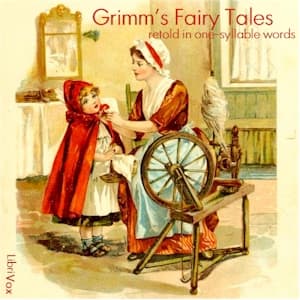

Okay, so hear me out - I know this sounds like the weirdest thing to put in your ears, but Grimm's Fairy Tales retold entirely in one-syllable words? It's kind of genius in a really specific way.
I stumbled onto this while procrastinating on my thesis (shocking, I know) and thought it'd be good background noise. Three hours later, I'd listened to the whole thing and had some genuinely complicated feelings about it.
The Constraint That Makes It Work
As someone who's spent way too many hours thinking about magic systems and world-building rules, I have a deep appreciation for creative constraints. And this audiobook is basically an entire fairy tale collection operating under a single brutal rule: one syllable per word. That's it. That's the magic system.
And you know what? It actually works. The stories hit differently when they're stripped down to their bones. "Snow White and Rose Red" becomes this almost rhythmic, drum-beat kind of tale. The language is so simple it loops back around to being kind of... primal? Like you're hearing these stories the way they might have been told around a fire a thousand years ago. Short words. Hard sounds. Direct meaning.
For parents trying to get their kids into fairy tales, or for ESL learners - this is genuinely useful. The pacing is consistent, the vocabulary is accessible, and the stories are all the classics plus some deep cuts I'd never heard of. (My D&D group would love some of these lesser-known tales for campaign inspiration, honestly.)
The LibriVox Reality Check
Look, here's the thing about LibriVox - it's free audiobooks read by volunteers. And that's amazing! But it also means you're not getting Steven Pacey-level performance. You're getting regular people doing their best in what sounds like their living rooms.
Some readers are pretty solid. Clear enunciation, good pacing. Others are monotone - which is basically the opposite of what you get with Battle of the Labyrinth, where the narrator gives each character distinct energy. There's no dramatic variation when the wolf shows up, no shift in energy when Cinderella gets her moment. It's all delivered at the same emotional temperature, which for fairy tales - stories that are supposed to be thrilling and scary and magical - feels like a missed opportunity.
But I kept thinking about who this is actually for. If you're a kid learning to read along, or someone practicing English, that steady, clear delivery is probably exactly what you need. The lack of dramatic flourish becomes a feature, not a bug. Everything is understandable. Nothing is confusing.
Would My Thesis Advisor Approve?
Probably not, since I listened to this instead of writing about procedural generation. But as a study in constrained storytelling? Actually kind of fascinating.
The one-syllable rule forces some wild word choices. Characters don't "escape" - they "get out." They don't "discover" - they "find." It's like reading a translation that prioritizes rhythm over precision, and sometimes that creates these weirdly poetic moments. Other times it just sounds choppy.
The audio quality is clean - no weird background noise or anything - which is honestly better than some LibriVox projects I've tried. And at just under three hours, it's a quick listen. Perfect for a long drive or a couple of cleaning sessions.
Who Should Roll Initiative (And Who Should Pass)
This one's for parents who need bedtime stories, ESL learners who want accessible vocabulary, or anyone curious to experience familiar tales stripped to their linguistic bones. Skip it if you want polished voice acting or dramatic performances - that's not what LibriVox volunteers are here to deliver.
The Final Saving Throw
This isn't going to replace your Sanderson-level world-building fantasies. It's not meant to. But for zero dollars, you get a genuinely interesting experiment in constrained storytelling. Just don't expect voice acting. Expect clear, steady storytelling with all the complexity stripped away until only the bones remain. Sometimes that's exactly what you need.