
I was three hours into a late-night design deadline—you know the kind, where the client wants seventeen revisions by morning and your cats are judging you from across the room—when I realized I'd been staring at the same vector path for ten minutes because my brain was completely hijacked by this audiobook. Not in a good way. In a "wait, did they just say Hitler had two daughters in Argentina?" way.
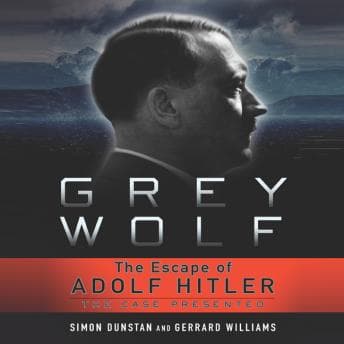
Look. I'm a romance girl. I ugly-cry to Julia Whelan and keep spreadsheets of my emotional breakdowns. But sometimes you need a palate cleanser, something completely different, and the premise of Grey Wolf grabbed me by the throat. Hitler escaped? The CIA was involved? There's a whole secret Nazi compound in Patagonia? My abuela would have been RIVETED. She loved a good conspiracy theory almost as much as she loved her telenovelas.
The Promise vs. The Delivery (A Love Story That Wasn't)
Here's where things got complicated. The book's marketing basically screams "What if Hitler didn't die in that bunker?" and honestly, that's a wild enough hook that I was ready to suspend disbelief and go along for the ride. But what I actually got was... a very thorough World War II history lesson. Like, extensively thorough.
Don't get me wrong—the research is impressive. Over 500 detailed notes, declassified documents, the whole nine yards. Simon Dunstan and Gerrard Williams clearly did their homework. They cite specific U-boat routes, escape vehicles, dates, names. But I kept waiting for the juicy stuff—Hitler's supposed life in Argentina, his alleged daughters, what his daily routine looked like in hiding—and it felt like those parts were almost afterthoughts wedged between chapters of war history I could've gotten from any WWII documentary.
It's like ordering a spicy margarita and getting a history of tequila production instead. Educational? Sure. What I came for? Not quite.
Don Hagen's Voice: Steady as She Goes
The narration is... fine. And I hate saying that because "fine" feels like such a cop-out. Don Hagen has a clear, consistent delivery. No weird audio glitches, no muffled sections, no random background noises. Professional through and through.
Don Hagen brings that same polished, unflappable delivery to Under the Black Flag, and I had the exact same reaction there—technically impeccable, emotionally a little bloodless for subject matter that really deserves some menace.But here's the thing—this is an 11-hour conspiracy theory about one of history's most evil men potentially escaping justice. Where's the tension? Where's the subtle shift in tone when we're discussing something truly chilling? Hagen reads it all with the same measured pace, whether he's describing Nazi submarine routes or the alleged final years of a mass murderer. For a book that's essentially asking "what if the biggest monster of the 20th century got away with it," the delivery felt almost too... neutral?
I kept wanting him to lean into the drama. Give me a little vocal intrigue. Let your voice drop when we're talking about shadowy escape plans. Instead, it felt like listening to a well-researched but emotionally flat documentary. At 1.0x speed (my usual), some sections genuinely dragged. I bumped it to 1.25x around hour five and didn't look back.
Who's Going to Love This (And Who Should Run)
If you're a WWII history buff who wants deep context and doesn't mind that the "Hitler escaped" angle is more framework than focus, you'll probably find this fascinating. The evidence compilation is genuinely interesting, even if I'm not fully convinced by the thesis.
But if you're like me—coming in for the scandalous alternate history, the "what happened next" drama, the conspiracy thriller vibes—you might feel a little cheated. I wanted emotional stakes. I wanted to feel something about the possibility that one of history's greatest monsters lived out his days peacefully in South America. Instead, I got a lot of submarine logistics. Skip this one if you need narrative momentum or you're hoping for a gripping thriller pace.
Also worth noting: this requires focused listening. Don't put this on while doing dishes or walking the dog. The details are dense, the names are many, and if you zone out for ten minutes, you'll be completely lost.
What My Heart Can't Quite Shake
Did this book make me feel something? Honestly... frustration, mostly. Frustration at the pacing, frustration at the bait-and-switch between marketing and content, frustration that such a wild premise didn't hit harder emotionally.
But also—and I can't quite shake this—a weird, uncomfortable curiosity. Because what if? The evidence about the skull in Moscow being female is genuinely unsettling. The declassified documents are real. That specific kind of unease—where the primary sources are real but the conclusions feel like they're leading you somewhere you're not sure you want to go—is something I felt even more acutely reading Isaac Newton, which does a similarly thorough job of sitting with the uncomfortable gaps between documented fact and mythology. And even if I'm not fully on board with the conclusion, the questions this book raises stuck with me longer than I expected.
Abuela would have had OPINIONS about this one. She would've crossed herself and muttered about evil never truly dying. And honestly? She might not have been wrong to wonder.








![Steve Jobs [unabridged audiobook] audiobook cover](/_next/image?url=https%3A%2F%2Fcovers.audiobooks.com%2Fimages%2Fcovers%2Ffull%2F9788499923406.jpg&w=1920&q=75)