
"Be so good they can't ignore you." Robin Sharma drops that one early - maybe twenty minutes in - and I sat there in my home office at 11 PM thinking, yeah, that's basically what my mom said in Korean while pressing shirts for sixteen hours straight. She just didn't have a speaking fee attached to it.
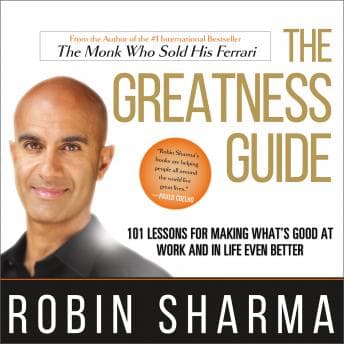
Bottom line: The Greatness Guide is 4 hours and 17 minutes of motivational fortune cookies. Some are genuinely good. Most you've already read on a LinkedIn carousel. At 2.0x speed, I got through this in just over two hours, and honestly? That felt about right for the amount of actual insight here.
101 Lessons, Maybe 15 That Stick
Here's the thing about Robin Sharma - the guy who gave us The Monk Who Sold His Ferrari and The 5AM Club. He knows how to package wisdom. The 101-lesson format actually works in audio because each chapter is basically 2-3 minutes long. Quick hit, move on. No bloated case studies, no forced frameworks with clever acronyms. Just Sharma riffing on leadership, habits, attitude, and what he calls "world-class" performance.
Some of the lessons genuinely landed. His bit about "Your Days Are Your Life in Miniature" - the idea that how you show up on a random Tuesday IS your life, not some dress rehearsal - that one hit different at 11 PM when I'd been grinding through client decks all day. And his lesson on avoiding "the victim mindset" in corporate culture? I've seen this fail at three different companies. Leaders who blame markets, blame teams, blame timing. Sharma calls it out plainly, without the academic veneer.
But then you get lessons that are essentially "be nice to people" and "read more books" dressed up in motivational language. Lesson after lesson of "great leaders do X" without any real mechanism for HOW. This is what separates Sharma from, say, a Jim Collins or an Annie Duke. He tells you to climb the mountain. He rarely hands you the rope. Richard Rohr does something closer to handing you the rope in Falling Upward — less motivational wallpaper, more actual mechanism for why the second half of your life requires a fundamentally different operating system.
Adam Verner Doing the Heavy Lifting
Adam Verner narrates with this calm, measured tone that works perfectly for what is essentially a spoken-word pep talk. The guy's an Earphones Award winner and you can hear why - he gives Sharma's sometimes repetitive prose a sense of weight it might not deserve on the page. There's a steadiness to his delivery that makes even the thinner lessons feel intentional rather than filler.
That said, 101 short chapters narrated in the same register can start to blur together. By the midpoint I was using the chapter breaks as mental reset buttons. Verner doesn't shift gears much - no dramatic range, no tonal variety between a lesson about corporate leadership and one about being kind to your spouse. It's all delivered at the same emotional altitude. Effective for background motivation. Less effective if you're trying to distinguish lesson 47 from lesson 73.
The Parents Test
I measure every business book against my parents' dry cleaning shop in Koreatown. Did they need this book? Would it have helped them?
Honest answer: no. My parents already lived most of these principles. Show up early. Work harder than anyone expects. Treat every customer like they matter. Don't complain. The Greatness Guide is a book that describes what people like my parents did instinctively. Now it has a TED talk.
But - and Jenny would say I'm being harsh, and Jenny is right - there IS an audience for this. If you're 25, early in your career, and nobody ever sat you down and said "your attitude determines your altitude" (Sharma's words, not mine), then sure. This could be the nudge you need. It's motivational vitamin supplements. Not medicine, not a cure, but maybe you're deficient and don't know it.
Who Gets ROI and Who Doesn't
Listen if: You want a low-commitment motivational listen for your commute or morning routine. The short chapter format is genuinely well-suited for daily micro-doses. One lesson per drive, let it marinate.
Skip if: You've read more than five business books in the last year. You've already absorbed 90% of this through osmosis. And if you're looking for frameworks, data, or actionable strategy - wrong shelf entirely.
The key takeaway is worth the listen. The other 3 hours? Not so much. But at 4 hours and 17 minutes, Sharma at least respects the format. He doesn't pad a pamphlet into a textbook. I'll give him that.
The Consulting Rate on This One
At a credit per book, this is a tough sell. It's the kind of content that's freely available in Sharma's Instagram posts and YouTube talks. Solid production, solid narrator, but the substance-to-time ratio is thin even by self-help standards. Stream it if your library has it. Save your credit for something with more weight.