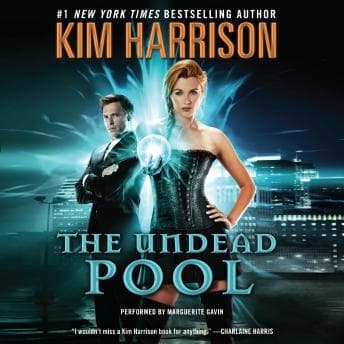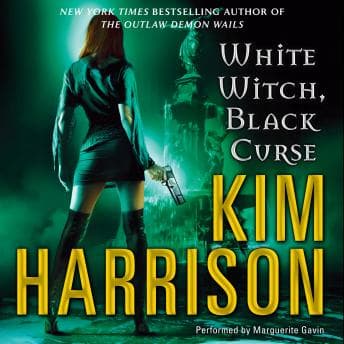
Kim Harrison's Hollows series is doing something that most urban fantasy refuses to do: it's letting its horror breathe.
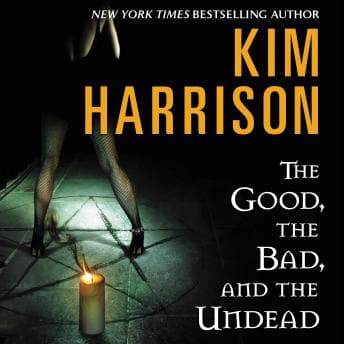
The Good, the Bad, and the Undead picks up where Dead Witch Walking left off, and if you thought book one was just a quirky witch-bounty-hunter romp, book two yanks the rug out. Rachel Morgan's world gets darker here - there's a serial killer targeting ley line witches, and the investigation drags Rachel into the kind of vampire politics where "seduction" and "threat" are the same word. Harrison doesn't flinch from the uncomfortable overlap between desire and danger in her vampire mythology, and that's where this book lives. Right in the messy, skin-crawling middle.
Shirley Jackson Would Appreciate the Power Dynamics
What got me - what really got under my skin - was the Trent Kalamack thread. Harrison writes power the way good horror writers write fear: it's not about the obvious moments, it's about the accumulation. Trent's politeness is scarier than most fictional monsters I've encountered this year. Every interaction Rachel has with him feels like she's standing at the edge of something she can't see the bottom of. And when the book pulls Rachel into the vampire master's orbit? That six feet of supernatural seduction the blurb promises? It delivers, but not in the way you'd expect. The tension isn't sexy-fun. It's sexy-wrong. It's the kind of discomfort that good horror trades in - you keep listening because you need to know how bad it gets.
I was shelving returns at the library during the Kalamack scenes (yes, I listen while I work, yes my coworkers have caught me making faces at particularly tense moments), and I actually stopped mid-cart because the power dynamic shifted so suddenly I needed to just... stand there and process it. A patron asked if I was okay. I was not.
Marguerite Gavin Gets the Assignment - Mostly
Here's the thing about Gavin's narration: she understands that Rachel Morgan is not a cool, collected protagonist. Rachel is reactive, messy, sometimes reckless, and Gavin leans into that with an emotional delivery that gives Rachel real weight. Her voice has this sonorous quality - warm and full - that works beautifully for Rachel's internal monologue. When Rachel's scared, you hear it in the slight thinning of Gavin's tone. When Rachel's being a smartass (which is often), there's this dry edge that lands.
But - and I need to be honest here - the character differentiation relies on subtle tone shifts rather than distinct voice work. Ivy and Jenks sound different enough that you won't get confused, but the secondary characters can blur together. For a 14-plus hour listen, that matters. By the time you're deep into the ley line witch investigation and there are multiple players in a room, you're sometimes working harder than you should to track who's speaking. It's not a dealbreaker. But it keeps this from being one of those performances where the narrator disappears entirely into the world.
I'll say this: Gavin commits to the emotional beats. The humor lands. The tension holds. She's a five-time Audie nominee for a reason. The narrator commits. That's rare. But I wanted just a little more vocal range for the ensemble.
Second Book Syndrome? Not Quite.
This is a setup book. I need to be real about that. Harrison is building toward something bigger in the Hollows series, and you can feel the architecture going up around you. Some of the middle hours are more procedural than visceral - Rachel investigating, Rachel bickering with the I.S., Rachel making questionable decisions about who to trust (Rachel, girl, please). The pacing isn't breakneck. It's a slow burn that rewards patience, and if you're coming for pure horror, you'll need to sit through some urban fantasy scaffolding to get to the good stuff.
But the good stuff? It's good. The vampire mythology Harrison builds here - the way consent and compulsion get tangled up, the way Rachel's independence keeps crashing against systems designed to strip it - this understands that horror isn't about gore, it's about dread. The dread of losing yourself. The dread of wanting something that will destroy you.
My podcast listeners are going to love the vampire politics in this one. It's the kind of slow-creeping power horror that doesn't get enough credit in urban fantasy. The closest thing I've reviewed to that same layered political dread is actually Dune: House Harkonnen, where every polite conversation is a knife held behind someone's back - different genre, same sick feeling in your stomach.
Who Needs This in Their Ears
If you loved Dead Witch Walking and want to see Harrison sharpen her teeth (pun absolutely intended), this is your next credit. If you're coming from the horror side and you're curious about urban fantasy that takes its darkness seriously, start with book one but know that book two is where the real unease kicks in. If you scare easily, skip. If you don't, you need this.
If you've already read the series in print? Gavin's performance adds emotional texture, but some listeners find the experience less electric when they already know the beats. Fair warning.
The Card Catalog Entry
Solid second installment. Gavin carries it well, even if she doesn't quite disappear into the ensemble. Harrison's horror instincts are sharper here than in book one, and the vampire power dynamics alone are worth the listen. Not a perfect audiobook, but a genuinely unsettling one. Shirley (my cat) was unimpressed. I was unsettled for days.