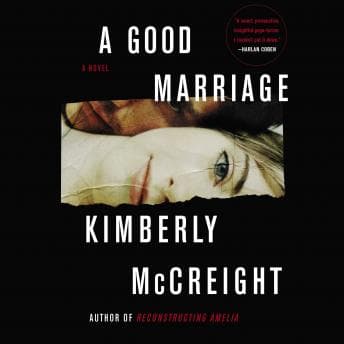

Let me cut to the chase: A Good Marriage is a solid domestic thriller that kept me engaged through a long drive back from a client site in Houston, but it's got some tactical flaws that prevent it from reaching elite status.
I started this one around midnight, Ranger snoring in the passenger seat, highway stretching out dark and empty. Perfect conditions for a murder mystery set in Brooklyn's Park Slope—couldn't be further from I-10 at 2 AM if you tried. McCreight's got a former prosecutor protagonist in Lizzie, and as someone who's worked with plenty of JAG officers, I appreciated that she writes legal procedure like someone who's actually been in a courtroom. No Hollywood nonsense here.
When the Intel Gets Messy
Here's where things get complicated. Three narrators—George Newbern, Karissa Vacker, and Sarah Zimmerman—and they're running different missions that don't always sync up. Newbern handles the courtroom scenes with the kind of measured authority you want from someone describing legal proceedings. Stately, steady, no drama where drama doesn't belong. That's how it should be done.
Vacker's handling of Lizzie works most of the time. She's got this introspective quality that fits a woman watching her marriage crack apart while defending an old friend. But—and this is where I started grinding my teeth—she over-pronounces word endings like she's teaching a pronunciation class. Every "-ing" hits with unnecessary force. By hour six, I was noticing it every single time.
Amanda's narrator? Some listeners found her overdramatic. I'll say this: the character's supposed to be dead from the jump, so you're getting her story through flashbacks. That theatrical quality makes more sense when you realize you're hearing a dead woman's memories. Still, it can grate.
The Marriage Autopsy
McCreight's doing something clever here that took me a while to appreciate. She's not just asking "who killed Amanda Grayson?" She's conducting a post-mortem on multiple marriages simultaneously. Lizzie's crumbling relationship with Sam. Zach and Amanda's picture-perfect Brooklyn life that was anything but. The web of secrets among the Brooklyn Country Day parents.
The revelations about Zach's secrets hit hard. I've seen plenty of people maintain perfect operational security in their professional lives while their personal lives are complete chaos. McCreight captures that disconnect—how someone can seem like they've got everything together while hiding fundamental truths from the people closest to them.
What I appreciated: the plot twists feel earned. Not cheap gotchas designed to shock. When the truth starts coming out, you can trace the breadcrumbs back. That's good thriller construction.
Where the Operation Stalls
At nearly thirteen hours, this one asks for significant commitment. Around the middle section, the pacing loses momentum. Too many characters, too many subplots about Park Slope parents and their petty dramas. I get it—McCreight's building a picture of this insular community protecting its own. But some of these people are just... shrill. Whining about problems that wouldn't register as problems to most of the population.
(Linda would say I'm being harsh. She'd also point out that I've never had to navigate private school parent politics. Fair enough.)
The multiple narrator approach mostly works for keeping the perspectives distinct, but occasionally the transitions feel jarring. You're deep in Lizzie's head, then suddenly you're with Amanda in a flashback, and the tonal shift can yank you out of the story.
Who Should Strap In (And Who Should Bail)
If you liked Big Little Lies—and the comparison's apt—you'll find familiar territory here. Wealthy families, dark secrets, a murder investigation peeling back layers of privilege. If domestic thrillers aren't your thing, or if you need constant action to stay engaged, this might test your patience. Skip it if pronunciation quirks drive you crazy; Vacker's style will have you climbing the walls. And if you want a straightforward whodunit, the marriage drama might feel like padding.
Cooper, Signing Off
Worth your time? Yeah, with caveats. McCreight knows how to construct a legal thriller that doesn't insult your intelligence, and the central mystery kept me guessing until the final hours. Dead Men's Money had that same quality of respecting the reader's intelligence, though it leaned harder into the procedural elements. The narrator situation is uneven—Newbern's the MVP, Vacker's mostly solid with that one annoying habit, and Amanda's narrator is love-it-or-hate-it.
I finished it as the sun came up outside Austin, Ranger finally awake and judging me for the all-nighter. Not a perfect mission, but mission accomplished. Sometimes that's enough.