
Everyone kept telling me the sequel wouldn't hit as hard as A Good Girl's Guide to Murder. So I went in braced for disappointment—and honestly, they were half right and half wrong in ways I didn't expect.
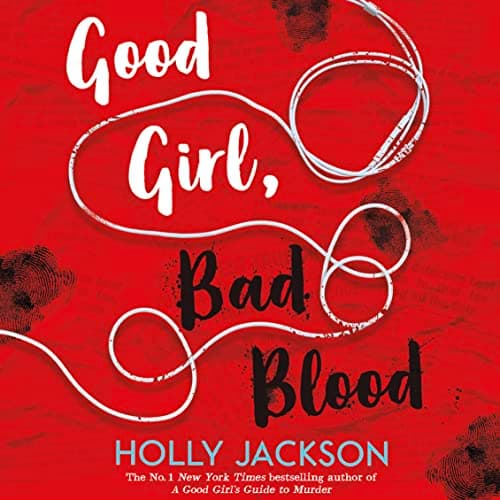
Good Girl, Bad Blood picks up with Pip Fitz-Amobi swearing off detective work after the events of the first book. She's released a true-crime podcast about the case, it's blown up, and she's trying to be a normal student. That lasts about five minutes. When Jamie Reynolds vanishes and the police shrug it off, Pip does what Pip does—she starts digging. The twist this time is that the investigation unfolds partly through the podcast itself, with interview segments and episode recordings woven into the story.
This structural choice is where the audiobook format earns its keep. With six narrators—Kristin Atherton, Luke Poli, Clare Corbett, Jot Davies, Richard Hughes, and Maryam Grace—the production turns the podcast-within-a-story conceit into something that genuinely works in your ears. When Pip is recording an interview for her show, you're essentially listening to a podcast inside an audiobook, and it never feels gimmicky. Each narrator brings a distinct presence to their characters, and the transitions between perspectives keep the pacing tight across nearly twelve hours.
Kristin Atherton carries the bulk of the narration as Pip, and she nails the character's particular blend of relentless determination and creeping anxiety. There's a real urgency in her delivery during the investigation scenes. The supporting cast fills in the edges well—the interview subjects feel like real people being questioned, not just dialogue being read aloud. Where the narration occasionally stumbles is in the more emotionally heightened moments. A few scenes lean into breathless, frantic delivery that's technically appropriate for what's happening on the page but physically uncomfortable to listen to through headphones. It's a minor issue, and it comes from the narrators committing fully to the material rather than phoning it in, but it's worth flagging if you're sensitive to that kind of intensity.
As for the story itself, Holly Jackson structures the mystery differently from the first book. Where A Good Girl's Guide to Murder was a cold case with layers of buried secrets, this one is a real-time missing person investigation. The stakes feel more immediate but also more scattered. Pip is chasing leads across multiple suspects and timelines simultaneously, and while Jackson handles the plotting with skill—there are genuine surprises, and the final reveals land with force—the middle section occasionally feels like it's spinning plates rather than building toward something inevitable. The first book had a tighter spiral. This one casts a wider net.
What Jackson does brilliantly, though, is escalate the personal cost. Pip isn't the same person she was in book one. The toll of investigating, the moral compromises, the way people in her town look at her now—it all accumulates. That slow psychological unraveling of someone who can't stop chasing the truth is something Thomas Harris mapped in brutal detail in Hannibal: A Novel—different genre, different stakes, but the same uncomfortable portrait of what obsession costs a person over time. The audiobook format amplifies this because you're literally hearing the strain in her voice across hours of listening. By the final act, when things get genuinely dark, the emotional weight has been earned rather than manufactured.
The full-cast approach is the clear differentiator here compared to reading the print version. On the page, the podcast segments are formatted as transcripts. In your ears, they're alive. You get tone, hesitation, the way someone's voice tightens when they're lying. It adds a layer of information that makes the mystery-solving feel more participatory—you're picking up clues from how people sound, not just what they say.
I listened to this mostly during evening commutes and a couple of longer drives, and it held my attention consistently. The chapter structure works well for commute-length sessions, and the multiple narrators prevent any single voice from becoming monotonous over the runtime. It's not quite a book that demands your complete focus—the plot is clear enough to follow even if you zone out for a minute—but you'll catch more of the foreshadowing if you're paying attention.
Compared to the first book in the series, this is a step sideways rather than a step down. It trades the elegant simplicity of a single cold case for a more ambitious but less tidy structure. The audiobook production is arguably better than the first, though, specifically because the podcast format gives the multiple narrators more to do.
If you loved the first book and want to see Pip's psychology tested in darker, messier territory, this is well worth the listen—especially in audio, where the podcast-within-a-story device actually sings. Skip it if a scattered middle act frustrates you more than a strong payoff redeems, or if you need your YA thrillers wrapped up neatly. The audio production elevates the source material in ways that feel purposeful rather than decorative. It's not flawless—that wandering midsection and occasionally overwhelming vocal intensity keep it from the top tier—but it's a strong listen that justifies its format.