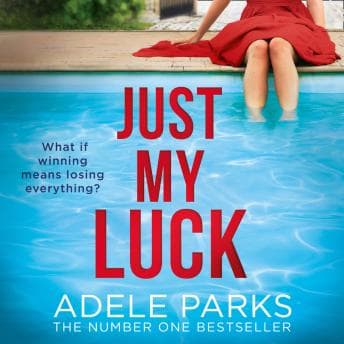

Everyone's calling this a thriller, but it's really a domestic pressure cooker with the lid screwed on too tight. I went in expecting a lottery heist or some kind of crime caper. What I got was thirteen hours of watching friendships disintegrate over £18 million. And honestly? That's more brutal than most combat scenarios I've witnessed.
I started this one during a late-night security review for a client—paperwork that could put anyone to sleep. Figured some British drama would keep me sharp. By 2 AM, I'd abandoned the spreadsheets entirely. Ranger was giving me that look, the one that says "you're supposed to be working," but I needed to know how this particular grenade was going to land.
When Money Becomes the Enemy
Here's what Parks gets absolutely right: the operational security failures. Lexi and Jake win this massive jackpot, and within hours, their so-called friends are circling like vultures over a carcass. The Pearsons and Heathcotes have been playing these same six numbers for fifteen years—fish and chip suppers, summer barbecues, the whole comfortable middle-class routine. Then someone doesn't tell the truth about that final Saturday night, and the whole thing goes sideways.
I've seen this scenario play out in real life. Not with lottery winnings, but with inheritances, business deals, even combat bonuses. Money doesn't change people—it just accelerates who they already were. I've seen that same truth explored in Tao Te Ching, though from a completely different angle: ancient wisdom instead of modern greed. Parks understands this. The betrayals here aren't sudden; they're reveals. You're watching masks slip off faces you thought you knew.
The dual narrator setup works like a well-coordinated intel briefing. Kristin Atherton and Louise Brealey split the perspectives, and there's no confusion about whose head you're in. Atherton handles the emotional turmoil with this controlled tension—like someone trying very hard not to scream in a public place. Brealey brings a different energy, more grounded, which creates this contrast that keeps you off-balance. Good tactical choice by the production team.
The Pacing Problem (And Why I Pushed Through Anyway)
Now, here's where it lost me—temporarily. Some listeners complained this thirteen-hour book should've been eight, and I get it. There are stretches in the middle where Parks is building pressure, but it feels more like water torture than strategic tension. I bumped it to 1.25x speed around hour five and never looked back.
But here's the thing: that slow burn pays off. The twist at the end—and I'm not spoiling it—genuinely caught me off guard. I've read enough thrillers to see most endings coming from a mile out. This one? Parks plays a long game, plants seeds early, and detonates them when you've almost forgotten they were there. That's solid fieldcraft.
The content gets dark. Adultery, violence, murder, the kind of family secrets that would make a confession booth uncomfortable. If you're looking for a cozy listen while you're making dinner, this ain't it. This is focused listening territory—the kind where you need to track the players and their motivations.
Who Should Queue This Up
If you like watching ordinary people make increasingly terrible choices under financial pressure, this one's for you. Fans of domestic suspense who don't mind a slower build toward a genuine payoff will find it worth the investment. Skip it if you need constant action or if thirteen hours feels like too long a deployment for one story.
Mission Debrief
Adele Parks clearly did her homework on human nature under pressure. The way these characters rationalize their increasingly terrible behavior—that's not fiction, that's observation. I've sat across tables from people justifying far worse with far less money at stake.
The audiobook format elevates the source material. Having two narrators for a story about fractured relationships and competing perspectives—that's not gimmick, that's smart adaptation. Both women bring professional-grade performances with excellent articulation and emotional range. No audio issues, no production hiccups, just clean delivery of a messy human story.
My only real complaint beyond the pacing: I wanted more from the male characters. They're there, they matter to the plot, but the focus stays tight on the women. Which is fine—Parks writes what she knows—but Jake felt more like a plot device than a person by the end.
Ranger approved this one, though he did fall asleep during the slower middle sections. Can't blame him. But when that ending hit, even he perked up at my reaction.
Mission accomplished, with reservations about the route taken to get there.