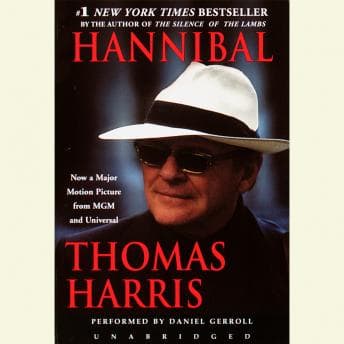

Thomas Harris ruined me for other thriller writers. I need to just say that upfront.
I finished this one pulling into my driveway at 6:47 AM after a brutal night shift—three codes, a combative patient, and a doc who kept calling me "nurse" like it was a four-letter word. And somehow, listening to Hannibal Lecter wax poetic about Florence while plotting murder felt... calming? I'm not sure what that says about me. Carlos would probably have opinions.
The Good Doctor Returns (And He's Been Busy)
Seven years since Silence of the Lambs. Seven years since Clarice Starling sat across from the most elegant monster in fiction. Harris picks up like no time has passed, and yet everything has changed. Lecter's living his best life in Italy—attending opera, cooking exquisite meals, curating art. Meanwhile, Starling's career has been systematically dismantled by the FBI's good ol' boys club.
Here's the thing. As someone who's actually worked in a system that chews up competent women and spits them out, Starling's trajectory hit different. The way her superiors undermine her, take credit for her work, then blame her when things go sideways? I've lived that. Different uniform, same garbage.
But this isn't really Starling's book. It's Hannibal's. And Harris asks you to do something uncomfortable—he asks you to love the monster.
Mason Verger: The Villain Who Made Me Grateful for Night Shift Horrors
I've seen some things in trauma. I've smelled some things. Mason Verger's descriptions still made me wince.
He's Lecter's surviving victim, now a faceless billionaire running a meat empire from his respirator, obsessed with revenge. His plan to capture Hannibal involves trained man-eating pigs. Yes, really. And somehow Harris makes this feel plausible within the world he's built.
Daniel Gerroll's narration really shines with Verger. He gives him this wet, labored quality—you can hear the respirator in how he paces the dialogue. It's disgusting. It's perfect. The character differentiation throughout is solid; Gerroll shifts accents and registers cleanly enough that I never lost track of who was speaking, even when I was charting vitals and half-listening.
The Italy Problem
Okay, I'm going to be honest. The middle section in Florence dragged for me.
Harris clearly loves Italy. He wants you to smell the leather markets, taste the wine, appreciate the architecture. And look, I get it. But at 3 AM when I'm trying to stay awake between patient rounds, extended descriptions of Florentine palazzo don't exactly keep the adrenaline pumping. I found myself speeding up to 1.25x during these sections. Nine Perfect Strangers had similar pacing issues in the middle—gorgeous prose, but sometimes I just needed someone to DO something already.
Compared to Red Dragon or Silence of the Lambs, this book lacks that relentless forward momentum. Those books had urgency—victims in danger, ticking clocks. Hannibal meanders. It's a character study dressed as a thriller, and sometimes the disguise slips.
That Ending Though
I need to talk about the ending without spoiling it.
If you've only seen the movie, you don't know. The book goes somewhere completely different—somewhere darker, stranger, more disturbing. I actually said "WHAT" out loud in my car. Scared the hell out of the guy in the next lane.
It's the kind of ending that makes you question everything you thought you understood about these characters. Some people hate it. I'm still not sure how I feel, three days later. But I can't stop thinking about it, and that's worth something.
Gerroll vs. Harris: The Narrator Debate
Apparently Thomas Harris narrated one of the earlier books himself, and some listeners prefer that. I haven't heard it, so I can't compare. Gerroll took some getting used to—his pacing is deliberate, almost theatrical. But once I adjusted, it worked. His Hannibal has this cultured menace, this European precision. His Starling is tired but fierce.
The production is clean. No sound effects, no music—just straight narration. Night shift approved.
Who This Is For (And Who Should Skip)
If you loved Silence of the Lambs and want more Clarice-and-Hannibal content: yes, but adjust your expectations. This is a different kind of book.
If you need fast pacing and constant action: maybe wait for a sale. The Italy sections will test your patience.
If you're squeamish about violence, torture, or morally complex endings: skip. Harris doesn't pull punches here.
If you want to understand why people find Hannibal Lecter attractive despite everything: this book will either explain it or make you more confused. Possibly both.
Clocking Out
I yelled at my dashboard during this one—not because the medical details were wrong (there aren't many), but because Harris made me feel things about a cannibal that I'm not comfortable examining too closely. By the end, I understood why some listeners say they fell in love with Hannibal Lecter.
My mom would probably not love this. But she still thinks I should've been a doctor, so her judgment is suspect anyway.
Perfect for that post-shift decompression when you want something that'll make your actual job seem sane by comparison.