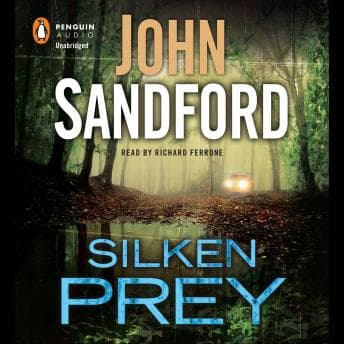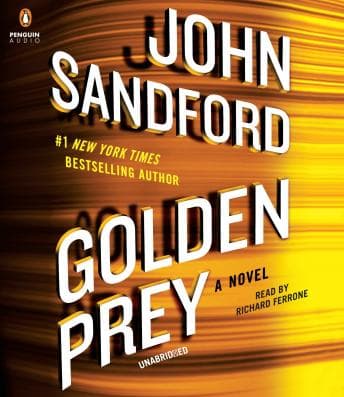

Look, I'll be honest - I came to this one late. Lucas Davenport has been doing his thing for over thirty novels, and I've only dipped in and out of the Prey series. But Golden Prey? This is the one that hooked me. And honestly, it's the kind of thriller that horror fans can appreciate because Sandford understands something crucial: real menace comes from characters who genuinely don't care if you live or die.
The setup is brutal from the jump. A cartel counting house gets hit, five people dead including a six-year-old girl, and suitcases of cash vanish into the wind. Davenport - now working as a U.S. Marshal with basically a blank check to pick his own cases - decides this is his problem. What follows is a three-way collision between law enforcement, cartel assassins, and the Dixie Hicks crew who pulled the robbery. It's messy. It's violent. And Sandford never flinches.
Richard Ferrone Is the Voice of Inevitable Violence
Here's the thing about Ferrone's narration: that gravelly, lived-in voice isn't just an aesthetic choice. It's the sound of a world where violence is a matter of when, not if. He reads Davenport with this calm authority that makes you believe this guy has seen everything and is genuinely hard to surprise. But he's not monotone about it - there's warmth there, humor even, especially in the banter.
The character differentiation is solid. Ferrone shifts tone and accent to distinguish the sprawling cast, and you never lose track of who's talking. The cartel guys sound different from the Southern criminals who sound different from the feds. It's not showy voice acting - it's subtle, professional work that serves the story instead of drawing attention to itself.
Now, the female characters. Yeah, this is where Ferrone's gruff timbre works against him. The women don't quite land the same way. It's not bad, exactly, but you can feel him working harder, and the seams show a bit. For a book that's mostly testosterone-soaked action, it's not a dealbreaker. But it's there.
The Queen of Home-Improvement Tools
Can we talk about the villains for a second? Because Sandford has created some genuinely unsettling antagonists here. The cartel torturer nicknamed the "Queen of home-improvement tools" - I mean, that's the kind of detail that sticks in your brain. Shirley (my cat) was unimpressed when I explained this to her at 1 AM, but I was genuinely creeped out. This book understands that horror isn't about gore - it's about dread. The anticipation of what someone like that might do is worse than any explicit scene.
That same understanding of psychological menace shows up in Second Wife, though the setting couldn't be more different.
And the robbers themselves? They're not cartoons. They're competent, dangerous people with their own logic and loyalties. Sandford gives everyone enough dimension that you understand their moves even when they're monstrous. That's harder to pull off than it sounds.
Case of Jennie Brice manages something similar with its villain, though in a much quieter register.
Pacing That Doesn't Let You Breathe
Eleven hours flew by. I started this during a late shift at the library (yes, listening to crime thrillers while shelving books in a quiet building - I'm aware of the irony) and finished it over two days of commuting. The plot moves. Sandford doesn't pad, doesn't meander, doesn't give you those saggy middle sections where nothing happens for three chapters.
Ferrone's pacing matches perfectly. He knows when to push through action sequences and when to let dialogue breathe. The man has narrated enough of these that he's basically fluent in Sandford's rhythm. My podcast listeners are going to love this - it's exactly the kind of propulsive thriller that works for people who need something to keep them awake during long drives.
Who This Is (and Isn't) For
If you're sensitive to violence, this isn't your book. There's a dead child in the opening. There's torture. There's a lot of people getting shot. Sandford doesn't wallow in it, but he doesn't sanitize it either. The darkness is the point. Also, if you need your female characters to sound distinctly female in audiobook form, you might notice Ferrone's limitations more than I did.
But if you want a crime thriller that moves like a shark and hits like a hammer? You're in the right place.
One More for the Road
Golden Prey works because it respects its genre. It's not trying to be literary fiction in a thriller costume. It's a well-crafted crime novel with a protagonist who's smart, dangerous, and genuinely fun to follow. Ferrone's narration is the definitive version - there's a reason he's won Earphones Awards for this series.
If you scare easily, skip. If you don't, you need this. It's the kind of book that makes you check your rearview mirror a little more carefully on the drive home.