
Let's just rip the band-aid off right now: I should be finishing the procedural generation algorithm for my thesis. My advisor, Dr. Patel, sent me an email with the subject line "Urgent: Timeline Update" three days ago. I haven't opened it.
Instead, I have spent the last 16 hours listening to a three-thousand-year-old human-sandworm hybrid lecture me about political philosophy. And honestly? No regrets. (Okay, maybe like 5% regret when I look at my bank account, but we move.)
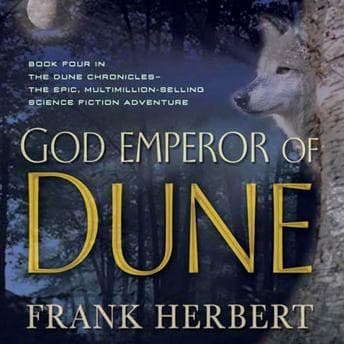
God Emperor of Dune is the weird one. It's the book where casual fans usually tap out because Frank Herbert decided to skip 3,500 years into the future and turn the protagonist into a literal monster. But if you stick with it? It's arguably the best one.
When the DM Goes Mad with Power
If I tried to pull this in my Saturday D&D group, my players would revolt. "So, the main NPC is an immortal worm who controls all space travel and water, and we just have to listen to him talk for 400 pages?" Yes. Exactly.
This isn't an action movie. It's a theology seminar held in a dungeon. Leto II has followed the Golden Path to save humanity from itself, but the cost is that he's... well, gross. He's a tyrant. A bored, lonely, omniscient tyrant.
The vibe is incredibly specific. Dense. Heavy. Basically Herbert flexing his world-building muscles until they rip through his shirt. If you're looking for laser battles, go back to Star Wars. Or honestly, just start with Dune if you haven't already—it eases you into Herbert's philosophical tendencies before he goes full worm-tyrant mode. This is about the stagnation of a species. Fascinating, assuming you have the patience for it. (Which, considering I watched a 4-hour video essay on Elden Ring lore last week, I apparently do.)
The '92 Dream Team of Audiobook Narrators
Okay, look at this cast. Simon Vance, Scott Brick, Katherine Kellgren. This is an S-Tier lineup. It's like the '92 Dream Team but for people who read into microphones in padded rooms.
Simon Vance handles the bulk of the heavy lifting, specifically Leto's journals. And thank the Maker for that. Vance has this way of sounding regal and weary at the same time—perfect for a guy who has seen everything for three millennia and is just tired of everyone's stupidity. He brings a gravitas that makes the philosophical info-dumps actually digestible.
However—and this is a big however—the production is a little chaotic.
It's not a full-cast drama, but it's also not a single narrator. Sometimes the voices switch. Sometimes Scott Brick is narrating, then suddenly it's someone else. A bit jarring. Like when my code compiles but throws a runtime error I didn't expect. Some people online complain about Vance's British accent not fitting the setting. To them I say: It's the year 10,000+. Do you really think they sound like they're from Ohio? Get real.
This Book Requires RAM
Here's the thing. You can't listen to this while doom-scrolling Twitter or trying to debug a script. I tried listening while grinding in an MMO and had to rewind three chapters because I missed a crucial conversation about breeding programs.
It's a slow burn. Like, glacial. But the payoff—the sheer scale of what Herbert is doing—is unmatched. It makes other sci-fi feel small.
Who should listen: Anyone who finished Children of Dune and wants to see Herbert's vision at its most ambitious and strange. Philosophy nerds. World-building obsessives. People who think "too much lore" is a compliment. Who should skip: If you need action beats every chapter, or if you bounced off the earlier books, this one won't convert you.
Dr. Patel, I'm Sorry
So yeah, the thesis is delayed. But I now understand the necessity of tyranny in the preservation of the species. That counts for extra credit, right?