
"You think you know your friends. You really don't."
That line hit me somewhere around hour three, and I had to pause my design work because suddenly I couldn't see the screen through the tears. Not sad tears—angry tears. The kind where you're furious at fictional people for being so painfully, recognizably human.
I started this one on a Wednesday night, Frida curled on my lap while I was mocking up logo concepts for a local bakery. By Thursday morning, I'd abandoned the project entirely and was just sitting in my reading chair, cats judging me, completely wrecked by these four Colorado families destroying each other over a school admission.
When Privilege Wears Yoga Pants
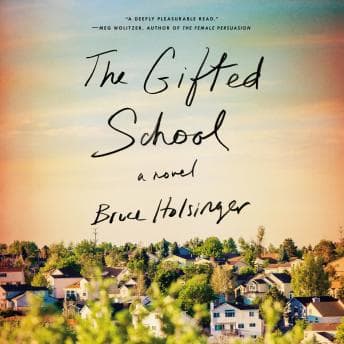
Here's the thing about The Gifted School that got under my skin: Bruce Holsinger doesn't let anyone off the hook. Not the helicopter mom who'd sell her soul for her kid's acceptance letter. Not the progressive parents who think they're above the competition while playing the game harder than anyone. Not even the kids, who absorb their parents' anxiety like little sponges and then squeeze it back out in devastating ways.
The four families—Rose, Samantha, Azra, and Lauren—have been in each other's lives for over a decade. Their kids grew up together. They've shared births, divorces, promotions, failures. And then Crystal Academy announces it's opening an elite school for gifted children, and suddenly every unspoken resentment, every buried secret, every quiet comparison of whose kid is smarter starts bubbling to the surface.
Abuela would have gasped at these women. She would have clutched her rosary and muttered about how money makes people lose their minds. And she would have been right.
January LaVoy Understood the Assignment
Okay, so January LaVoy? This woman is doing the Lord's work with this audiobook. She's handling four main POVs—plus their husbands, plus their kids of varying ages, plus various side characters—and never once did I lose track of who was speaking. Her Rose has this brittle, trying-too-hard energy. Her Samantha is all cool competence with cracks showing underneath. The teenage characters sound like actual teenagers, which is harder than it sounds.
The vibes are immaculate when LaVoy shifts between the mothers during their increasingly tense interactions. You can hear the passive aggression dripping. The way she delivers a seemingly innocent comment about someone's child that's actually a knife to the gut? Chef's kiss.
Full disclosure though: there are stretches where the book gets into the weeds about the gifted school's application process, complete with emails and program descriptions. LaVoy does her best, but reading bureaucratic language out loud is nobody's strong suit. She's far more in her element with character-driven tension—the way she handles the emotional core of Jar of Hearts is a masterclass in letting the darkness breathe without ever going over the top. I found my attention drifting during those sections, and I'm someone who listens at 1.0x because I'm savoring every word. Those parts felt like the author wanted us to understand exactly how the system works, but honestly? I got it after the first detailed explanation.
The Slow Knife of Suburban Betrayal
This book felt like watching a car crash in slow motion where you know everyone in the vehicle and you're screaming at them to brake but they just. Keep. Accelerating.
The chemistry between these families—and by chemistry I mean the volatile, combustible kind—is what kept me listening through nearly fourteen hours. The secrets that come out aren't soap opera twists. They're the quiet, shameful kind that real people carry. The lies parents tell themselves about why they're pushing their kids so hard. The way class and race factor into who gets to be "gifted" and who gets overlooked.
I ugly-cried at the chapter where one of the kids finally breaks down about the pressure. Just absolutely lost it. Frida looked at me like I'd grown a second head. Diego left the room entirely.
But here's my honest take: the middle third drags. Holsinger is building something, layering in all these details and tensions, but there were moments where I wished he'd trusted us to connect the dots faster. The payoff in the final hours is worth it—the revelations land hard and the consequences feel earned—but getting there requires some patience.
Who This Wrecked Me For (And Who Should Run)
Listen if you've ever sat in a school parking lot and felt the competitive energy radiating off other parents. If you've wondered what your friends really think of you. If you want to feel superior to fictional people while also uncomfortably recognizing yourself in them.
Skip if you need likeable protagonists—these people are messy and flawed and sometimes genuinely terrible. If you're looking for a mystery with a clear villain, this isn't it. Everyone here is complicit in their own way.
The moral murkiness reminded me of Accused: A Rosato & DiNunzio Novel—also narrated by LaVoy, and also full of characters you keep rooting for even while wanting to shake them.
Ay, Mija, Why Do They Do This to Themselves?
My heart. MY HEART. This book made me feel so much—rage, sadness, uncomfortable recognition, and finally something like catharsis. It's not perfect. The pacing wobbles and some of the procedural details could've been trimmed. But when it lands, it lands hard enough to leave a bruise.
Abuela would have loved this one. She would have watched these women like she watched her telenovelas, shaking her head and saying "Ay, mija, why do they do this to themselves?" And I would have had no answer, because I don't know either. That's what makes it so painfully real.