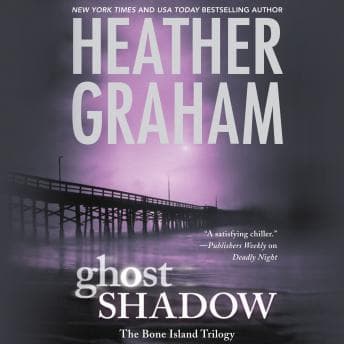

I was chopping onions for a dal that would take three hours to simmer when Katie MacDonald started talking to ghosts, and I found myself asking: why does this woman trust the dead more than the living?
This is a fascinating case study in what I call the "romantic suspicion paradox." Katie can communicate with spirits, she's drawn to a man accused of murdering his fiancée, and somehow the ghostly warnings she receives make her *more* attracted to him rather than less. The research actually shows that proximity to danger increases romantic attachment—it's called misattribution of arousal—and Heather Graham either knows this or stumbled into it accidentally. Either way, it works. Mostly.
The Psychology of Trusting a Maybe-Murderer
What makes Katie compelling is her absolute certainty in her own intuition despite zero empirical evidence. She's got spectral friends whispering warnings, bodies piling up on the Island of Bones in historically themed tableaux (which, as a narrative device, is genuinely creepy), and yet she's falling for David Beckett anyway. My therapist would have thoughts about this character. Many thoughts.
The problem is that David himself doesn't give us much to work with. I had a similar frustration with character development in Dragon Teeth: A Novel, where the protagonist's motivations felt more plot-driven than psychologically coherent. Angela Dawe voices him in this formal, stiff manner that some listeners found off-putting, but psychologically, it actually tracks. Here's a man under suspicion for murder—of course he's guarded. Of course he sounds like he's choosing every word carefully. Whether Dawe intended this characterization or it's just how the performance landed, I found it worked for the story's tension even when it made the romance feel... clinical.
When Your Narrator Excels at Half the Cast
Here's where things get interesting. Dawe is genuinely excellent with the female characters and the large cast differentiation. You can tell who's speaking, the emotional delivery in the suspense scenes hits right, and the mystery tone stays consistent. But the male characters (David aside) blur together in a way that had me rewinding more than once. "Wait, was that the detective or the bartender?" is not a question you want to ask during a murder mystery.
Some listeners recommended 1.25x speed, and I'll be honest—I tried it. The pacing does drag in places. Graham has a tendency to repeat certain phrases ("husky" appears with suspicious frequency), and Dawe's dramatic pauses at revelation moments sometimes land awkwardly, like she's waiting for a reaction that can't come through your earbuds. At 1.25x, these issues smooth out considerably.
The Bone Island Problem
This is the first book in the Bone Island Trilogy, and it does that thing where setup occasionally overtakes story. We're establishing Katie's abilities, the island's history, David's tragic backstory, the supporting cast, the ghostly mythology—and sometimes the actual mystery feels like it's waiting in line behind all this worldbuilding.
But the historical elements are genuinely interesting. The macabre tableaux the killer creates, reenacting moments from the island's past? That's the kind of detail that makes a thriller memorable. It's not just "bodies appear"—it's "bodies appear staged as historical figures in death poses that mean something." Katie exhibits classic pattern-recognition behavior trying to decode these scenes, and that intellectual puzzle kept me engaged even when the romance felt unconvincing.
Who This Works For (And Who Should Walk Away)
If you're here for paranormal romantic suspense with a protagonist who talks to ghosts and falls for complicated men, this delivers. If you need your romance to feel organic rather than plot-mandated, you'll be frustrated. And if male character voice confusion will pull you out of the story, consider the ebook instead.
The mystery itself is solid—not groundbreaking, but competent. Return of Sherlock Holmes operates on similar mechanics—methodical reveals that let you play along without giving everything away too early. Graham understands how to structure reveals, and the ghostly elements add atmosphere without overwhelming the whodunit. I found myself genuinely uncertain about David's guilt until fairly late, which is more than I can say for most thrillers in this genre.
Case Notes: Final Assessment
Psychologically, this doesn't track in a few places—Katie's trust in David develops faster than her evidence warrants, and some of the supporting characters make decisions that serve the plot rather than their established personalities. But Graham gets the big things right: the atmosphere of the Keys, the creepiness of the historical murders being recreated, the tension of falling for someone who might be a killer.
The audiobook version has its flaws—the male voice confusion, the pacing issues, those awkward dramatic pauses—but Dawe's strengths with the female characters and the mystery tone make it worth the listen if you're already a fan of the genre. Just maybe bump up that playback speed.
My dal turned out perfectly, by the way. The book? A little undercooked in places, but satisfying enough.