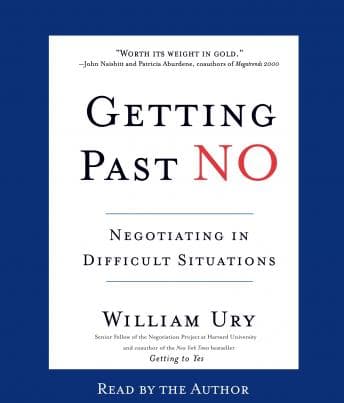

Two hours. This audiobook is two hours long. I nearly wept with joy when I saw that runtime. Finally, a business book author who respects that I have a job, a family, and approximately 47 other unfinished audiobooks in my queue.
Look, here's the thing about negotiation books—most of them could be a LinkedIn post. Ury actually delivers enough substance to justify the format, and he does it without the padding. No extended anecdotes about how he once negotiated peace in the Middle East for three chapters before getting to the point. (Okay, he did work on Middle East conflicts, but he keeps it relevant.)
The Framework That Actually Works
Ury's five-step breakthrough strategy is the kind of thing my parents did instinctively at their dry cleaning shop in Koreatown. Difficult customer screaming about a stain? Don't react. Don't argue. Step to their side. Reframe. Build them a golden bridge to back down gracefully. The difference is Ury gives you the vocabulary and structure to do it consciously.
He covers staying in control under pressure, defusing hostility, uncovering what people actually want (spoiler: it's rarely what they say they want), countering dirty tricks, and using power without being a jerk about it. All in two hours. No filler. No padding.
I've used variations of this framework with three different startup clients in the past month. One was dealing with a vendor who kept moving goalposts. Another had a co-founder dispute that was getting ugly. The "go to the balcony" concept—basically, mentally stepping back before you react—saved at least one of those relationships. Above Life's Turmoil explores that same mental discipline from a different angle, stepping above the chaos instead of getting pulled into it. Maybe both.
Ury Behind the Mic
Here's where I have to be honest. Ury narrates his own book, and he's... fine. Clear, professional, knows his material cold. But there's a reason some listeners say this doesn't hit as hard as Getting to Yes. The delivery is a bit like attending a very good Harvard lecture. Informative? Absolutely. Engaging? Meh.
My 2.0x speed couldn't save this one—not because it's bad, but because even at that pace, Ury's measured tone stays measured. Some author-narrators bring fire. Ury brings competence. 50th Law is the opposite—all fire, all the time, which works for that particular brand of power dynamics. Honestly, Ury's approach matches the content. This isn't a hype book. It's a tools book.
Jenny would say I'm being harsh. Jenny is right. The man literally helps resolve international conflicts for a living. He doesn't need to sound like a podcast host. The clarity of his delivery means you actually absorb the framework, which is the whole point.
Who Needs This (And Who Doesn't)
If you negotiate anything—salary, contracts, vendor deals, custody arrangements, who's picking up the kids—this is two hours well spent. It's the practical companion to Getting to Yes, focused specifically on what to do when the other side won't play nice.
Best for: Anyone who's ever left a negotiation thinking "I should've said..." or "Why did I get so angry?" Commuters especially—you can literally listen to this on one round-trip and have a complete toolkit.
Skip if: You want entertainment. This is education. Good education, efficient education, but not the kind of audiobook that makes your commute fly by because you're so engrossed.
I've seen the concepts in this book fail at companies where people half-implement them—they learn "don't react" but skip the part about building the other side a way out. The framework works when you use all five steps. Ury makes that clear, repeatedly.
The Bottom Line
Clean production, no weird audio issues. Just a Harvard negotiation expert talking directly to you for two hours about how to get difficult people to yes. At 2.0x, that's one hour. One hour for skills you'll use for the rest of your career.
That's an ROI my parents would approve of.