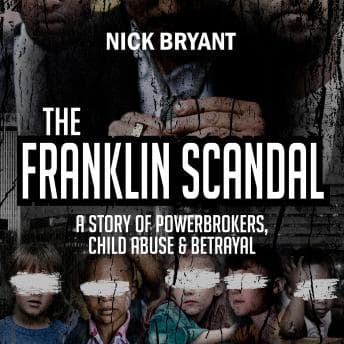

I wasn't ready for this one. Twenty-one hours of documented horror, and I listened to most of it during my morning jogs through Cambridge. My therapist would have thoughts about that choice.
Look, I went into this expecting a standard true crime investigation - the kind where you get your dopamine hit from watching a case unfold and resolve. But Nick Bryant's Franklin Scandal isn't that. It's a case study in institutional failure, in how power protects itself, and honestly? In how collective denial functions as a psychological defense mechanism. The research actually shows that when information is sufficiently disturbing, people will reject it regardless of evidence. This book is Exhibit A.
When the Investigator Becomes the Voice
Here's the thing about author-narrated audiobooks: they're a gamble. Sometimes you get someone who wrote a brilliant book but sounds like they're reading a grocery list. Bryant falls somewhere in the middle, and I mean that as more of a compliment than it sounds. His delivery is measured. Calm. Almost clinical at times - which some listeners have called "dry" or "flat." But I found myself asking: what tone SHOULD someone use when describing these allegations?
There's something psychologically appropriate about his restraint. He's not performing outrage. He's laying out documents, interviews, connections. The lack of emotional manipulation actually made me trust him more. (Yes, I analyze narrator choices through a psychology lens. It's a problem.)
That said - and I'm being honest here - there were stretches in the middle where I zoned out. Twenty-one hours is a lot. The meticulous documentation that makes this credible journalism also makes for some repetitive listening. I found myself speeding up to 1.25x during the more procedural sections.
The Psychology of Institutional Cover-Up
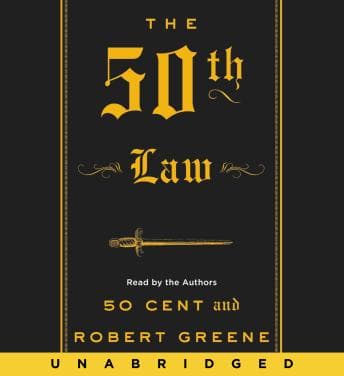
This is where Bryant's work becomes genuinely fascinating from a behavioral perspective. The systematic manipulation of power structures here echoes what I found in 48 Laws of Power - though Greene's work is prescriptive where Bryant's is descriptive documentation. The pattern he documents - allegations surface, gain traction, then get systematically discredited and buried - is a textbook example of what happens when powerful systems are threatened. The witnesses exhibit classic trauma responses. The officials exhibit classic self-preservation responses. Everyone is behaving exactly as psychological models would predict.
What makes this character-driven (and yes, I'm treating real people as characters, because that's how I process narrative) is watching how different individuals respond to impossible situations. The victims who recant under pressure. The investigators who back off. The journalists who won't touch it. Bryant doesn't sensationalize these choices - he just documents them. And somehow that's more damning than any dramatic narration could be.
The connection between a failed credit union in Omaha and allegations reaching to Washington, D.C.? It sounds like conspiracy fiction. But Bryant's approach is so methodical, so focused on primary sources and firsthand interviews, that it reads more like a forensic case file than speculation.
Who Should Listen (And Who Should Skip)
I need to be real: this is not a casual listen. It's not background noise for your commute. The subject matter is deeply disturbing - child trafficking, abuse, institutional betrayal at the highest levels. If you're in a vulnerable headspace, skip it. Seriously. Same goes if you need emotional storytelling and character arcs to stay engaged - you might struggle with Bryant's documentary approach.
But if you're someone who studies power dynamics, institutional psychology, or true crime that goes beyond individual perpetrators into systemic failure? This is essential. It's the kind of book that makes you uncomfortable not because of how it's told, but because of what it reveals about how systems protect themselves.
The audio quality is clean and professional. No production issues. No bonus content, which is fine - the book itself is comprehensive enough. Bryant includes extensive sourcing, which matters for material this controversial.
Would I listen again? Probably not - once was enough to sit with this material. But I'm glad I did. Some books change how you see the world. This one changed how I understand institutional denial. And that's not nothing.