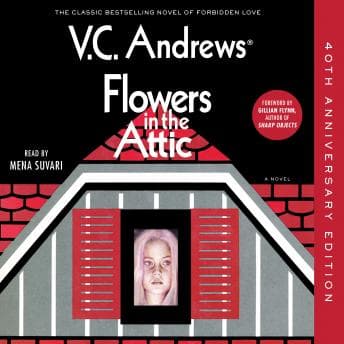

"We were so perfect, we seemed unreal." That line hit me somewhere around hour two, and I had to pause the audiobook. Not because I needed a break—because I needed to sit with how perfectly V.C. Andrews captured the self-mythology of doomed families. My students would roll their eyes at me for saying this, but Flowers in the Attic is basically a gothic Greek tragedy dressed up in 1970s melodrama. And I mean that as a compliment.
Look, I'll be honest. I came to this one late. Forty years late, apparently. When this 40th anniversary edition popped up, I figured it was time to finally understand why an entire generation of readers passed dog-eared copies around like contraband. So I downloaded it, started walking the lakefront with Denise, and within the first hour she asked why I kept making faces at the sky.
The Slow Burn That Earns Its Fire
Here's the thing about the pacing—yes, the first few hours move deliberately. Some listeners have called it slow, and I get that. We spend time in the "before," in the perfect family that's too perfect, in the tragedy that shatters everything. But Andrews is doing something here that I actually appreciate as someone who teaches narrative structure. She's building the prison before she locks the children in it.
Once those kids are in the attic? I couldn't stop. I listened through grading papers. I listened during a faculty meeting (sorry, Principal Martinez, but you were talking about parking lot logistics and I was trapped in a gothic nightmare). The claustrophobia is real. The slow deterioration of hope is real. And the way the children's relationships shift and darken—that's where Andrews earns her cult status.
Is the writing style a bit... theatrical? Sure. Some of the dialogue veers into the melodramatic in ways that would make my composition students wince. But honestly? It works for what this is. This isn't subtle literary fiction. It's operatic family horror, and the heightened language matches the heightened emotions.
Mena Suvari Gets Cathy Right
I didn't know much about Suvari as a narrator going in, but she gets something crucial about Cathy's voice. She plays her as sincere without being naive, wounded without being passive. There's this warmth in her delivery that makes you root for these kids even when the story pushes them toward increasingly dark places.
The character differentiation isn't elaborate—this isn't a full-cast production—but Suvari shifts her tone enough that you always know who's speaking. The grandmother comes through as genuinely menacing. The mother's gradual transformation from desperate to something colder... Suvari charts that arc beautifully.
My one small note: the emotional moments sometimes land a beat slower than I wanted. But I wonder if that's intentional pacing rather than a performance issue. Andrews wants you to feel the weight of these scenes, and Suvari gives them room to breathe.
The Elephant in the Attic
I can't write about this book without addressing it. Yes, this goes to some uncomfortable places. The forbidden love element that made this book infamous—it's there, and it's not treated as something to be condemned in the way a modern author might handle it. Andrews presents it as a consequence of isolation and desperation, which is... complicated.
My students often ask me why we read books that make us uncomfortable. This is exactly the kind of book I'd point to. Not because it's morally instructive (it really isn't), but because it captures something true about how extreme circumstances warp human relationships. It's not endorsing anything. It's showing what happens when you lock children away and strip them of everything normal.
Content warnings are appropriate here: abuse, violence, sexual content, themes that will genuinely disturb some readers. Know what you're getting into.
Mr. Williams's Final Grade
Flowers in the Attic isn't great literature in the way I usually define it. The prose doesn't reward the kind of close reading I'd do with my students. But it's effective storytelling in a way that's almost primal. Andrews understood something about family trauma and the gothic tradition that connects this book to everything from Jane Eyre to We Need to Talk About Kevin. I got a similar sense of dread from World War Z: The Complete Edition, though that one trades family horror for societal collapse.
Who should listen: If you love gothic horror, family dysfunction narratives, or you've always wondered what the fuss was about—this is your chance. Who should skip: If you need subtle prose or can't handle the content warnings above, this one's not for you.
At 15 hours, it's a commitment. But if you're looking for something that will genuinely haunt you—something that explains why a generation of readers still talks about this book—this anniversary edition delivers. Suvari's narration makes it accessible without softening the edges.
Just maybe don't listen during faculty meetings. The faces you make will raise questions.