
Everyone told me this would be exactly what I needed. "You're a software engineer," they said. "You should understand finance basics." And look, they weren't wrong—I've been at FAANG long enough to know that understanding P&L statements and cash flow isn't optional if you ever want to move beyond IC roles. But I expected this to be another one of those business books that could've been a blog post.
I was half right.
The Blog Post Problem (But Make It Actually Useful)
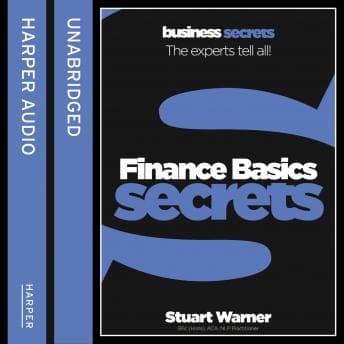
At 2 hours 40 minutes, this is barely longer than my morning commute. Which is... actually perfect? Stuart Warner—chartered accountant, two decades at PwC, the whole credentialed package—doesn't waste your time with startup founder origin stories or "imagine a world where" fluff. He gets straight into the mechanics: how to read financial reports, what a Profit and Loss account actually tells you, why cash flow and profit are different beasts entirely.
The thing is, this IS basically a blog post. Several blog posts, really. But they're the blog posts you'd bookmark and never read, compiled and narrated so you can't escape them. And sometimes that's exactly what you need.
Perfect for Train Zombies. Skip for Deep Dives.
I finished this in two commutes—one morning, one evening. The 6AM crowd on the Caltrain doesn't care if you're learning about accounting jargon or listening to epic fantasy. We're all zombies together. And this? Ideal zombie material. Not because it's boring (it's not), but because it's structured in these digestible chunks that survive the announcements, the stops, the guy next to you who breathes too loud.
Warner breaks down concepts like you're in a corporate training session—which, given his background, makes sense. Revenue recognition. Working capital. The difference between gross and net profit. Each section builds on the last, but if you zone out for a minute, you can pick it back up without rewinding.
The narrator—credited simply as "Business Secrets," which feels very 2010s audiobook—is... fine? Competent. Clear enunciation, professional tone. No personality to speak of, but honestly? For material like this, personality would be distracting. You're not here for Ray Porter's emotional range. You're here to understand why EBITDA matters.
The ROI Calculation
Here's where I get analytical (shocking, I know). Time investment: under 3 hours. Knowledge gained: enough to not embarrass yourself in a finance meeting, understand what your CFO is actually saying in all-hands, and maybe—maybe—build a business plan that doesn't make accountants cry.
Is this going to make you a finance expert? No. Will it replace an MBA? Absolutely not. But will it give you the vocabulary and mental models to have smarter conversations about money? Yeah. It will. Extreme Ownership gave me similar mental models for leadership conversations—different domain, same pattern of building frameworks that actually stick.
The section on analyzing businesses from financial reports was the highlight for me. Warner walks through what to look for, what the numbers actually mean versus what companies want you to think they mean. As someone who's debugged enough production systems to know that surface-level metrics lie, I appreciated the "here's how to spot the real story" approach.
Who Gets Value Here
If you're technical and finance-illiterate (no shame, most of us are), this is your entry point. If you're starting a side project and need to understand the money side. If you're interviewing for roles where "business acumen" is on the requirements list and you've been faking it.
Skip if you already took accounting in college. Skip if you want depth—this is foundations only. Skip if you need entertainment value from your audiobooks.
Worth Your Commute. Barely.
I'm giving this a qualified recommendation because it does exactly what it promises and nothing more. Warner's got the credentials, the material is solid, the format respects your time. But it's also aggressively practical in a way that means you'll forget half of it unless you immediately apply it.
I listened at 1.5x (my default) and could've gone faster. The production is clean but basic—no sound effects, no chapter music, just information delivery. Which is fine. That's the product.
At this price point and time investment, the ROI is positive. Not spectacular. But positive. And sometimes that's the right call—not every audiobook needs to be a transformative experience. Sometimes you just need to understand what EBITDA stands for before your next 1:1 with your manager.
Kevin asked what I was listening to this morning. "Finance basics," I said. He looked at me like I'd betrayed everything we stand for. But here's the thing—understanding systems is understanding systems. Whether it's distributed databases or double-entry bookkeeping, the pattern recognition is the same.
This is basically a crash course, but for your commute. And that's exactly what it needed to be.