
Why are we so obsessed with the girl who survives? Is it because she's strong, or because we just want to see how broken a person can get before they snap back? I asked myself this somewhere around mile three of my morning jog along the Charles, listening to a woman sound like she was about to have a panic attack in my ear.
Let's be real for a second. This book is a psychology dissertation waiting to happen.
When Meta Gets Messy
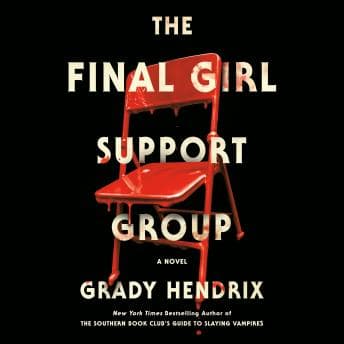
Okay, so the narrator is Adrienne King. Yes, that Adrienne King. The original Final Girl from Friday the 13th. On paper? Genius casting. It's meta on a level that makes my academic brain tingle. But in execution? It's... complicated.
I've seen the reviews—people saying her voice is grating or sounds "too old." And look, I get it. She doesn't have that polished, smooth audiobook voice we're used to. Her phrasing is weird sometimes. She pauses in places that don't make grammatical sense. (Honestly, it sounded like she was reading the script for the first time in a few spots.)
But—and hear me out—it actually works for Lynnette. The protagonist isn't a slick action hero. She's a middle-aged woman whose life has been defined by extreme trauma. She's anxious, paranoid, and exhausted. King's voice sounds exactly like someone who checks the locks five times before bed. Is it pleasant to listen to? No. Is it psychologically accurate for a woman on the edge? Absolutely.
The Paranoia is the Point
What Grady Hendrix gets right—and what usually annoys me about thrillers—is the aftermath. Usually, the survivor walks away, maybe has a bad dream, and then is fine. Lynnette is not fine. She's a mess. She has exit strategies for her exit strategies.
My therapist would have a field day with this group. You've got the angry one, the wealthy one, the one in denial. It's a support group where nobody actually supports each other because they're all too busy surviving.
The narrative drags in the middle—I found myself zoning out while prepping dinner, realizing I'd missed ten minutes of dialogue and didn't really care. I had a similar experience with Just After Sunset: Stories—some sections lost me, but the psychological dissection of horror made it worthwhile. The way Hendrix deconstructs the "slasher" tropes, though? Super smart. He treats these movie tropes like real-life case studies.
Who's This Actually For?
If you want a fast-paced thriller with a smooth narrator, you're gonna hate this. Seriously, just read the physical book. But if you're a horror nerd who loves the psychology of why we watch these movies—the survivor guilt, the hypervigilance, the way trauma rewires everything—it's worth the credit. Skip it if unconventional narration drives you up the wall.
Case Study Complete
It's messy, anxious, and a little bit exhausting. Just like trauma. (Don't tell my students I was listening to slasher fiction instead of grading papers.)