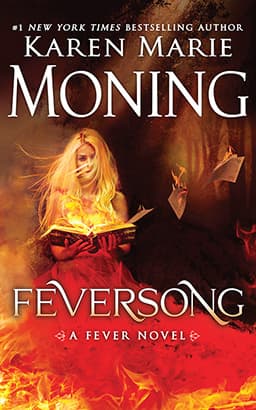

Everyone told me the narrator change would ruin it. That switching from Phil Gigante and Natalie Ross to Amanda Leigh Cobb and Jim Frangione for the series finale was basically sacrilege. I went in braced for disappointment while procrastinating on my thesis at 2 AM, and honestly? They were wrong. Mostly.
Look, I'm not going to pretend the first hour wasn't rough. Your brain has spent eight books associating specific voices with Mac and Barrons, and suddenly those voices are different. It's like when your D&D group gets a new player who takes over an NPC you've been running for three years. Jarring. But here's the thing—by hour four, I'd stopped noticing. By hour ten, I was genuinely impressed.
The Sinsar Dubh Deserved This Performance
The magic system in this series—if you can call sentient evil books and Fae courts a magic system—is *chef's kiss*. And Feversong asks its narrators to do something genuinely difficult: convey Mac being possessed by an entity of unthinkable evil while still keeping her recognizable as Mac. Amanda Leigh Cobb pulls this off better than I expected. There's this subtle shift in her delivery when the Sinsar Dubh takes control, a coldness that creeps into the vowels. It's not theatrical possession voice. It's worse. It's Mac, but *wrong*.
Jim Frangione's Barrons took longer to click for me. Barrons should sound like danger wrapped in expensive suits, and Frangione leans more... growly alpha than refined predator. But the emotional beats land. When the stakes involve Mac's actual soul, you feel it.
Where Cobb Shines (And Where She Doesn't)
Here's my honest take: Cobb is fantastic as Dani. Like, genuinely excellent. The younger character's voice has this energy that feels authentic. But as Mac? It's serviceable rather than revelatory. Mac's internal monologue—which Moning writes in this punchy, confrontational style—sometimes comes across flatter than it should.
The dual narration helps here. Switching between Cobb and Frangione for different POV chapters keeps things fresh across sixteen hours. And sixteen hours is a commitment. (Yes, it's worth it. If you've made it through eight books, you're not stopping now.)
When Eight Books of Setup Finally Pay Off
This is Sanderson-level world-building finally clicking into place. Speaking of complex magic systems that reward patience, Elantris does something similar with its runic framework—though Sanderson's approach is more methodical than Moning's chaotic Fae courts. The Unseelie King's backstory, the Song of Making, the black holes over Dublin—Moning has been setting up these dominoes for years, and watching them fall is satisfying in that way only long series can deliver. But the audio pacing in the middle section drags. There's a lot of political maneuvering between Seelie and Unseelie courts that works better on page than in your ears.
I found myself speeding up to 1.25x during the negotiation chapters and slowing back down for the action sequences. The battle for Mac's soul—and I mean that literally—hits hard. The stakes feel earned because we've spent so long with these characters.
My D&D Group Would Have Feelings About This
The moral ambiguity here would spark a three-hour alignment debate at my table. Orb of Binding has that same messy morality—characters making choices that would absolutely derail my campaign if a player tried them. Enemies become allies. Heroes make choices that are objectively terrible but emotionally understandable. Moning doesn't give you easy answers, and the narrators don't try to soften it. When characters make heart-wrenching decisions, Cobb and Frangione let those moments breathe.
The romance elements are still present—this is paranormal romance at its core—but Feversong leans harder into the urban fantasy apocalypse than the earlier books. If you're here for Barrons being possessive and dangerous, you'll get that. But you'll also get genuine existential stakes about the fabric of reality tearing apart.
Who Should Take This Sixteen-Hour Journey
If you haven't read the previous eight Fever books, what are you doing here? Go back to Darkfever. This is not a standalone.
If you're a series completionist who's been hesitant because of the narrator change—push through that first hour. It gets better. If you need consistent voices across a series to stay immersed, maybe wait for a sale. The adjustment period is real. Skip this if you're looking for an entry point into urban fantasy; you'll be completely lost.
If you love dark urban fantasy with complicated magic, morally gray characters, and stakes that feel genuinely apocalyptic—this delivers.
Worth Sixteen Hours of Thesis Avoidance?
Dr. Patel would be disappointed to know I finished this instead of working on my procedural generation chapter. But Feversong closes out the Fever series with the emotional weight it deserves, even if the new narrators take some warming up to. It's not a perfect audiobook—the pacing sags, Cobb's Mac isn't quite right—but the payoff for series fans is real. Sometimes you need to see how the story ends, and this ending earns its runtime.