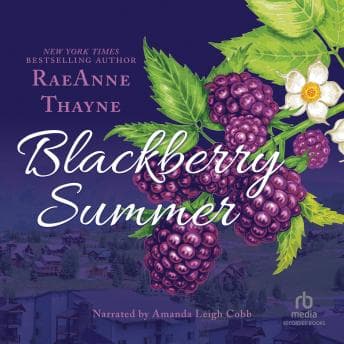
Look, I need to vent about something first. Why do romance novels keep putting women in car accidents to teach them life lessons? Claire Bradford is running a successful bead shop, raising her kids solo, keeping her life together - and apparently the universe decided she needed to nearly die to realize she should maybe go on a date? As someone who's actually worked a code, I have Opinions about using trauma as a character development shortcut.
But here's the thing. I'm still giving this book a solid rating. Because RaeAnne Thayne somehow made it work anyway.
The Medical Stuff (She Did Her Homework)
I braced myself for the usual nonsense. You know the kind - miraculous recoveries, doctors who have time for heart-to-heart conversations, nurses who exist only to deliver exposition. But Thayne actually gets the recovery process mostly right. Claire's frustration at needing help, the slow progression back to normal activities, the way an injury ripples through every part of your daily life - that felt real. Not perfectly accurate (I could nitpick, but Carlos says I need to stop yelling at audiobooks about IV placement), but respectful of what healing actually looks like. Becoming had that same authenticity about personal transformation, even if Michelle Obama's journey didn't involve any car accidents.
The small-town dynamics hit different when you've worked in healthcare too. The way everyone knows everyone's business, the community rallying around tragedy, the gossip that spreads faster than any official communication - that's every hospital unit I've ever worked on, just with more mountains and fewer code blues.
Riley McKnight: The Competent Man Doing Competent Things
I have a weakness for romance heroes who are just... good at their jobs. Riley comes back to Hope's Crossing as the new police chief, and Thayne writes him as genuinely capable without making him a jerk about it. He's protective without being controlling. He respects Claire's independence even when she's literally injured and could use some help.
Is he the most original hero I've ever encountered? No. But after fifteen years of watching real-life drama play out in trauma bays, I don't need my romance heroes to be complicated. I need them to be kind, competent, and not emotionally constipated. Riley delivers on all three.
The best friend's younger brother trope is well-worn territory, but it works here because the history between them feels lived-in. You believe these people have known each other for decades.
Amanda Leigh Cobb Keeps It Cozy
The narration is exactly what this book needs - warm, steady, emotionally present without being overwrought. Cobb doesn't do anything flashy, but she doesn't need to. This isn't a thriller requiring constant tension. It's a comfort read, and she treats it like one.
Her pacing matches the slow-burn romance perfectly. The emotional beats land. When Claire finally lets her guard down, you feel the shift in Cobb's delivery. Nothing revolutionary, but solid work that serves the story.
My one small complaint: some of the male voices blend together a bit. In a book with multiple male characters, a little more vocal distinction would help. But honestly? For a ten-hour listen during my post-shift decompression drives, it didn't bother me much. That's the beauty of comfort reads - they don't need to be perfect, just effective at what they do.
The "Angel of Hope" Mystery
There's a subplot about a mysterious benefactor helping townspeople after the accident, and it's exactly the kind of sweet, low-stakes mystery that works in this genre. You're not going to be on the edge of your seat trying to solve it. But it adds texture to the community storyline and gives the book something beyond just the central romance.
The teenage robbery subplot that leads to the accident is handled with more nuance than I expected. Thayne doesn't let the kids off the hook, but she also doesn't demonize them. There's genuine exploration of how a community failed its young people and how they might do better. My mom would love this (she still thinks I should've been a doctor, but she'd appreciate the community healing angle).
Who This Is For
If you want dark, twisty, morally gray romance - keep scrolling. This is comfort food. It's the audiobook equivalent of a warm blanket and a cup of tea after a rough shift.
Perfect for: post-shift decompression, long drives, anyone who needs to believe small towns can actually be nice places where people help each other. Night shift approved.
Skip if: you need high stakes, you're allergic to small-town settings, or you can't handle the "trauma as catalyst" trope even when it's handled reasonably well.
The Post-Shift Prescription
I finished this one pulling into my driveway at 8 AM, and I sat in the car for an extra few minutes to hear the ending. Carlos found me there, half-asleep, smiling at my dashboard like a weirdo. That's the kind of book this is. Not life-changing. Not trying to be. But genuinely good at what it's aiming for - a warm, hopeful story about second chances and community.
Sometimes that's exactly what you need after watching people fight for their lives all night. Thayne gets that. And I appreciate her for it.