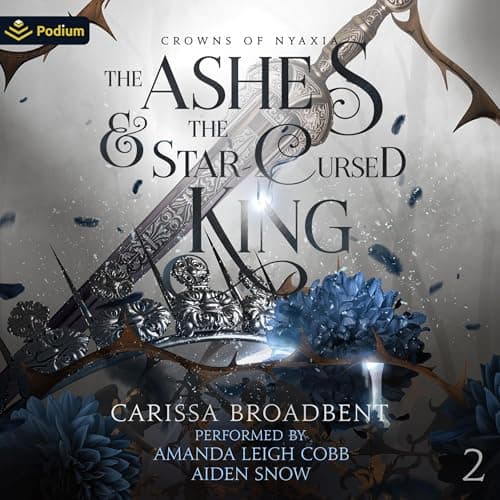

"You cannot trust anyone, least of all Raihn."
That line hit me somewhere around hour three, and I was sitting in my apartment at 1 AM with my thesis document open in another tab - untouched, obviously - while Oraya's world collapsed around her for the second time. I'd told myself I'd listen to one chapter before bed. That was four hours ago.
Look, I came into this series skeptical. Fantasy romance isn't usually my lane. I'm the guy who reads Brandon Sanderson for fun and argues about hard magic systems over pizza. But Carissa Broadbent does something here that earned my respect: she builds a political system that actually matters. The House of Night isn't just window dressing for a love story. Raihn's position as a Turned king - a former slave trying to hold power while his own nobles sharpen their knives behind him - that's the kind of political tension that makes me pause the audiobook and stare at the wall thinking about power structures. The Blade Itself scratched a similar itch for me - that same slow-burn sense that every alliance is temporary and every smile might be a knife.
The Dual Narration Problem Nobody Warned Me About
So here's the thing. Amanda Leigh Cobb is fantastic. Full stop. The way she carries Oraya's grief after losing her father, the way her voice tightens when Oraya is trying to hold it together and failing - that's real craft. You can hear the anger underneath the control, and when it breaks through, it breaks through hard.
Aiden Snow, though. Man. I want to be diplomatic here but I kept getting pulled out of the story every time his chapters started because his Raihn sounds like a different character than Cobb's Raihn. And the pronunciation differences? He says character names differently than she does. In an audiobook where you're bouncing between two narrators chapter by chapter, that's not a minor quibble. It's like playing D&D and your DM suddenly starts pronouncing the BBEG's name differently mid-campaign. You notice. Every time.
Cobb carries the emotional weight of this book on her back and she does it well. Snow isn't bad exactly - his voice work is solid in isolation - but the inconsistency between them creates this low-level cognitive dissonance that never fully goes away.
Betrayal, Blood, and a Magic System That Actually Has Rules
What kept me locked in despite the narrator friction is that Broadbent understands something a lot of fantasy romance doesn't bother with: the betrayal has to cost something real. Oraya doesn't just forgive Raihn because he's hot and brooding. She's furious, she's grieving, and she's practical enough to take a strategic alliance while still wanting to destroy him. That tension - political necessity vs. personal rage vs. the inconvenient fact that feelings don't care about your revenge plans - drives the entire book.
The ancient power tied to her father's secrets? That's where my fantasy nerd brain lit up. There are actual rules to how this works. Consequences. Costs. Not Sanderson-level systematic magic, but it's not hand-wavy nonsense either. When Oraya starts unraveling what she actually is and what her blood means, the progression is satisfying in a way that reminded me of leveling up in a really well-designed RPG. Each revelation builds on the last.
And the House of Blood as antagonists - political enemies who operate through infiltration rather than open warfare - gave me serious scheming-faction energy. My D&D group would love running a campaign in this world.
19 Hours Is a Commitment. Here's Whether It's Worth Yours
At 19 and a half hours, this is not a casual listen. The middle section drags in places where the political maneuvering gets repetitive - there are only so many "nobles are plotting against us" scenes before you get the point. But the back third? The back third earned every hour I spent getting there. The emotional payoffs land because Broadbent took the time to set them up properly, and the action sequences hit hard when they finally arrive.
I read this instead of writing my thesis. Again. Dr. Patel, if you're reading AudiobookSoul for some reason, I can explain.
If you loved the first book and you're invested in Oraya and Raihn, the story delivers. The narrator situation is the main thing holding this back from being an easy recommendation - Cobb is a 4.5 out of 5 performance dragged down by the inconsistency with Snow. Consider reading the physical book for Raihn's chapters and listening to Cobb's. (I'm only half joking.)
Roll for Initiative or Walk Away From the Table
Listen if you dug the first book's world and want a fantasy romance that makes its characters bleed for their happy ending - political stakes, real betrayal consequences, and a magic system with actual teeth. Skip if narrator inconsistency is a dealbreaker for you, or if you need your romance without 19 hours of court intrigue attached. The narrator mismatch is a real flaw that'll bother some listeners more than others, but if you can ride it out, there's a genuinely good fantasy story underneath - one with political stakes that matter and a love story that earns its ending through pain rather than convenience.